
Top VCs in India: Startup Funding Guide for Founders


Building a startup in India today is more exciting—and challenging—than ever before. Thanks to a vibrant tech ecosystem and a huge market, India has given rise to over 100 unicorns since 2016, making it one of the world’s fastest-growing startup landscapes. But for most founders, getting the right funding at the right time can make or break their journey. In 2023 alone, venture capitalists invested over $25 billion into Indian startups, but the competition for those funds is fierce—and not all VC firms are the same or invest in the same types of founders or sectors.
That’s why understanding how venture capital works in India, who the top VC players are, and what they look for can really make a difference for new founders. Whether you’re still in the idea phase or gearing up for your Series A, this guide breaks down the basics: how VC funding is structured, which sectors are catching investors’ eyes in 2024, and how to reach out to the right firms for your stage of growth. If you’ve ever wondered how to get that first investment—or wondered if you’re even pitching to the right VCs—this guide is for you.
How Venture Capital Works for Indian Startups
VCs vs. Angel Investors: What’s Different?
Navigating the startup funding world, you’ll often hear the terms “VC” and “angel investor.” While both invest in young companies, their approach and involvement differ. Angel investors are usually individuals who invest smaller amounts, often in the idea or prototype phase, and may act as early believers or mentors. Venture capitalists, meanwhile, represent firms that pool larger sums from various sources—like pension funds or high-net-worth individuals—and invest in startups with high growth potential.

VCs typically conduct deep due diligence, join your cap table through equity investment, and actively push for scaling. Their involvement goes beyond money: they often secure board seats and introduce founders to seasoned advisors and business networks. For Indian startups, VCs bring credibility and the momentum needed to achieve rapid product-market fit—a leap that’s tough to make with angel funding alone. Learn more about product-market fit.
Stages of Funding: Seed to Late-Stage
Venture capital doesn’t arrive all at once—it shows up in rounds, each tailored to a startup’s risk profile and growth phase. Most founders in India first raise a seed round, tapping angels, micro-VCs, or seed funds to validate the idea and gain early traction. If the concept clicks, VCs enter with a Series A, backing expansion, product development, and hiring. For more details, check out startup fundraising stages.

As your startup matures (Series B, C, and beyond), the capital raised gets larger and the expectations sharper—think rapid scale, more hires, and tackling new markets. At every round, VCs evaluate metrics like growth rate, burn rate, unit economics, and readiness for exit (listing or acquisition). Clarity on your funding needs and stage helps you target the right VC partners from the outset. For a deep dive into burn rate and other financial health indicators, see our dedicated guide.
Now that you have a clear understanding of how funding flows through an Indian startup’s journey, let’s examine which sectors and trends are commanding the attention (and capital) of major VCs right now.
Funding Trends and Sectors Attracting VC Money
Current VC Investment Landscape in India
The Indian startup ecosystem has rebounded after a cautious 2023, with deal momentum picking up in early and mid-2024. Investors are more selective, looking for companies with clear paths to profitability. At the same time, median pre-money valuations have climbed, especially for certain sectors, signaling renewed optimism.

Tech-first businesses continue to dominate, but investors are moving beyond the legacy focus on consumer internet or fintech. Valuations in SaaS, climate tech, and healthtech have notably jumped—the above chart illustrates the 2024 surge in sector-wise median valuations. Founders with strong unit economics, efficient cash burn, and tangible traction stand out in the current climate.
Hot Sectors in 2024–2025
In 2024 and into 2025, climate tech and sustainability-driven businesses are drawing outsized attention. Startups leveraging AI and deeptech—especially in healthcare diagnostics, logistics, and financial infrastructure—are seeing record pre-Series A check sizes. B2B SaaS is another magnet, particularly solutions solving for Indian SMBs or export-oriented businesses. Learn more about healthcare venture capital trends.
Meanwhile, direct-to-consumer brands with niche positioning, agritech platforms digitizing farmer supply chains, and EV ecosystem startups are also in favor. While edtech has cooled since the pandemic, segments such as upskilling tech and AI-powered learning tools still catch the eye of specialist VCs.
Now that you’ve got a grip on where the money is heading, let’s break down the firms actually writing the cheques—so you know which investors to reach out to, whether you’re just starting out or ramping up for the next big round.
Top VC Firms in India for Fresh Funding Rounds
Active Early-Stage VCs
For founders hunting for that crucial seed or Series A cheque, India’s early-stage funding landscape is buzzing with trusted names. Blume Ventures stands out for identifying breakout companies in SaaS, fintech, healthtech, and consumer brands; they’re known to take bold risks when others hesitate. Better Capital moves quickly, offering not just money but hands-on feedback to first-time founders, especially in edtech and B2B SaaS. For entrepreneurs wanting ex-founder expertise, FirstCheque punches above its weight, helping teams sharpen their narrative and product. India Quotient never shies away from unconventional consumer or social commerce bets, bringing deep India-market knowhow to fledgling startups.
Newer entrants like Antler India and Titan Capital (Snapdeal founders’ fund) are also investing pre-product, pre-revenue, or in overlooked sectors, making this a golden era for early founders unafraid to chase tough problems.
Growth and Late-Stage VC Players
Indian startups eyeing bigger, expansion-size cheques are seeing robust activity from firms like Elevation Capital and Matrix Partners India. These teams have backed unicorns across consumer internet, SaaS, and digital finance, and are now scouting for the next wave of scale-hungry founders. Sequoia Capital India (now Peak XV Partners) is arguably the most influential growth-stage backer, with a portfolio straddling marquee brands (BYJU’S, Zomato, Razorpay) and emerging category winners.
Other active growth-stage players include Lightspeed India, celebrated for its conviction in India-first models, and Accel, whose repeat success in SaaS and marketplaces speaks volumes. Watch out for Chiratae Ventures and Nexus Venture Partners too—they’re ramping up growth bets in frontier tech, health, and logistics.
Global VCs With Strong India Focus
International heavyweights are betting big on India’s startup scene like never before. Tiger Global and SoftBank Vision Fund are household names for their audacious late-stage deals and rapid-fire scaling capital. Prosus Ventures and General Atlantic zero in on massive markets—edtech, payments, online commerce—often leading $50M+ rounds in local leaders.
On the early and mid-stage front, 500 Global and Y Combinator have ramped up India investments, connecting local founders to Silicon Valley’s best practices and global networks. These global players bring more than cash—they open doors to cross-border expansion, strategic partnerships, and a chance to join the world’s most ambitious tech circles.
Each of these VCs brings a unique lens, ticket size, and network to the table. Knowing where you fit—stage, sector, ambition—makes all the difference in who you should approach. In the next section, let’s break down how to spark the right VC’s interest and what you’ll need to stand out when knocking on their doors.
How to Approach and Pitch to Indian VCs
Crafting an India-Friendly Pitch Deck
Your pitch deck is more than just a slideshow—it’s your entire story and business potential distilled into a handful of slides. For Indian VCs, clarity on the scale, India-market fit, and growth pathway is crucial — your deck should unmistakably answer: “Why now?” and “Why here?”
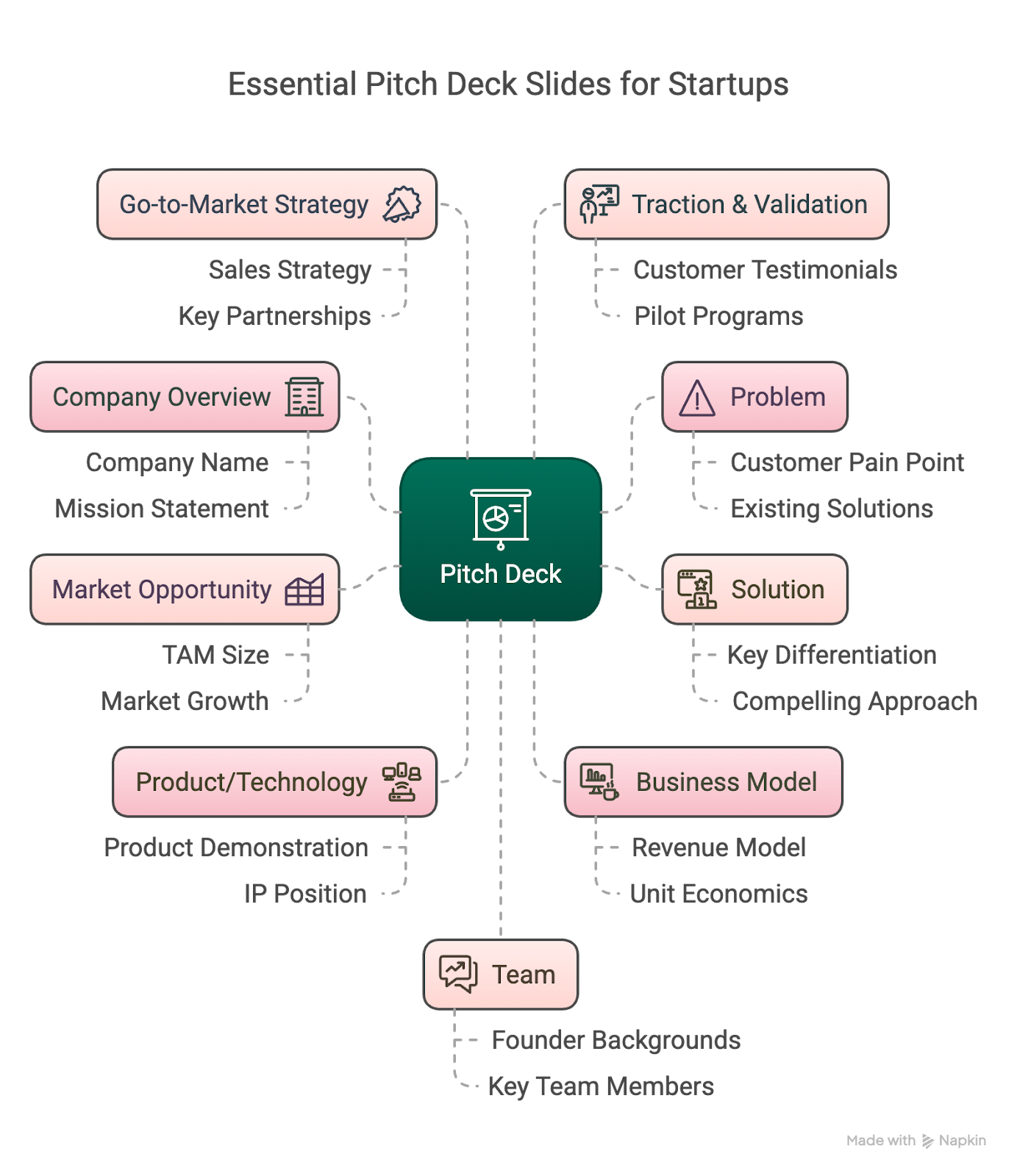
Include these essentials (in simple language, no frills): the specific problem in India you solve, your unique solution, market size with real local numbers, early traction or social proof, your business model, how you’ll reach customers, and—crucially—why your team will win in the Indian context. Context matters, so if you can, share how the business model adapts to local behaviours or regulations.
What Top VCs Look For in Founders
Indian VCs back founders who know their turf, move fast, and show evidence of execution—not just vision. Investors appreciate entrepreneurs who demonstrate an obsession with their customer’s pain point and possess local insights.

Be specific about what you’ve built, what you’ve learned from your first users or pilots, and how you’ll leap over regulatory or distribution roadblocks India is known for. VCs also notice humility and adaptability—in every meeting, show you’re coachable, hungry for feedback, and always testing assumptions.
Common Mistakes First-Time Founders Make
First-timers often chase “trendy” sectors, pitch global ambitions without a local wedge, or skip over business model details. If your pitch focuses only on a big market or a cool tech but can’t show why people in Pune, Vadodara, or Chennai care—VCs will disengage. Another pitfall: hiding bad numbers or glossing over failed experiments. Transparency (with thoughtful analysis) is better than a shiny but shallow story.
Remember: most Indian VCs will do deep diligence, including customer calls and localization checks. If you preemptively point to challenges and explain your plan to overcome them, you’ll build much more trust in the room.
Now that you know what Indian VCs look for in a pitch and where founders trip up, let’s dig into the support systems that can help you level up your funding journey.
Thank you for reading EasyVC’s blog!
Are you looking for investors for your startup?
Try EasyVC for free and automate your investor outreach through portfolio founders!
Government Programs and Support for Startups
Key Schemes Backing Venture Funding
Indian founders have access to several government initiatives tailored to boost both direct funding and venture capital activity. The flagship Startup India scheme offers tax exemptions, fast-track patent services, and simplified company registration. Beyond regulatory relief, the Fund of Funds for Startups (FFS) managed by SIDBI is a major force: it doesn’t invest directly in startups, but backs SEBI-registered venture capital funds, multiplying the capital pool available for Indian tech and non-tech ventures. Since inception, FFS has allocated thousands of crores across over 100 VC funds, many of which actively back early-stage founders.
Alongside FFS, the Startup India Seed Fund Scheme (SISFS) provides up to Rs 20 lakh in grants and Rs 50 lakh in debt/equity support, primarily for prototypes, product development, and market entry. The government also runs dedicated sectoral funds, like the Electronics Development Fund and Biotech Ignition Grant, feeding capital into priority innovation hubs. These schemes are designed to plug funding gaps where VCs may hold back due to higher risk or longer gestation periods.
Leveraging State Support Alongside VC Money
Startup-savvy states such as Karnataka, Maharashtra, and Telangana have set up their own startup missions, incubators, and mini-grant programs. Several, including the Maharashtra State Innovation Society and Karnataka Elevate, actively co-invest with private VCs in homegrown companies or match investor commitments for select sectors. Recognition under state policies often unlocks free cloud credits, subsidized workspace, or direct introductions to local funds.
Many VC dealmakers look favorably at startups who have leveraged these public schemes: government support can validate your model, extend your financial runway, and signal strong intent in the eyes of institutional investors. Blending state support with private capital helps founders derisk early milestones and strengthen their negotiating position for later rounds.
While public programs can be a springboard, understanding how to navigate India’s top venture firms will give your startup the sharpest edge. Let’s explore the essential networks and resources that connect founders with leading investors across the Indian startup landscape.
Essential Resources: Connect With Leading VCs in India
Outreach Platforms and Demo Days
Modern founders don’t wait for introductions—they seek out networks and platforms where India’s top venture capitalists actively scout for the next big idea. Inc42 Plus, LetsVenture, AngelList India, and Venture Intelligence remain trusted spaces to find VC events, virtual demo days, and pitch opportunities. Industry events like TiE Global Summit, SaaSBoomi, and YourStory’s TechSparks are magnets for venture partners, often featuring open pitch sessions and curated networking with fund decision-makers.
Another thriving space: university incubators such as CIIE at IIM Ahmedabad, NSRCEL at IIM Bangalore, and IIT Madras’ E-cell, organizing regular demo days where seeded startups can meet and pitch to focused VCs in India’s most active ecosystems. For a deeper dive, check out our ultimate guide to startup incubators.
Curated List: Contacts for Top VC Firms
Speed matters. To save you hours of LinkedIn sleuthing, here’s a quick reference list of email contacts and application portals to connect directly with India’s most sought-after VC firms:
- Sequoia Capital India/Peak XV Partners: Contact Form
- Accel India: Contact Page
- Lightspeed India: startups@lsip.com
- Matrix Partners India: ideas@matrixpartners.in
- Blume Ventures: apply@blume.vc | Application Portal
- Kalaari Capital: Contact Page
- SAIF Partners (Elevation Capital): Contact Form
- Indian Angel Network: Entrepreneurs Portal
- Inventus India: info@inventuscap.com
Pro tip: Before you hit send, always check the latest investment focus, sector interest, and thesis of each firm to ensure your outreach resonates.
Once you’ve established contact and lined up meetings, it’s time to shift gears and refine how you pitch to these investors. Next, we’ll break down the secrets of building a pitch and raising your odds with India’s top VCs. For expert advice, explore our art of startup fundraising and venture capital fundraising deck guides.
Quick Answers: Indian VC Funding FAQs
How much equity do Indian VCs typically take?
In early funding rounds, most Indian VCs ask for 15% to 25% equity. As funding size grows, equity offered tends to reduce, but every deal is different based on risk and negotiation.
Do you need traction before reaching out to VCs?
Yes—solid traction attracts attention quickly. Aim for strong user or revenue growth, or clear proof that your solution solves a pressing problem. For pre-revenue startups, a demo or live prototype is often a must.
Are term sheets in India founder-friendly?
It varies. There’s been a shift towards more balanced agreements, but always scrutinize clauses on liquidation preference, founder vesting, and board control. Get legal advice before signing anything.
How long does the Indian VC funding process usually take?
From first meeting to cash in the bank, expect 2 to 6 months. Fast processes do happen—but diligence, negotiation, and compliance checks can add weeks.
Can foreign founders raise VC money in India?
Yes, though having an Indian entity is crucial for most deals. Be prepared for some paperwork and compliance with FDI rules depending on your sector.
Armed with answers to these FAQs, founders can approach investors with sharper clarity. Now, let’s zoom into India’s most influential VC firms and what makes them stand out for fresh funding rounds.