
Sharpening Your Board Deck: Essential Practices for Impactful Meetings

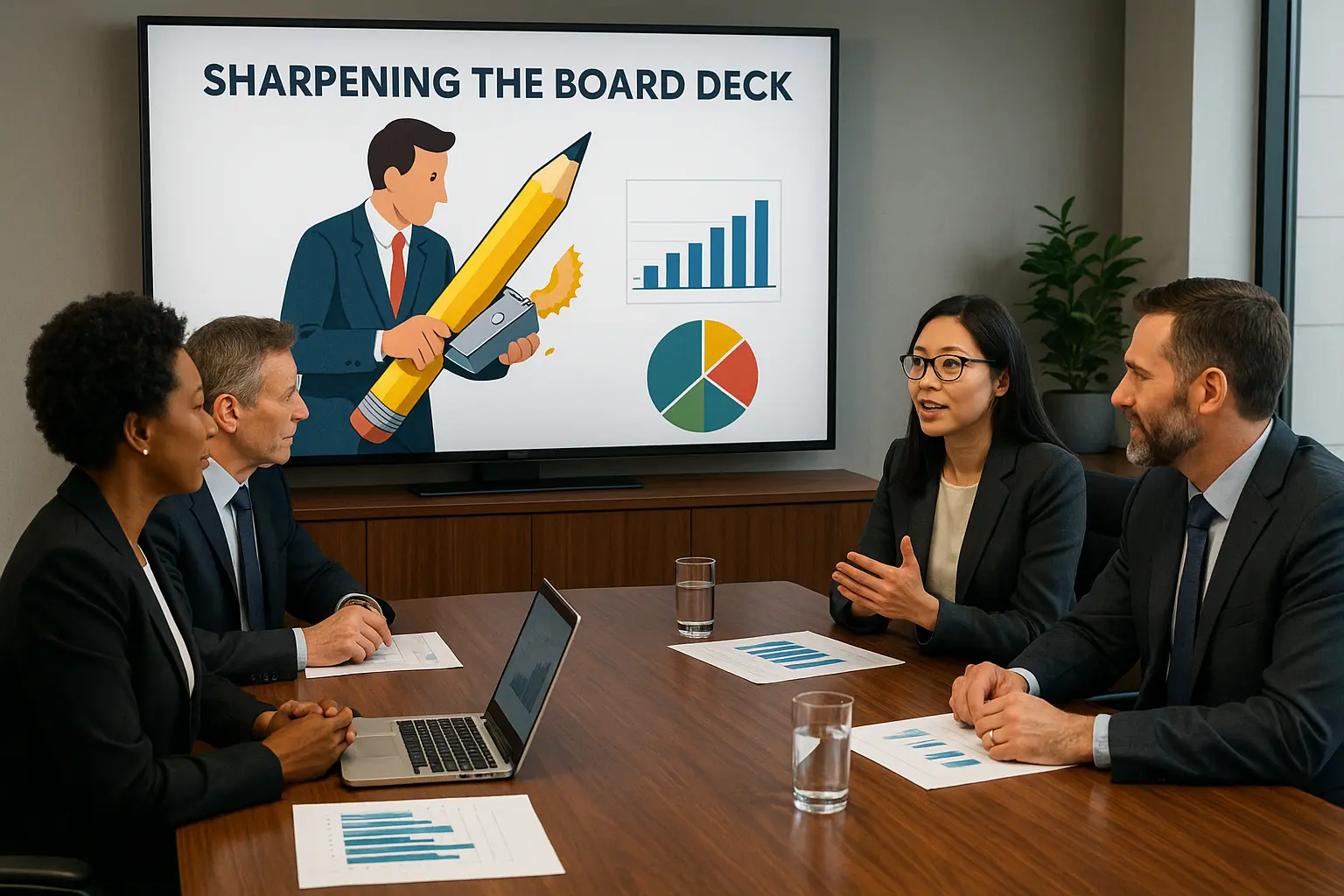
If you’ve ever sat through a long board meeting and wondered what could have made it more productive, you’re not alone. According to a 2022 survey by BoardEffect, more than 60% of board directors feel that meetings are hindered by unclear or overloaded presentations. A well-crafted board deck isn’t just a box to check—it shapes how your board understands your progress, the challenges you face, and the decisions you need help with.
This post will share simple, hands-on practices to make your next board deck easier to follow, more honest, and genuinely helpful for getting good feedback. Whether you’re a seasoned CEO or building your first board update, these steps can help make your discussions more focused and impactful.
Set Clear Goals for the Board Meeting
Effective board meetings start with purpose. Without clear goals, sessions can lose focus, descend into status updates, or fail to make vital decisions. Setting specific objectives ensures your meeting time is used to drive the organization forward—not just to recap the past.
Define What Success Looks Like
Start by asking what you want to achieve by the end of the meeting. Is the priority to secure buy-in for a new strategy, resolve a major blocker, or chart a path for the next quarter? Articulating your desired outcomes helps you tailor the agenda, guide conversation, and measure meeting effectiveness once it’s over.
Prioritize Decisions Over Updates
While sharing information is important, the most impactful board meetings are those where decisions are made. Identify which items need board input or a collective judgment call, and focus your preparation on these points. Keep routine updates brief or send them in advance, so valuable face-to-face time is reserved for discussing big-picture issues and pivotal choices.
Once you have a clear destination for your meeting, it’s crucial to design your materials in a way that keeps everyone on course. The next step is ensuring your board deck is structured for clarity and impact.
Organize the Board Deck for Maximum Clarity
Start with an Executive Summary
Begin your board deck with a concise executive summary that outlines the meeting’s key objectives, decisions needed, and the most critical updates. This enables board members to quickly understand where to focus their attention, setting the tone and context for the rest of the presentation.
Highlight Key Metrics and Trends
Directly after the summary, present the essential metrics and trends that inform the board about company performance and progress toward goals. Use clear visuals—such as charts, graphs, or infographics—so insights can be grasped at a glance. Consistency in layout and metric tracking from meeting to meeting helps the board see progress and identify emerging challenges.

Group Information by Strategic Area
Structure your deck by organizing slides around major strategic areas—such as growth, operations, financials, and risks—instead of burying related details in disparate sections. This logical grouping allows board members to engage deeply within each area, fostering focused discussion and efficient decision-making.
A well-organized deck primes your audience for productive discussions, but its impact is maximized when paired with honest, contextual insight. Next, let’s explore how to go beyond the numbers and create a genuinely transparent conversation with your board.
Share Honest Context Beyond the Numbers
Provide Unvarnished Performance Insights
While financials and key metrics anchor your board deck, they don’t tell the whole story. Sharing the honest context behind the numbers—what drove them, what didn’t work, and why—builds real trust with your board. Use a narrative to add color and depth to the data, making it clear what was in your control and where external factors played a role. Transparency about both wins and misses strengthens stakeholder confidence.
Surface Challenges and Proposed Solutions
Every business faces headwinds, and boards expect to hear about them. Go beyond just listing problems by proactively outlining the major challenges your team is contending with. Even more important, present thoughtful, specific plans for how you aim to address these challenges—whether it’s operational pivots, investments in resources, or changes in strategy. This approach not only provides context but engages the board as true strategic partners, not sideline observers.
Invite Candid Feedback from the Board
The most impactful board meetings are two-way conversations. By openly sharing uncertainties and areas where guidance is needed, you show humility and foster a culture where feedback is welcomed. Encourage your board members to ask tough questions and challenge assumptions. This candid dialogue leads to richer insights, sharpens your decision-making, and ultimately serves the organization’s best interests.
With open communication paving the way, it’s equally important to ensure the board deck remains concise and impactful, focusing your audience’s attention exactly where it’s needed most.
Keep Slides Focused and Action-Oriented
When building your board deck, remember that every slide is valuable real estate. Avoid overloading slides with excessive details or tangential data. Instead, focus each slide on a single key point or decision, making it clear why the information matters and what action is expected as a result.
Use Visuals to Clarify Complex Information
Well-designed visuals can transform intricate data into digestible insights. Use charts, graphs, timelines, and diagrams to highlight trends or illuminate relationships that might otherwise be lost in paragraphs of text or tables of numbers. Not only do visuals make your message more memorable, but they also enable quicker understanding—essential in a fast-moving board meeting.
Limit Slide Count and Avoid Redundancy
Resist the urge to explain everything on slides. Instead, distill content to only what’s most impactful for the board’s decision-making. Redundant or verbose slides dilute your narrative and can sap the board’s attention. Aim for brevity, ensuring that each slide amplifies your key objectives and streamlines discussion.
By honing your slides to highlight critical actions and using visuals thoughtfully, your board meetings will be more focused and productive. With your deck sharp and concise, the next step is to ensure your board receives and reviews these materials in advance for a seamless meeting experience.
Coordinate Ahead for a Smooth Board Experience
Distribute the Deck Before the Meeting
Sending out your board deck in advance gives directors critical time to digest the information, formulate questions, and engage more meaningfully during the meeting. Aim to share the complete materials at least a few days before—this not only displays respect for their time but also paves the way for richer discussions.
Align with Team Leaders on Content
Collaborate with your internal leaders well before the meeting to ensure each section of your board deck is accurate, up to date, and aligned across teams. Touch base with finance, operations, marketing, and other relevant leads to verify numbers and key messages, minimizing last-minute surprises and inconsistencies.
By proactively coordinating with your stakeholders and circulating the materials early, you create an environment where the board can focus on strategic guidance rather than sifting through unclear or new information. This foundation seamlessly sets you up to craft a board deck that is engaging, visual, and focused on driving effective action in your meetings.