
How to Manage Remote Teams: Strategies for Real-World Results


Let’s be real—managing a team has always been a balancing act, but doing it remotely comes with a whole new set of puzzles. Suddenly, you’re juggling different time zones, trying to keep communication flowing, and sometimes just hoping everyone still feels like a team even if they’re scattered across the world. According to Buffer’s State of Remote Work 2023, 21% of remote workers say loneliness is their biggest struggle, while 17% point to difficulties with collaboration and communication.
If you’ve ever wondered how to keep everyone on the same page, build trust from a distance, or spot burnout when you can’t pop by someone’s desk, you’re not alone. Navigating remote management can feel tricky—but with the right strategies, it’s absolutely doable and can even help your team thrive. In this article, we’ll break down what makes remote management unique, share practical steps that actually work, and offer tips to keep your team motivated and connected—no matter where you all are.
What Makes Managing Remote Teams Different?
Coordination Across Time Zones
When your team is scattered across continents, even scheduling a simple call becomes a puzzle. Time zones shape everything—from when people log in to how quickly issues get resolved. Deadlines often mean different things depending on where someone is located. Instead of expecting instant answers, remote leaders have to rethink how to assign tasks, stagger meetings, and create routines everyone can actually follow.
Maintaining Team Cohesion Remotely
In a physical office, relationships develop organically: quick chats in the hallway, spontaneous brainstorming over coffee, or catching up before meetings. Take those away, and it becomes much harder to foster the sense of belonging and camaraderie that make teams gel. Remote managers need to double down on intentional team-building and find creative ways to help people connect despite the distance. Without some extra care, it’s easy for teammates to feel adrift and disconnected.
The New Pace and Patterns of Communication
Remote work pulls communication into new shapes—less back-and-forth chatter, more written messages, and a greater risk of missing tone or context. One person’s urgent update might get buried in someone else’s morning inbox shuffle. Loneliness, distractions, and misunderstandings often creep in when people rely mainly on asynchronous tools or don’t have a set rhythm for sharing progress.

Recognizing these differences isn’t just an academic exercise—it’s the starting point for building habits and systems that help your remote team actually thrive. Now that you know what sets remote management apart, let’s dig into the practical moves that make it work.
Essential Practices for Managing Remote Teams
Be Clear About Outcomes, Not Just Activities
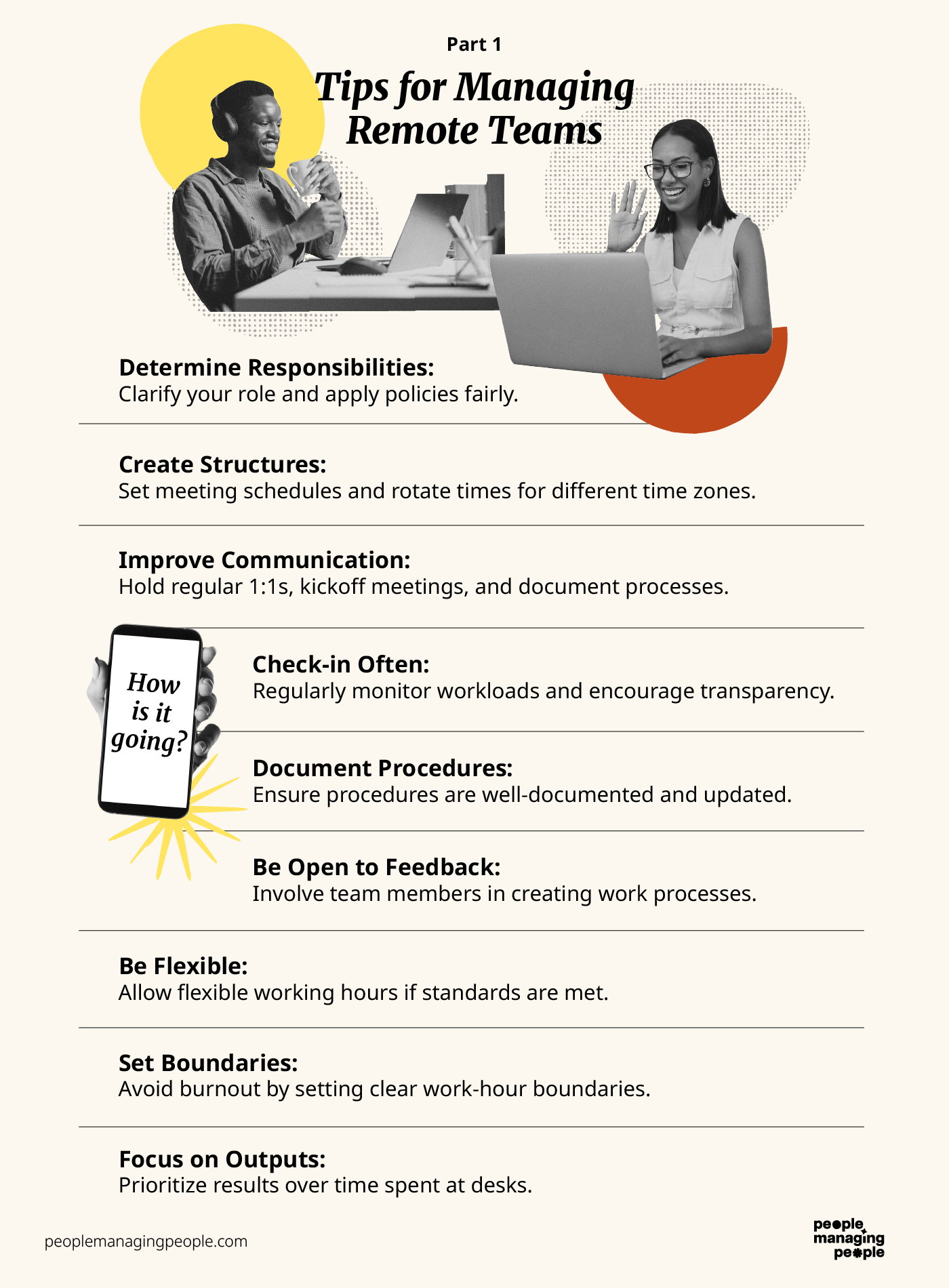
Remote teams do their best work when they know the finish line, not just the path. Focus conversations around concrete goals, whether that means delivering a presentation, hitting a deadline, or solving a customer problem. Rather than tracking hours online, talk about results: what does a great week look like? Clarity about outcomes gives each person the freedom to map out their own workflow, sidestep micromanagement, and stay motivated by seeing their impact.
Pick the Right Tools for Connection
No two remote teams are exactly alike, but one truth holds: using too many platforms creates confusion, not connection. Narrow down your toolkit to essentials—perhaps one app for project management, one for chatting, and one for video calls. Base your choices on how your team interacts, not just industry trends. When your team knows where to look for updates or how to start a quick call, collaboration feels natural, not forced.
Choose Asynchronous and Synchronous Communication Wisely
Some conversations need the focus of a live meeting; others get muddled if they’re rushed. Use synchronous time for high-stakes decisions, brainstorming sessions, or anything that sparks creative energy. Asynchronous updates—like status reports or sharing feedback—give everyone breathing room, especially across time zones. Blending both approaches cuts down on endless meetings and helps each team member work when they’re at their best.
Getting these habits right sets a strong foundation for remote teamwork. But thriving at a distance takes more than smart strategies—it’s also about building trust and accountability in everyday interactions. Let’s look at how to make that happen, wherever your team’s desks may be.
How to Build Trust and Accountability from Afar
Set Expectations Early and Revisit Often
Remote teams don’t have serendipitous hallway chats to clear up confusion. The first step: talk through what a “job well done” looks like upfront, not after the fact. Lay out realistic deadlines, define priorities, and be explicit about which decisions need consultation versus autonomy. Once you’ve set these expectations, check in as work evolves. As roles shift or projects pivot, everyone deserves clarity—not just at the start, but throughout the journey.
Create Shared Norms for Availability
It’s tempting to assume teammates are available from sunrise to midnight. Resist the urge. Instead, work together to outline when people are genuinely reachable, and through which channels—quick Slack messages, scheduled calls, or emails that can wait. This helps everyone plan deep work and downtime without guilt or second-guessing. Shared calendars or status updates (“heads-down—back at 2 PM”) can prevent both nagging and unnecessary radio silence.
Share Progress Visibly and Frequently
Accountability thrives when progress isn’t hidden in inboxes or private workspaces. Use shared docs, project boards, or regular update threads so everyone can see momentum (or stalls) in real time. Keep updates snappy: celebrate milestones, flag obstacles early, and make it easy for others to pitch in if someone’s stuck. This shared visibility doesn’t just keep projects moving—it reinforces trust that everyone is pulling their weight, even if you rarely see each other on screen.
Building this foundation creates an honest, reliable team culture, no matter the distance. As you master trust and accountability, you’ll be set up to tackle an equally vital challenge: keeping motivation and wellbeing front and center, even with scattered schedules and screens.
Supporting Wellbeing and Motivation in Remote Teams
Spot Signs of Burnout and Disconnect
Remote work makes it easy for exhaustion to hide under the surface. Pay attention to sudden changes in participation, slower response times, or team members who start attending fewer meetings. Drop into one-on-one chats, not just to talk about projects, but to ask how people are honestly feeling about their workload and balance. Consider rotating digital “pulse checks” using quick, anonymous surveys to catch patterns of low morale before they escalate.
Celebrate Wins, Milestones, and Personal Growth
In a distributed team, small successes are easy to overlook without the nudge of spontaneous hallway applause. Start meetings with shout-outs for progress, highlight professional development—like someone mastering a new skill or earning a certification—and send personal notes for birthdays or work anniversaries. Even tiny gestures, like thank-you voice memos or a new emoji in your chat app, keep motivation alive and help achievements stand out in a digital world.
Promote Inclusion and Team Spirit from Anywhere
Isolation can erode the feeling of belonging. Build in rituals that go beyond work, such as sharing “remote desk views” once a week or playing a quick online game together. Rotate who leads team check-ins to give everyone a voice, and create interest-based chat channels where employees can swap recipes, playlist suggestions, or book recs. Diverse backgrounds and locations can be a strength if everyone feels seen—not just as workers, but as individuals.
Addressing wellbeing and motivation sets a strong foundation, but sometimes even the most mindful leaders hit bumps along the way. Next, let’s dig into how to spot and solve those inevitable challenges when managing remote teams.
Thank you for reading EasyVC’s blog!
Are you looking for investors for your startup?
Try EasyVC for free and automate your investor outreach through portfolio founders!
Ready to put these remote management strategies into action? Imagine what your team could accomplish if everyone felt seen, heard, and trusted—no matter where they’re working from. Don’t let distance dilute your team’s impact. The right approach turns remote work into your team’s superpower.
How will you begin to shape a more connected, productive, and motivated remote workplace? Start today, and discover what’s possible.
Of course, no journey is without bumps in the road. In the next section, let’s tackle some of the tough challenges remote managers face—and how you can outsmart them before they derail your progress.
[CTA-HOOK]Troubleshooting Common Remote Management Challenges
Resolving Miscommunication and Gaps
Written words—Slack, email, a stray comment in a project note—don’t always carry the nuance you’d get in a face-to-face conversation. Tiny misunderstandings can snowball into major confusion. If a message seems unclear, prompt your team to say, “Can you clarify what you mean by this?” Regularly invite questions. Summarize next steps at the end of calls and ask someone else to restate them. This catches errors before they take hold. Screen-share walkthroughs or a quick Loom video can clear up ambiguities faster than long email threads ever could.
Dealing with Performance Issues Remotely
If someone’s work starts slipping, approach it as a partner, not a critic. Start by checking if there’s a hidden obstacle—an unclear task, a personal issue, or technical hiccups. Use one-on-one calls to discuss feedback privately and honestly, not over group chat. Trust crumbles when people feel singled out. Set micro-goals together and check in often; track progress in a shared doc so it’s transparent for both sides. Remember, distance can make problems feel bigger than they are—addressing them early and human-to-human usually shrinks them back down to size.
Navigating Time Zone and Culture Differences
Let’s face it: “Let’s hop on a quick call” isn’t always feasible when your team is spread from Melbourne to Montreal. Combat time zone troubles by building in shared quiet hours—windows when everyone is offline and can focus. Rotate meeting times so no one is always burning the midnight oil. For cultural nuances, make space for people to share local holidays, working habits, or communication norms. This encourages empathy and softens misunderstandings before they begin. Even small gestures—like a note appreciating someone’s effort to join a meeting at an odd hour—help knit together a distributed team.
Overcoming these roadblocks lays stronger foundations for remote teamwork. Up next, let’s look at practical tools and resources that make life easier for distributed teams and help you turn these principles into habits.
Handpicked Tools and Resources for Remote Team Success
Collaboration and Project Tracking Platforms
Remote teams thrive on clarity and seamless coordination. Trello’s visual boards give everyone a bird’s-eye view of tasks and deadlines—it’s as straightforward as moving sticky notes across a whiteboard. If you need deeper project scaffolding, Asana offers granular control over workflows, dependencies, and priorities, making it easy to keep complex projects on track even when your team is scattered across continents.
For quick brainstorming or wireframing, Miro brings the brainstorming magic of a whiteboard to your browser. You can sketch, plan, and vote in real time—perfect for lively remote workshops. Meanwhile, Notion serves as a digital workspace for docs, wikis, checklists, and knowledge bases. Instead of sifting through endless email threads, you get a live, always-up-to-date source of truth that your team can actually enjoy using.
Recommended Virtual Team-Building Ideas
Trust doesn’t grow in a vacuum. Try out quick-fire quizzes using Kahoot! for a burst of energy at the start of team calls. Online escape rooms, trivia nights with QuizBreaker, or even a simple weekly “coffee chat” can go a long way in shrinking the distance between people. For moments when cameras are off, Donut’s Slack integration helps match teammates for casual check-ins—a gentle nudge for connection that feels natural, not forced.
Whether you’re refining a shared project or organizing a virtual scavenger hunt, the right tools can spark true collaboration and camaraderie. But even the best resources don’t prevent every challenge. Up next, let’s tackle the stubborn friction points that still trip up even the most well-equipped remote teams.
Quick Answers: Managing Remote Teams FAQ
How do you keep remote teams productive?
Trust your team to manage their time, but be specific about what needs to get done. Focus on results, not hours spent online. Small, regular check-ins help keep progress on track and give people a chance to flag roadblocks before they become real problems.
What’s the best way to handle meetings with remote teams?
Only schedule meetings if there’s a clear purpose. Share an agenda in advance, keep discussions focused, and make sure everyone gets a chance to chime in—especially quieter voices. Record meetings so team members in different time zones can catch up later.
How do you measure success in remote teams?
Swap out activity tracking for clear goals and milestones. Tie success to outcomes, whether that’s growth, completed projects, or satisfied clients. Simple dashboards or weekly summaries work better than micromanagement in monitoring progress.
With these practical answers in mind, let’s dig even deeper into the common remote leadership headaches—and set you up with strategies to handle them when they arise.