
How to Cold Email Potential Investors

Reaching out to potential investors with a cold email can feel daunting, but for many founders, it’s often the only way to get your foot in the door. In fact, according to a survey by DocSend, over 90% of startup fundraising relationships begin with some form of a cold introduction or outreach—so you’re definitely not alone in facing the inbox challenge.
While cold emailing rarely leads to instant results (typical reply rates hover around 5-15%), those first connections can open crucial doors for your business. But it isn’t just about sending as many emails as you can. The way you approach, research, and craft your cold emails often makes the difference between being ignored and getting a meeting.
This guide walks you through each step—from deciding if cold emailing is the right move for your fundraising round to composing messages that actually get read, and improving your results over time. Whether you’re a first-time founder or just looking to refine your approach, you’ll find practical tips and templates to help your emails stand out in even the busiest inboxes.
Decide If Cold Emailing Is Right for Your Fundraising
When cold outreach makes sense
There’s no point firing off mass emails to investors unless your company actually fits what most VCs look for. Before you start drafting messages or building lists, pause—how well does your startup line up for venture capital?
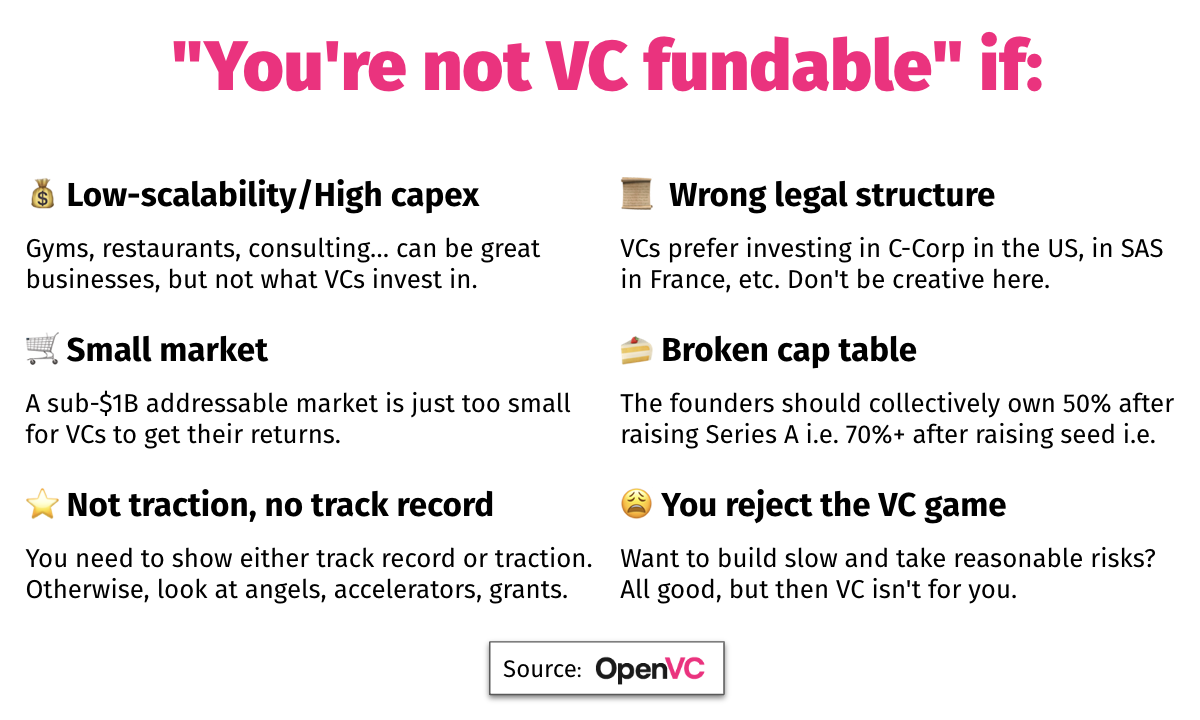
If your revenue is flat or very slow, or you’re in a niche market, VCs may not bite no matter how perfectly written your email. Likewise, certain legal structures, a messy cap table, or a thin track record can make cold outreach futile. But if you’re solving a big problem, can show real progress, and have a compelling story—even without warm introductions—it’s worth reaching out directly.
What to have prepared before clicking send
Sometimes founders rush contact before they have what investors expect. At minimum, you should have a pitch deck that tells your story fast, real numbers that demonstrate traction, and answers ready for tough questions. Make sure you can communicate what you’re building, the market you’re chasing, and the results you’ve seen so far—without needing four paragraphs to do it. The crisper this groundwork, the better your cold email will land.
Once you’ve weighed these factors and gathered your essentials, it’s time to search out people who are actually likely to say yes. Taking the time to target the right folks can make all the difference between radio silence and real conversations.
Find and Research the Right Investors
How to build a focused investor list
Not all investors are created equal when it comes to your startup. Instead of blasting your email to every firm you can find, get laser-specific. Start by sorting potential investors based on their track record in your market, funding stage, and portfolio fit. Tools like Crunchbase, Signal, or the investor sections of well-known accelerators can fast-track your search. Avoid casting a wide net—focus on building a short list of people who are actively betting on companies like yours.
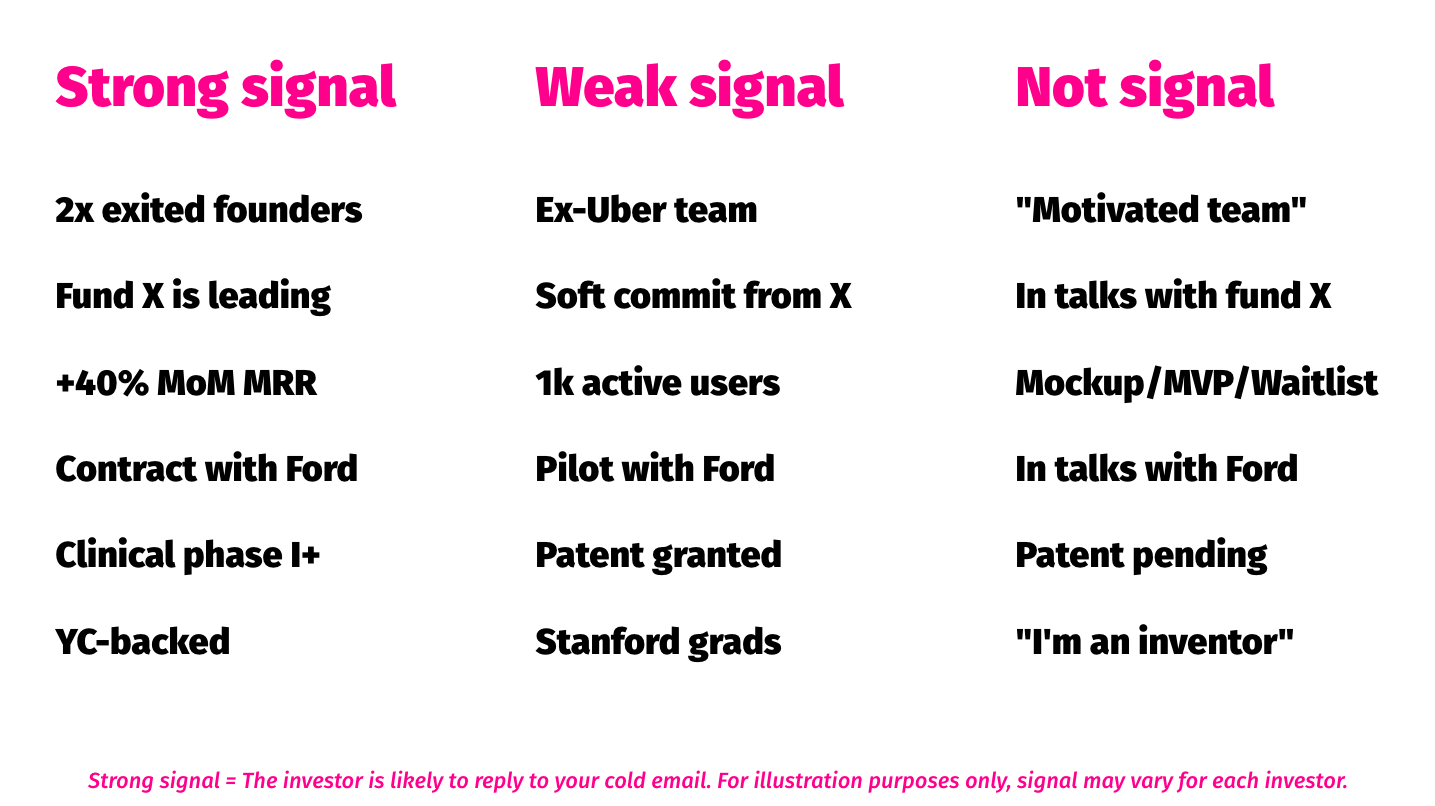
The image above breaks down what catches an investor’s eye—signals that can help you prioritize which investors are more likely to respond positively to your pitch.
What to look for in investor profiles
Dig into each potential investor’s recent deals, preferred industries, investment size, and what stage they typically enter. Check their personal backgrounds, LinkedIn activity, and blog posts. Has this investor backed a direct competitor? Do they share insightful posts about your market, attend industry events, or sit on startup boards you admire? These details will help you spot alignment—or red flags—before reaching out.
Ways to personalize your approach
Now, use what you’ve learned. Mention specifics when you reach out—reference their recent investment or a post they wrote that connects to your vision. Maybe you both admire the same founder, or your startup extends work they’ve already shown interest in. Stand out by making it impossible for your email to feel like a generic, copy-pasted pitch.
Once you’ve assembled your shortlist of well-matched investors, it’s time to craft a high-impact introduction that grabs their attention from the first subject line.
Craft a Cold Email That Gets Read
Write a subject line that stands out
Your subject line decides whether your email even gets opened. Skip anything that sounds mass-blasted or desperate. Instead, make it personal and specific. Mention something the investor will recognize—perhaps their portfolio company, investment focus, or a recent article they wrote. Examples: “Building on X Ventures’ Climate Wins—Intro from Berlin,” or “Seed SaaS: 250% ARR Growth in 8 Months.”
Open with a concise introduction
Get right to the point—no need for a full biography. State your name, your role, and what your company does in one clear sentence. “I’m Jamie, founder at UrbanBee—an IoT solution for urban pollinator tracking.” Immediately follow up with the specific problem you solve, without filler or buzzwords.
State your ask and highlight your traction
Be upfront about what you want—a call, a meeting, or feedback. Don’t make the investor guess. Pair your ask with your best numbers: revenue, user growth, customers signed, or partnerships inked. This turns a vague request into a concrete opportunity.
Explain why you are a good fit for the investor
Investors get hundreds of emails. Make yours feel handpicked for them. Reference a deal they did, their thesis, or a personal mission. Show you’ve done your homework and explain why your company aligns with their interests and why now is the right time for them to get involved.
Attach or link to your pitch deck smartly
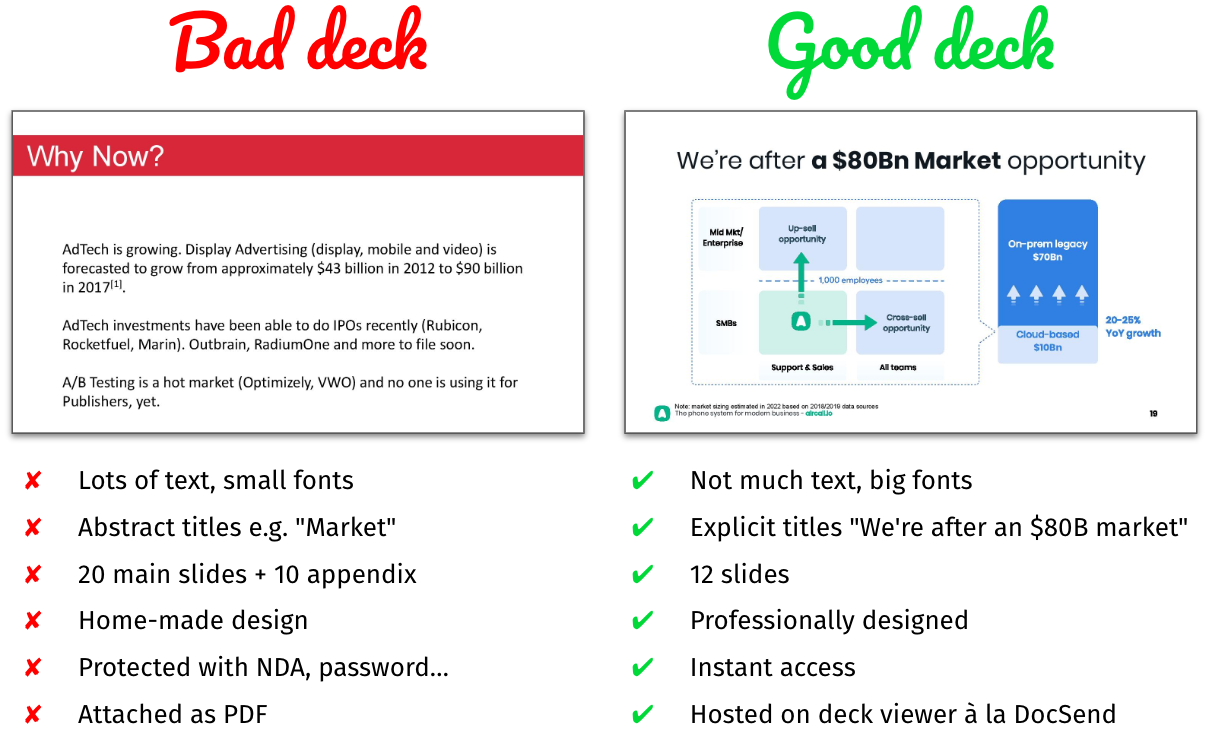
No one wants to hunt for attachments or dig through multiple links. Use a single, instantly accessible link (Google Drive, DocSend) where possible. Make sure permissions are open—don’t force an investor to request access. And keep your deck sharp: direct, easy to skim, visually clean, with each slide telling a clear story.
Once your email is compelling, how you format and send it can mean the difference between a reply and radio silence—let’s cover tactical ways to maximize your chance of reaching an investor’s inbox next.
Thank you for reading EasyVC’s blog!
Are you looking for investors for your startup?
Try EasyVC for free and automate your investor outreach through portfolio founders!
Key Tactics to Improve Response Rates
Simple formatting tips for mobile and desktop
Most investors skim emails on their phones. Make every line count. Use short sentences and concise paragraphs—avoid walls of text. Stick to a single readable font at 12–14pt size. Add clear spacing between sections. Bulleted lists help busy readers find key details quickly, especially your traction and next steps. Always test-send to your own inbox—preview how it renders on both desktop and mobile screens before hitting send for real.
Avoiding spam filters and deliverability issues
Even the best email is useless if it never hits an inbox. Use your real name and company domain, not a generic Gmail or Yahoo address. Steer clear of salesy phrases (“incredible offer”, “risk-free”, etc.), overuse of exclamation points, and unnecessary attachments. Only link to reputable sites and your own website. Try plain text or very light HTML—too much formatting can trigger spam detection. Before a big batch, send a handful first and check if any land in spam; adjust based on results.
How to follow up (without being pushy)
Quiet persistence pays off. If you don’t get a reply within one week, send a single, short follow-up that adds value—a product milestone update, new traction figures, or a thoughtful industry insight. Avoid guilt trips and don’t repeat the same ask verbatim. If you still hear nothing after a second follow-up, move on gracefully. A polite exit (“Understand if this isn’t a fit now. Thanks for considering!”) keeps doors open for the future.
Now that you know how to boost your chances of landing a response, let’s look at ways to put these tactics to use with easy-to-adapt email templates for every stage of your investor outreach.
Cold Email Templates for Investor Outreach
Sometimes, staring at a blank email draft is the hardest part of reaching out to potential investors. To help you begin strong, here are two templates that get right to the point, show respect for busy schedules, and encourage real replies. Customize each template with specific details about your business and the investor’s background—the more tailored, the better.
Template for first-time outreach
Subject: Quick intro & [Startup Name]—aligned with your focus on [investor interest area]
Hi [Investor’s First Name],
I’m [Your Name], founder of [Startup Name]. We’re building [one-liner on what your product does, tied to a relevant trend or sector]. In the last [timeframe], we’ve [brief traction: user growth %, revenue, key partnerships, or technical milestone].
I noticed you’ve backed [portfolio company/reference], and your investment thesis matches what we’re doing at [Startup Name]. We’re now raising [$ amount] to [short purpose—expansion, build, launch]. I’d love to share details if you’re open to it.
Are you available for a quick call next week? I’ve attached our deck for context.
Thanks,
[Your Name]
[LinkedIn URL] | [Website]
Template for following up
Subject: Quick follow-up: [Startup Name] | [Your main value prop]
Hi [Investor’s First Name],
I’m following up to see if you had a chance to review the information I sent about [Startup Name]. We’ve since [mention new progress—user milestone, press, new partnership] and the raise is [share update: progressing, still open].
If this isn’t your focus right now, I appreciate you letting me know. Otherwise, happy to answer questions or set up a call.
Thanks again for considering,
[Your Name]
When you have your templates ready, turning copy-and-paste into real conversations comes down to thoughtful personalization and smart sending. Next, let’s explore how to measure if your emails are breaking through and what to tweak for even better results.
Metrics to Track and Learn From Each Campaign
Open and reply rates: What’s normal?
Your cold email’s journey starts in the inbox, but simply being delivered is only part of the story. Open rates show if your subject line is doing its job—grabbing attention in a crowded inbox. In investor outreach, 40–60% open rates are healthy targets, depending on how personalized your list is. If you’re not breaking 30%, it’s time to review your sender reputation and subject lines.
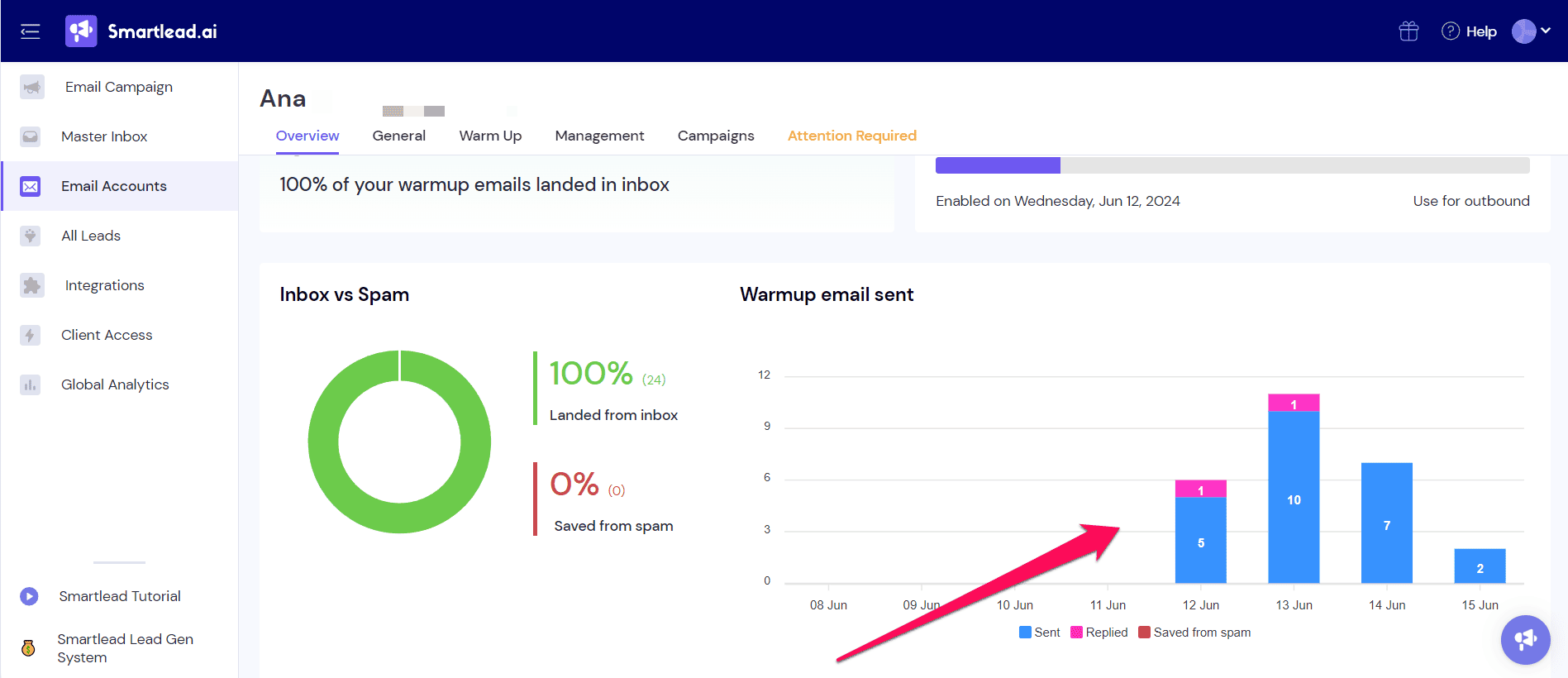
But opens alone aren’t enough. Track your reply rate—anything above 10% is a strong signal for investor lists. If you’re scraping by with 2–5% replies, something likely needs fixing in your messaging or targeting.
How to improve based on your results
If your numbers disappoint, don’t guess—break things down. Low opens often point to boring subject lines or spam filter issues. If opens are high but replies are crickets, your body copy probably isn’t hooking readers, or your ask isn’t clear. Try A/B testing different intros or value props, and watch for spikes after each change.
Keep an eye out for patterns: Do certain industries, roles, or geographies respond better? Adjust your targeting and messaging based on this data. Each campaign is a mini-experiment—the more granular you get in your analysis, the faster you’ll refine what works with your target investors.
Now that you know where your emails are landing and how investors engage, let’s get practical about templates and formats that actually start conversations.