
How to Calculate Net MRR: Formula, Examples, and Tips

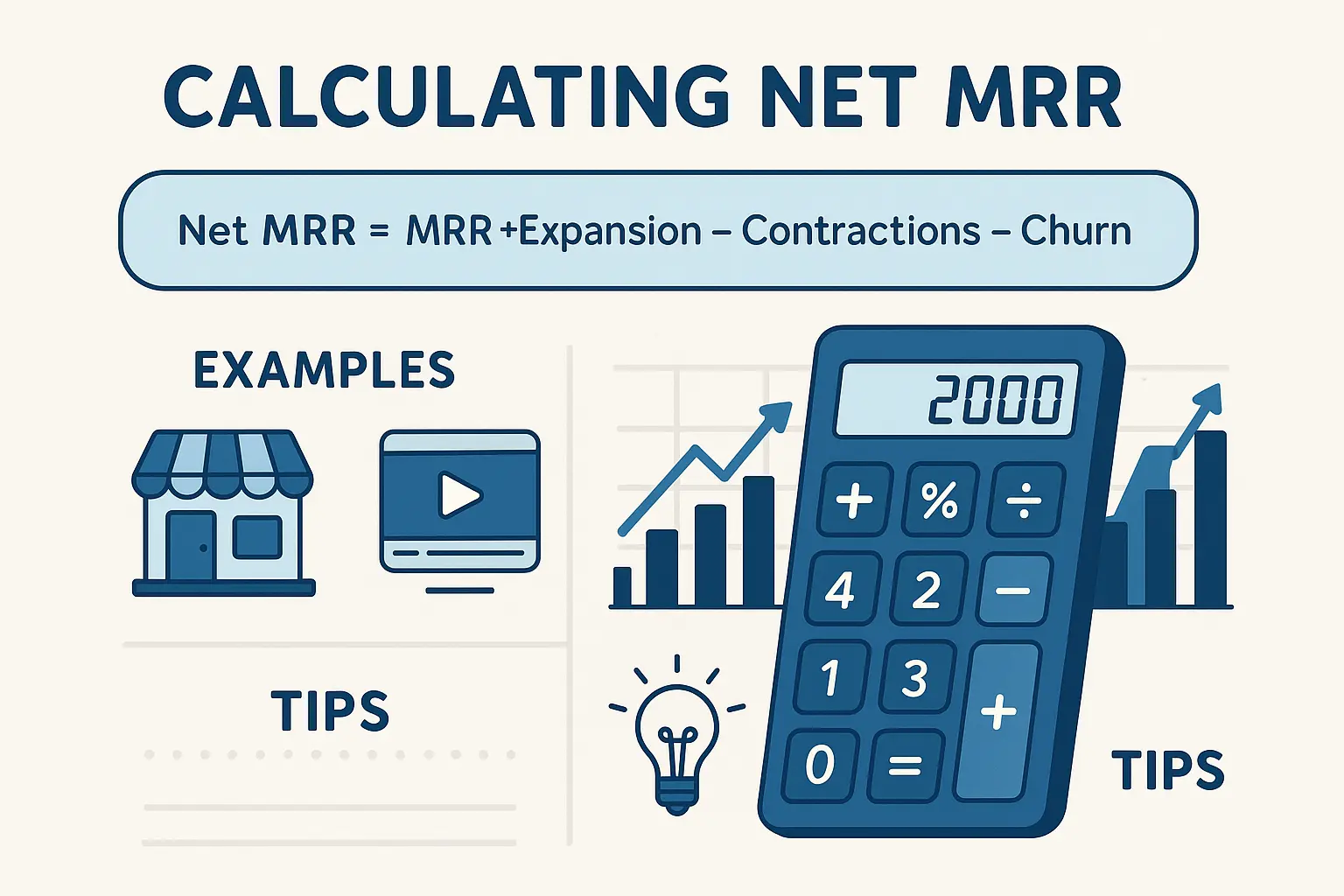
When you run a SaaS or subscription-based business, recurring revenue is the lifeblood of your growth. But looking at your monthly recurring revenue (MRR) alone doesn’t always give you the full story. That’s where Net MRR comes in—it helps you see the real impact of new sign-ups, upgrades, downgrades, and customer churn all in one number. In fact, a 2023 study found that over 60% of SaaS leaders cited Net MRR as one of their top three metrics for financial health.
Understanding how to calculate Net MRR can make the difference between guessing and knowing how your business is really doing each month. This guide will break down the formula, walk through practical examples, and share tips so you can confidently track Net MRR—and use it to spot problems or opportunities before they catch you off guard.
What Is Net MRR?
Net MRR stands for Net Monthly Recurring Revenue. It’s a single number that tells you, every month, how much revenue your business actually keeps and grows—after accounting for gains, losses, expansions, and contractions in your customer base. Instead of just looking at what you earn from subscriptions, Net MRR reveals the bigger picture: the money left after customers upgrade, downgrade, churn, or join as new users.
Net MRR vs. MRR: Key Differences
While MRR (Monthly Recurring Revenue) sums up all your recurring subscription income for a month, Net MRR paints a truer financial portrait. Traditional MRR tells you the total earned, but ignores losses from churn and reductions, or increases from customer upgrades. Net MRR balances all of these sources, subtracting lost revenue and reflecting both positive and negative customer moves.
Think of MRR as your initial paycheck, while Net MRR is the amount left after deductions, taxes, and occasional bonuses—what really ends up in your bank account by month’s end.
Why Net MRR Matters for SaaS and Subscription Businesses
SaaS and subscription companies live and die by their recurring revenue. Net MRR strips away the noise and shows real momentum. Rapid Net MRR growth signals loyal users and steady upgrades, while declines quickly reveal customer pain points or rising churn. By tracking Net MRR, operators can spot trouble before it snowballs, double down on what’s working, and predict their company’s financial trajectory with far more clarity.
The simplicity of Net MRR hides its usefulness—it’s the sharpest tool for understanding monthly progress in any business depending on subscriptions. But to use it well, you need to know what goes into that number. Next, we’ll break down all the pieces that add up to Net MRR so you can see exactly what drives changes month to month.
Essential Components of Net MRR
Net MRR is all about understanding how your recurring revenue changes each month. To get the full picture, you need to break it down into four main pieces: New MRR, Expansion MRR, Churned MRR, and Contraction MRR. Each one tells a different part of the story.
New MRR
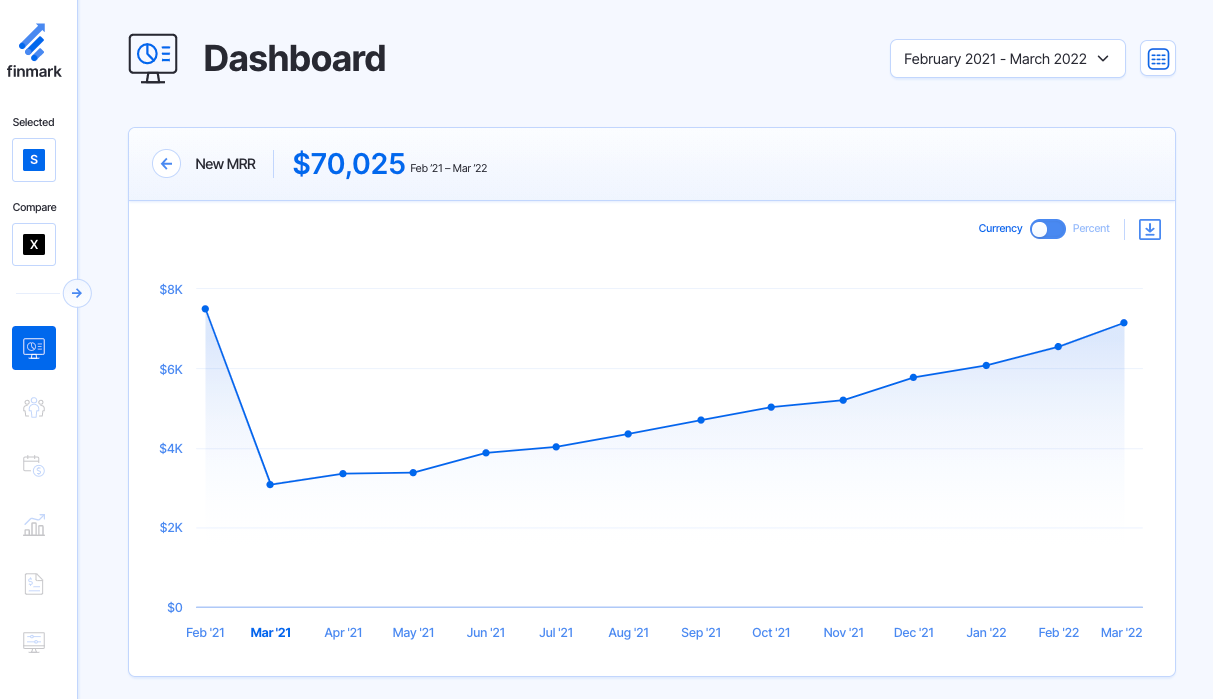
New MRR is the extra recurring revenue you collect from brand new customers this month. Think of it as fuel for your growth—every new subscription or paid sign-up bumps this number higher. Tracking New MRR helps spot which marketing or sales efforts are working best.
Expansion MRR
Expansion MRR is the added recurring revenue from current customers upgrading or buying more of your services. This could be someone moving from a basic to a premium plan, or adding extra seats to their account. It’s a clear sign your product delivers enough value that customers are willing to pay more for it.
Churned MRR
Churned MRR is the lost revenue from customers who cancel or stop their subscriptions. Even if you’re rapidly signing new users, heavy churn can wipe out growth fast. Watching this number keeps customer retention front and center.

Contraction MRR
Contraction MRR is the lost recurring revenue when existing customers reduce their spending without leaving completely. Downgrades, removing users, or switching to cheaper plans cause contraction. Keeping this number low often comes down to listening to customer pain points and adjusting your offering.
With these four numbers in hand, you’re ready to calculate what really matters: how much your recurring revenue is actually growing (or shrinking) every month. Next, let’s walk through how you can put these components together with a simple step-by-step process.
How to Calculate Net MRR Step by Step
Net MRR Formula
The core formula for Net Monthly Recurring Revenue (Net MRR) pulls together the essential pieces of your subscription revenue. Here’s the formula you’ll use:
Net MRR = New MRR + Expansion MRR – Churned MRR – Contraction MRR
Let’s break down what each part means:
Net MRR Calculation Walkthrough With Example
Let’s put this formula into action with a real-world scenario. Imagine your SaaS business sees these changes in a month:
Plugging these values into the formula:
Net MRR = $4,000 + $1,000 – $1,200 – $300 = $3,500
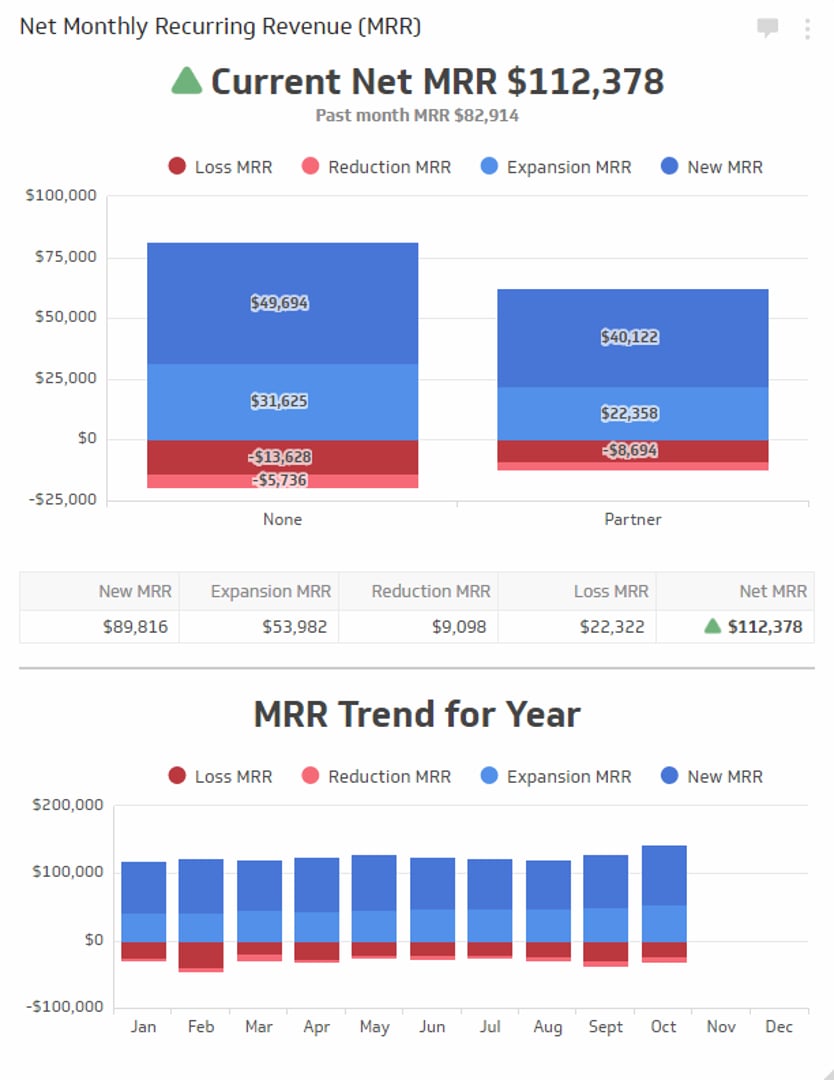
The dashboard above shows how a finance or operations team might visualize Net MRR and its subcategories, making it easier to identify which revenue streams are supporting growth and which areas need attention.
Now that you know how to run the numbers, you’re ready to put those calculations to work. Let’s look at how to use these insights to guide better decisions and spot growth opportunities in your business.
Ready to Level Up Your Revenue Tracking?
Pinpointing Net MRR isn’t just about plugging numbers into a formula—it’s about tuning into the rhythm of your business. When you know exactly how your revenue is growing, shrinking, or holding steady, you can spot opportunities and risks before they show up on your bottom line.
If you’re looking to get actionable insight—not just data—now’s the perfect moment to refine your strategy. From choosing the right tools to setting up reporting automation, taking the next step can help you uncover the stories hidden in your revenue trends.
Curious how these insights actually play out in a real-world setting? Let’s explore some hands-on ways to use Net MRR to steer your business decisions.
Applying Net MRR Insights to Your Business
Tracking Trends and Identifying Red Flags
Net MRR reveals more than just a number — it tells a story about how your revenue evolves over time. By examining monthly trends, you can spot signals that need attention. A dip in Net MRR might point to increasing churn, shrinking contracts, or a slowdown in customer upgrades. Watch for sharp drops, gradual declines, or plateaus; each pattern has a different cause. If your Net MRR is consistently growing, that’s a reassuring sign that your business is on a healthy trajectory. But even steady growth can mask underlying issues, such as customer segments with higher churn rates. Break down the data by cohort, plan type, or acquisition channel to pinpoint where growth is strongest or where churn is eating away gains.
Improving Net MRR: Practical Tactics
Boosting Net MRR usually comes down to retaining customers and expanding their value over time. Start by addressing the root causes of churn — are people leaving after the trial, or do long-term customers downgrade? Improve onboarding, check in with customers before renewal dates, and gather feedback early. For expansion, introduce add-ons, tiered plans, or upgrade incentives that appeal to satisfied users. Make contract upgrades frictionless and emphasize benefits. Transparency matters here: clear communication about billing changes and the value of each tier can reduce downgrades and cancellations. Small tweaks, like periodic customer health checks or automated renewal reminders, can help you hold onto revenue that might otherwise slip away.
By learning to read your Net MRR patterns and taking targeted action, you gain control over the direction of your monthly recurring revenue — not just watching outcomes, but actively shaping them. Next, let’s look at what healthy performance actually means, and how often you should be crunching these numbers to keep your business on course.
Net MRR Benchmarks and Frequently Asked Questions
Benchmarks for Net MRR vary by stage, industry, and business model, but some clear patterns stand out. Early-stage SaaS companies typically aim for aggressive double-digit monthly growth, often targeting 15–25% Net MRR growth month over month. Once your business matures, a steady monthly Net MRR growth rate above 5% is considered strong. Fast-growing companies consistently push for 10%+ growth, but even 3–5% can be healthy in saturated or enterprise markets. Benchmarks also shift if your business has high annual contract values, long sales cycles, or focuses on expansion revenue.
What Is a Healthy Net MRR Growth Rate?
Anything above 3% monthly is generally solid for a growing SaaS or subscription company—if you’re consistently stretching up to 10%, you’re in rare company and likely attracting strong investor attention. However, what’s considered “healthy” heavily depends on your size, maturity, and vertical. Early-stage startups are under pressure to grow quickly, while established companies focus on stability and reducing churn. If you see flat or negative growth rates, it’s time to dig into churn or contraction causes immediately.
How Often Should You Calculate Net MRR?
Best practice is to calculate Net MRR at least once a month. This gives you a reliable pulse on revenue health, helps you spot unhealthy churn or contraction trends early, and supports meaningful comparisons over time. Fast-moving startups sometimes calculate Net MRR weekly, especially after launching new pricing, rolling out expansions, or entering new markets. For executive dashboards, monthly reporting is enough in most cases.
Does Net MRR Include Discounts, Refunds, and Credits?
Yes, Net MRR should always reflect your “true” recurring revenue—after discounts, credits, and any refunded amounts have been subtracted. If you offer discounts, account upgrades or downgrades, or issue credits for service problems, these all impact your monthly recurring revenue and should be included in your Net MRR calculation. Ignoring them will leave you with an inflated picture of your business health.
Now that you know what good looks like and how to keep your numbers honest, let’s explore how Net MRR insights translate into growth opportunities and practical action for your business.