
How Many Slides Should My Pitch Deck Have?


Putting together a pitch deck can be surprisingly stressful—especially when you’re staring at your slides wondering, “Is this too short? Too long? Am I losing people before I even start?” If you’ve asked yourself, “How many slides should my pitch deck have?”, you’re not alone.
Most investors will tell you that less is more. In fact, Guy Kawasaki’s famous 10-20-30 rule suggests that the ideal pitch deck has no more than 10 slides and fits into a 20-minute presentation. But the real world isn’t always that neat. According to DocSend, the average successful pitch deck sent to investors has about 19–20 slides—and investors spend just over 3 minutes reviewing them.
Your slide count might feel like a small detail, but it can make a big difference in whether your story lands or gets lost. In this article, we’ll break down why the number of slides matters, what investors expect to see, and how to tailor your deck for any situation. That way, you’ll feel confident your pitch is focused, clear, and easy to follow—whether you’re sending it by email or presenting in person.
Why Pitch Deck Length Matters
Capturing Investor Attention
Investors have short attention spans because they see hundreds of decks every month. The first minute of your presentation sets the tone, so every slide must fight for its place. A pitch deck that respects the viewer’s time signals you respect theirs, too. Streamlined decks help you get to the heart of your business quickly—before your audience tunes out.
Avoiding Information Overload
Piling on extra slides may sound thorough, but it’s often overwhelming. When information is scattered or stretched across too many slides, your message loses punch. A deck with just the essentials forces you to prioritize what matters most and keeps your story tight. This reduces confusion and helps your main points land with clarity.
Understanding the importance of brevity sets the stage for determining just how many slides you actually need—and what today’s investors expect.
The Ideal Number of Slides for Modern Pitch Decks
What Investors Expect
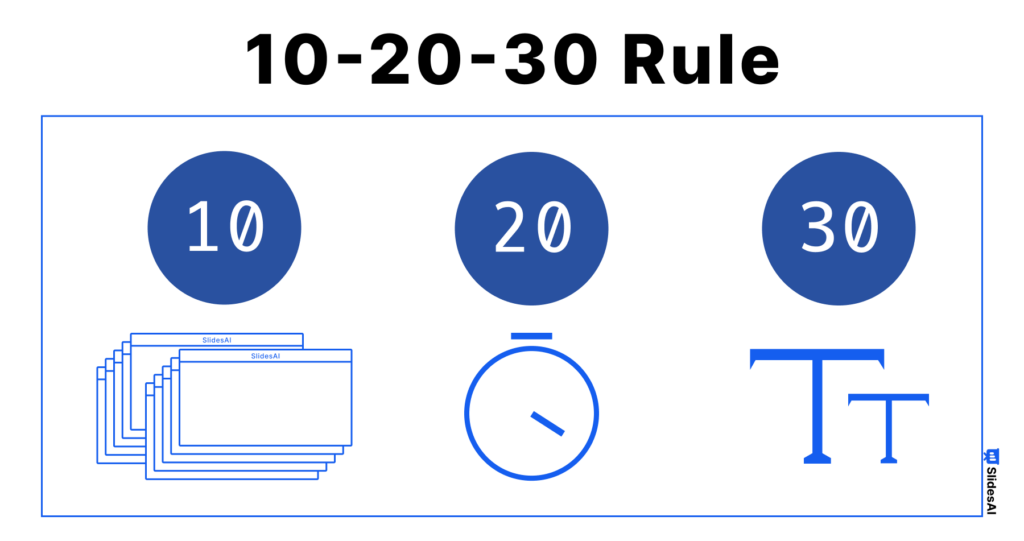
Investors see hundreds of pitch decks every year, so they’ve developed a keen sense for what works—and what doesn’t. Too many slides and you risk losing their attention; too few, and your message feels incomplete. Most venture capitalists still reference the classic “10-20-30 Rule”: ten slides, twenty minutes, and at least 30-point font for readability. This isn’t a rigid law, but it’s a useful benchmark.
Most modern pitch decks land somewhere between 10 and 15 slides. This sweet spot covers the essentials—problem, solution, market, business model, traction, team, and ask—without filler or fluff. Going beyond this range is fine if every slide adds value, but the most impressive decks often say more with less.
Short Deck vs. Full Investor Presentation
There isn’t just one type of pitch deck. The “short deck”—typically 6-8 slides—is great for email intros or meetings where you need to spark interest quickly. Once you have a roomful of engaged investors, the “full” presentation runs longer, allowing for added detail and backup data, but rarely exceeds 15-18 tightly-constructed slides.
Edits are your best friend here: prioritize clarity on every slide, trim anything repetitive, and make sure each page earns its place. A deck packed with only vital information will always stand out more than one padded with extras.
Now that you have a sense of the optimal slide count, let’s break down which specific slides actually matter—and why each one deserves its spot in your story.
Essential Slides to Include (And Why)
Vision or Purpose
Start by clarifying what you aim to achieve. Summarize your driving belief or the change you want to spark in a single impactful statement. This helps listeners immediately connect with the bigger picture.
Problem Statement
Highlight the real-world issue that your project targets. Avoid vague frustrations—quantify the pain or show why the problem matters deeply to your audience.
Your Solution
Describe how your product tackles the issue. Keep it clear, focused, and jargon-free. Show what’s unique about your approach and why it stands out.
Market Opportunity
Size matters here. Outline the number of people affected by the problem and what makes this market worth entering now. Use credible numbers, trends, or comparisons to ground your claims.

Business Model
Explain how you’ll make money. Skip the guesswork—get to the point: who pays, how much, and how often? Investors want to see a path from interest to revenue.
Traction or Validation
Share signs that people already care. Use data like sales, user numbers, partnerships, or test results. Even if you’re pre-launch, cite clear evidence that backs your concept.
Go-to-Market Plan
Lay out how you’ll reach users and scale up. Be real—focus on the first channels, partnerships, or tactics you’ll use, not generic statements about “going viral.” See our detailed guide on go-to-market strategy pitch deck for more insights.
Team
Briefly introduce the people who will make it happen. Highlight relevant experience or achievements that prove you can pull this off. Show why your team is the right one for this challenge.
Financials
Share current figures and realistic projections for the next few years. Investors expect to see your costs, expected revenue, and any runway you currently have. Stay anchored in facts rather than wishful thinking. For templates and deeper understanding, explore our posts on startup financial projections template and startup runway.
The Ask
Conclude with what you need—funding, partnerships, expertise. Specify the amount, how it’ll be used, and the impact it will create. Clarity here shows you have a plan, not just a dream.
Once you know these core slides, tailoring your deck’s length for different scenarios becomes much easier, allowing you to adapt to each conversation without losing your key story.
Tailoring Your Pitch Deck Slide Count for Different Situations
Teaser Decks vs. Full Decks
Not every pitch deck needs the same level of detail. If you’re sending a teaser deck to spark initial interest, stick to six or seven slides. Focus on your vision, the problem, your solution, and traction—leave deeper details for a live conversation. A full deck, for an investor meeting or due diligence, typically runs 10-15 slides and covers your business model, team, financials, and growth plan. The goal: give just enough to prompt questions and a follow-up call.
In-Person vs. Email Pitch
In-person presentations allow for elaboration and storytelling, so you can work with around 10-12 concise slides that support your narrative. When pitching over email, your deck must be self-explanatory. This might mean adding a few extra slides—not to overwhelm, but to fill in gaps your voice would normally cover. Short bullet points, clear headers, and helpful visuals can keep things digestible.
Adjusting for Round and Audience
Not all investors want the same thing. For a seed round, lean decks with high-level strategy and a big vision usually suffice. Series A or later, investors expect more on traction, detailed go-to-market plans, and financial forecasts, so a slightly longer deck makes sense. If your audience is more technical or comes from a specific industry, tailor a couple slides to highlight details that will stand out to them. In every situation, remember it’s about clarity—not slide count for its own sake.
Now that you know how to flex your pitch deck to fit different situations, let’s look at how some of the world’s most successful startups structured their slide counts when raising capital.
Thank you for reading EasyVC’s blog!
Are you looking for investors for your startup?
Try EasyVC for free and automate your investor outreach through portfolio founders!
Still debating whether your pitch deck needs that extra slide? Sometimes, finding the perfect balance is easier said than done. If you’re looking for clarity on what to include and what to leave on the cutting room floor, you’re not alone—and you don’t have to figure it out on your own.
Ready to see how successful founders structure their presentations? Let’s dive into real pitch deck examples, so you can visualize what works (and what doesn’t) at every funding stage.
[CTA-HOOK]Sample Slide Counts from Real-World Pitch Decks
Seed Stage Examples
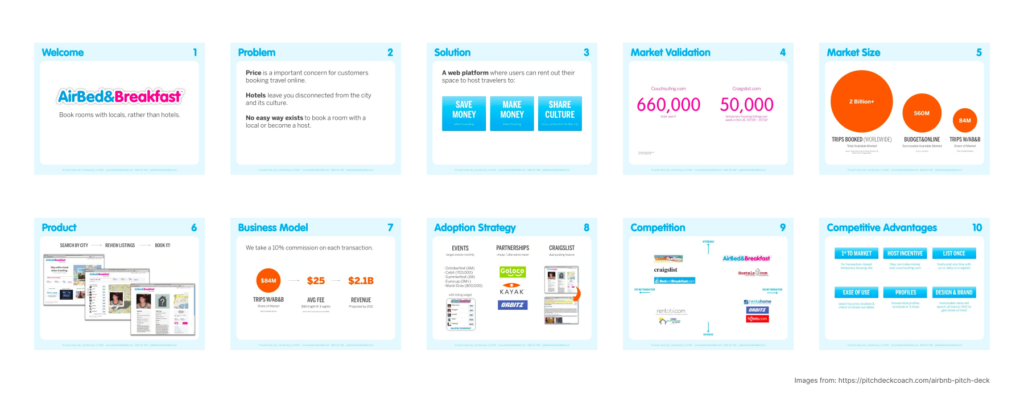
Many standout startups launched with pitch decks that pack a punch in fewer than 15 slides. Take Airbnb, for instance: their original seed deck contained just 12 slides and made every word count – from the problem to the opportunity and the ask. Brevity, clarity, and visual storytelling are the stars in these early decks.
Series A and Beyond
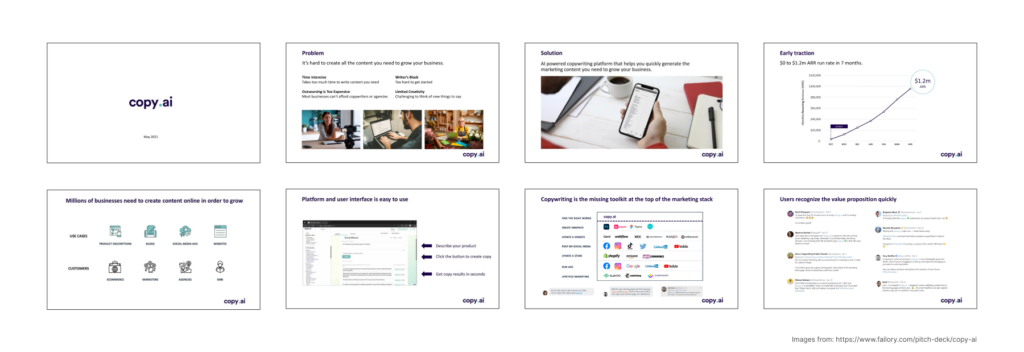
As startups grow and raise larger rounds, decks often expand to between 15 and 20 slides. For example, Copy.ai’s Series A pitch deck clocks in at 19 slides, covering in more detail their team, traction, monetization strategy, and product roadmap—without losing focus. This expanded format helps answer investor questions up front, streamline due diligence, and build excitement at scale.
Whether you’re crafting a deck for your first funding round or a major raise, learning from real examples can help define what “just enough” looks like. Next, let’s zero in on how to nail the ideal slide count for your exact fundraising situation.
Quick Tips for the Perfect Pitch Deck Length
When to Cut or Combine Slides
If you’re squeezing multiple ideas onto a single slide, it’s probably time to separate them. On the other hand, if a slide just repeats points from others, combine them to avoid redundancy. Every slide should have a purpose—review each one and ask, “Does this tell the investor something new or essential?”
Design and Storytelling for Clarity
Keep words sparse and visuals sharp. Investors should grasp your key messages in seconds, not minutes. Use clear headers, charts, and relevant images to guide their eye. A logical flow matters more than perfect symmetry: if your story builds excitement and answers key questions, the exact slide count becomes less important.
Final Slide Checklist
Before you hit send or step on stage, scan your deck for “slide clutter.” Remove slides that don’t advance your narrative, and check that every slide supports your core message. Ensure all necessary topics—from your vision to your ask—are present without filler content.
With these tips, you’ll feel confident that your pitch deck is both tight and engaging. Now, let’s see how founders bring this balance to life through actual examples from startup pitch decks.
Frequently Asked Questions About Pitch Deck Slides
Can I Have More Than 10 Slides?
Absolutely. Ten slides is a popular rule of thumb, but it’s more of a guideline than a law. What matters most is keeping your message clear and focused. If your story needs two extra slides to land a point—or you need a few less to get straight to the heart of your business—adjust accordingly. Investors care more about clarity than counting slides.
What Slides Can I Skip?
Some sections, like detailed financials or a lengthy team bio, can be shortened or reserved for follow-up if they’re not relevant at this stage. For very early pitches, especially teasers, you might skip deep financial projections or complex go-to-market plans. Just make sure you don’t leave out anything essential, like the problem, solution, or your ask.
How Long Should Each Slide Take to Present?
A helpful rule is to spend about one to two minutes per slide. If you fly through them in twenty seconds each, you’re probably missing details. If you linger four or five minutes on every slide, you risk losing your audience’s attention. Practice your delivery so your pitch flows naturally and stays within the time you’re allotted.
Now that the most common slide count questions are answered, let’s dive into real-world examples to see how effective decks are built from the ground up.