
Growing Tech Hubs in the United States: Where Innovation is Thriving

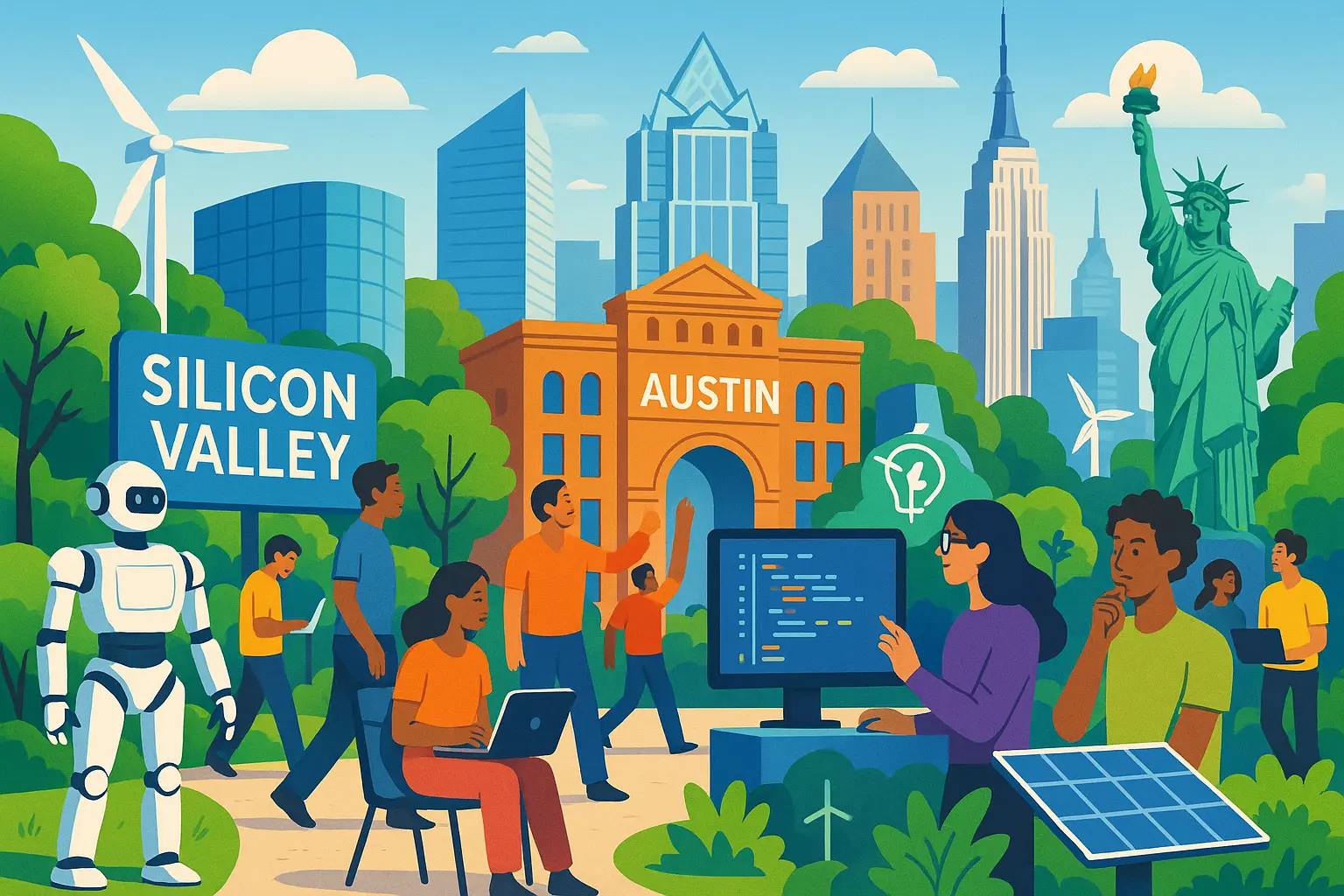
Technology is no longer just a story about Silicon Valley. Over the past decade, a remarkable shift has taken place—cities from Austin to Raleigh and Miami have transformed into thriving centers of innovation. Between 2015 and 2022, more than 75% of U.S. tech job growth happened outside the traditional powerhouses of San Francisco, New York, Seattle, and Boston.1 This means that today, you’re just as likely to find groundbreaking startups and ambitious engineers in the heart of Texas or the foothills of Colorado as you are in California.
What’s behind this surge? Lower costs of living, access to top universities, remote work flexibility, and a hunger for new opportunities are drawing companies and talent into cities once overlooked. These growing tech hubs aren’t just trying to copy Silicon Valley either. Each is building its own identity—whether that’s in AI, fintech, biotech, or cybersecurity.
If you’re curious about where technology is heading next, or wondering whether it’s time to look beyond the usual suspects, exploring America’s rising tech cities is a story worth following.
1 Brookings Institution, “The Rise of the Rest: Tech jobs spreading beyond a few metro areas” (2023)What Defines a Tech Hub in 2024?
Core Features of Modern Tech Hubs
A true tech hub in 2024 isn’t just a collection of startups squeezed into a downtown corridor. It’s a living network where software engineers, product designers, data scientists, and founders cross paths in coworking spaces, coffee shops, and meetups. These cities have tech jobs woven into their DNA, from healthcare analytics to advanced robotics—beyond just the latest app.

Modern tech hubs pair a supportive startup infrastructure—think accelerators, local investor networks, and abundant mentorship—with access to top talent from nearby universities. Collaboration is visible in distinctive neighborhood labs and on public transit routes dotted with people in hoodies and business casual alike, all talking code and opportunity.
How New Hubs Are Different from Silicon Valley
Unlike the monolithic scene dominated by big Bay Area venture capital, today’s emerging tech cities shape their own identities. They blend a spirit of experimentation with resilience learned from downturns. Local culture matters: some cities nurture biotech or AI, while others become havens for fintech or advanced manufacturing. Young founders opt in willingly, drawn by work-life balance and a sense that their success feeds the local community, not just distant investors.
Tech hubs in 2024 aren’t cookie-cutter copies of Silicon Valley—they’re ecosystems, each evolving at its own pace. Understanding their unique flavors helps explain why certain cities have become magnets for innovation in everything from green energy to digital health.
With a clearer sense of what separates emerging tech centers from old-guard giants and copycats, let’s dive into the longstanding powerhouses that set the bar for ambition and global reach in American technology.
The Established Giants: Traditional U.S. Tech Cities
San Francisco Bay Area
Silicon Valley remains the heartbeat of American technology. Headquarters of legacy titans like Apple, Google, and Meta anchor a dense network of startups chasing the next breakthrough. The region’s web of venture capital firms and elite universities—Stanford and UC Berkeley especially—fuels this relentless cycle of invention. Tech campuses sprawl south from San Francisco, drawing ambitious founders and coders from around the world, even as staggering costs test the area’s lure.
New York City
The city that never sleeps flexes far beyond finance and fashion. “Silicon Alley” stretches from Flatiron to Brooklyn, bustling with innovation in fintech, media, and healthtech. New York’s melting pot energy blends talent with an endless stream of capital. Major names like Google and Meta call Manhattan home, but the real electricity hums among nimble startups and tech meetups layered between historic brownstones and skyscrapers.
Seattle
Home turf for Amazon and Microsoft, Seattle’s skyline tells the story of bold digital ambition. Tech here doesn’t just build new apps—it reimagines cloud computing, e-commerce, and artificial intelligence at scale. Steeped in engineering DNA and access to outdoor escapes, Seattle pulls software talent from around the globe. A thriving support scene—startups, VC, and research labs—keeps new ventures sprouting, even as the city sizes up its next chapter beyond Big Tech.
Boston
Boston’s tech roots dig deep into its world-class universities and storied research culture. Startups draw inspiration—and recruits—from MIT and Harvard, while Route 128’s digital corridor remains fertile ground for robotics, biotech, and cybersecurity. The city fosters a blend of hardware bravado and software savvy, with innovation often springing from interdisciplinary collisions rather than pure code.
Yet as these giants continue to dominate headlines, a new generation of tech ecosystems is gathering momentum in cities you might not expect. Let’s explore where the freshest ideas—and future tech titans—are taking root across the country.
Fastest Growing Tech Hubs Across the U.S.
Austin, TX: Startups and Scaleups
Austin thrives as America’s buzzing tech playground. It’s a magnet for software developers, creative founders, and big-name companies moving south for lower overhead and no state income tax. Each spring, SXSW amplifies the city’s startup energy, and the tech scene spans from AI to electric vehicles. Austin blends youthful culture with rapid company growth, making it a preferred landing spot for innovators.
Phoenix, AZ: Southwest Surge
Once known for real estate and retirement, Phoenix is now luring tech firms, semiconductor giants, and solar startups. Affordable housing and sunshine draw young talent, while new data centers and manufacturing hubs power the local economy. The tech sector here is rising faster than the desert sun.
Raleigh & Durham, NC: Research Triangle Momentum
The Research Triangle, anchored by Duke, UNC, and NC State, nurtures biotech breakthroughs, software ventures, and cutting-edge research labs. With vibrant university pipelines and steady venture funding, Raleigh and Durham consistently punch above their weight in innovation.
Miami, FL: Fintech Meets Lifestyle
Miami’s tech scene isn’t all palm trees and nightlife—it’s now a go-to destination for fintech, health tech, and crypto entrepreneurs. City leaders court founders with incentives and a vision for building the “Capital of Capital.” The influx of remote workers and major investment is transforming Miami’s skyline and workforce.
Denver & Boulder, CO: Tech in the Rockies
Energized by outdoor culture and a collaborative spirit, Denver and Boulder stand out for cybersecurity, aerospace, and green tech. The proximity to top research institutions attracts scientists and engineers, while startups enjoy a genuine sense of community and room to grow.
Atlanta, GA: Diversity and Growth
Atlanta is rewriting its tech narrative with booming fintech, cybersecurity, and software startups—many founded by underrepresented entrepreneurs. Talent flows from world-renowned colleges, and Fortune 500 firms are thriving beside fast-growing disruptors. Atlanta’s entrepreneurial spirit is palpable on every block.
Salt Lake City & Provo, UT: Silicon Slopes
Utah’s Silicon Slopes are dotted with high-growth SaaS companies, VC-backed upstarts, and industry giants like Adobe and Qualtrics. Salt Lake City and Provo strike a balance between mountain living and a fast-paced business scene. Young professionals are moving in for opportunity and adventure. Check out our list of Utah venture capital firms to learn about funding sources supporting startups in this region.
Pittsburgh, PA: Robotics and AI Revitalization
Pittsburgh’s steel mills gave way to robotics labs, self-driving car test tracks, and artificial intelligence startups. Carnegie Mellon’s influence can be felt everywhere, and global investors see Pittsburgh as the perfect place to build intelligent machines.
Philadelphia, PA: East Coast R&D
Philadelphia blends Ivy League brainpower—courtesy of Penn, Drexel, and Temple—with growing investments in healthcare tech, life sciences, and enterprise software. Anchored by historic neighborhoods and a diverse talent pool, it’s redefining itself as a hotbed for collaborative research and next-gen startups.
What’s driving the boom in these vibrant tech hubs? To understand the forces fueling their rise, let’s look closer at the factors shaping this wave of innovation across America.
Why Are These Cities Booming?
Talent Pipelines and Top Universities
These cities aren’t thriving just by chance—their momentum often begins with local universities and colleges that pour out graduates ready to take on the challenges of tech. Think of Austin’s University of Texas, MIT’s influence near Boston, or the University of Pittsburgh’s role in robotics. These schools aren’t just producing coders and engineers; they’re fueling a steady stream of ambitious founders, inventive researchers, and startup teams, making the city’s talent magnet even stronger.
Funding, VCs, and Startup Support
Easy access to venture capital and accelerator programs transforms a good idea into a funded, growing company. In places like Miami and Atlanta, you’ll find a steady influx of investment, local angel networks, and incubators offering more than just money—they connect founders with crucial mentors and partners. These support systems turn lone entrepreneurs into teams with real market traction, helping fresh tech scenes flourish far from the shadows of Silicon Valley.
Quality of Life and Cost of Living
Many up-and-coming tech hubs lure top talent with the promise of more affordable lives than coastal giants can offer. You can swap a tiny apartment for a spacious home, enjoy vibrant neighborhoods, and still land a serious role in next-generation tech. From hiking in the Rockies near Denver to the arts scenes in Raleigh, lifestyle perks pair with job opportunities, inspiring professionals to plant long-term roots.
As these American cities attract dreamers and builders with unique combinations of resources and culture, they’re also charting new paths and facing fresh challenges. Understanding what lies ahead helps reveal the full story of tech’s transformation across the country.
Opportunities and Challenges for Emerging Tech Communities
Attracting and Retaining Talent
New tech cities draw skilled workers with fresh jobs, lower living costs, and a chance to shape something from the ground up. Yet, competing with established metros for experienced engineers and product leaders is a constant tug-of-war. Many young professionals see hot markets like Austin or Raleigh as stepping stones to big-name brands elsewhere. To keep talent rooted, up-and-coming hubs must offer more than a paycheck—think diverse culture, high-growth projects, and clear pathways for career advancement.
Building Ecosystems Beyond Software
Software drives much of America’s tech boom, but real staying power depends on broader foundations. Collaborative spaces, accessible venture capital, hardware labs, strong university ties, and support for industries such as biotech, cybersecurity, and clean energy—all of these elements are critical. Too often, eager cities focus on quick wins, skipping the patient work of building a holistic ecosystem. Without this, innovation risks stalling once the initial surge cools or the next economic headwind hits.
Remote Work’s Impact on Growth
Remote work has rewritten the map for tech communities, allowing cities far from the coasts to attract talent with lifestyle perks, not just big salaries. This democratizes opportunity, but it also introduces new hurdles. Startups in emerging hubs may find their workforces scattered across time zones, complicating team cohesion, mentorship, and local community bonds. On the flip side, remote work can make a city’s talent pool feel borderless—if local leaders embrace flexibility and foster connections, both online and off.
As these tech hubs navigate rapid growth and evolving work styles, the question becomes how they can nurture resilience and sustain momentum—an exploration that continues in the next chapter.
Your Role in Shaping Tomorrow’s Tech Landscape
Are you drawn to the idea of an emerging tech city—one where creative people and ambitious startups are rewriting the rules? Whether you’re a founder, student, or job-seeker, these rapidly evolving tech centers offer the chance to do more than just watch innovation happen. They need bold thinkers, daring builders, and curious collaborators willing to dive in and contribute their unique spark.
Curious which city matches your energy and ambitions? Or how your expertise could be the missing piece a thriving ecosystem needs? If you’re ready for growth, now is the moment to explore new networks, discover fresh opportunities, and maybe even help define the future of tech in America.
It’s not just about finding a job or launching another app—it’s about being part of a movement. Let’s dive into what the future landscape of tech hubs could look like over the coming decade, and how you might play a role in shaping that story.
The Future of Tech Hubs in America
Regional Specializations: Biotech, AI, Cybersecurity, and More
America’s tech landscape is fragmenting into a mosaic of regional strengths. Boston and Cambridge keep fueling biotech leaps, drawing talent straight from world-renowned labs and feeding off a steady pulse of venture capital. Meanwhile, Austin’s combination of creative culture and growing defense industry links has spurred a surge in cybersecurity startups.
Silicon Valley’s buzz about AI is now echoed in places like Pittsburgh and Raleigh-Durham, where robotics and machine learning research spill out from local universities into ambitious startups. Even Miami is carving its own lane, blending fintech with crypto expertise and attracting a new wave of digital-first firms. Each region now plays to its strengths, moving away from a one-size-fits-all tech identity.
Predictions for the Next Decade
The race isn’t just for talent or capital; it’s for uniqueness. The next decade will likely see specialized ecosystems, with regions doubling down on what they do best—whether quantum computing in Colorado, healthtech in Philadelphia, or logistics automation in Atlanta. Data privacy and responsible AI will drive both policy and product, pushing local governments and entrepreneurs into closer collaboration than ever before.
Climate tech is poised to reshape cities across the Midwest, as startups tackle challenges tied to energy and agriculture. Remote work and immersive technology will change how people experience these hubs—cities don’t just need offices, but vibrant communities that spark both creativity and inclusion. For startups focusing on climate tech, finding the right backers is key, and understanding environmental venture capital can be a game changer.
This evolution means opportunities for newcomers and seasoned professionals alike. As the next generation chooses where to plant roots, they’ll find environments as diverse and dynamic as the innovations they hope to create.
Next, we’ll look at how individuals can ride these new waves—whether landing careers at fast-growing companies, or launching fresh startups amidst the energy of America’s emerging tech destinations.
How to Break Into These Rising Tech Hubs
Career Prospects and Hot Skills
Landing a role in a quickly-growing tech city is all about matching your strengths with the region’s unique needs. Austin buzzes with demand for software engineers and cloud architects thanks to its booming SaaS and gaming startups. Miami’s fintech surge is hungry for cybersecurity analysts and mobile app developers who can build secure, user-friendly services. Raleigh and Durham value research scientists and data analysts who thrive in biotech and medtech environments, while Denver’s green economy leans hard on IoT engineers and renewable energy specialists. Learn what’s hot locally—then tailor your learning. Many companies now prize practical experience over diplomas, so get hands-on with open-source projects or contribute to hackathons tied to the city you’re eyeing.
Soft skills are equally crucial. Startups in these markets want people who can pivot fast, wear multiple hats, and communicate across small teams. Networking is rarely superficial in up-and-coming hubs; building real relationships at local meetups or tech events can land you insider leads before roles even hit the job boards.
How Startups Can Find Support
Launching a venture in an emerging tech hub means tapping into a fresh—yet rapidly maturing—support network. Most cities spotlight public-private partnerships, university incubators, and coworking spaces that offer real funding guidance, not just desk space. Check out local pitch competitions (like those connected to Atlanta’s Tech Village or Pittsburgh Innovation District) and sector-specific accelerators that put you in front of investors who fund local grit, not just polished decks.
Mentorship is easy to come by if you’re proactive. Smaller communities mean seasoned founders are more accessible and willing to connect over coffee or at grassroots demo days. Plug into Slack groups, city startup newsletters, and local angel networks—the best support often comes from other founders facing the same hurdles. Moving quickly and asking for help gets you noticed.
It’s no longer about waiting for one “right” opportunity. Those who dive into these rising tech hubs with a clear sense of the landscape can shape their own role as the city grows around them.
As these communities evolve, so do the challenges and opportunities they must tackle. Next, we’ll explore how these tech hubs are navigating hurdles on their path to long-term success.