
Growing Tech Hubs in LATAM: Where Innovation Is Booming


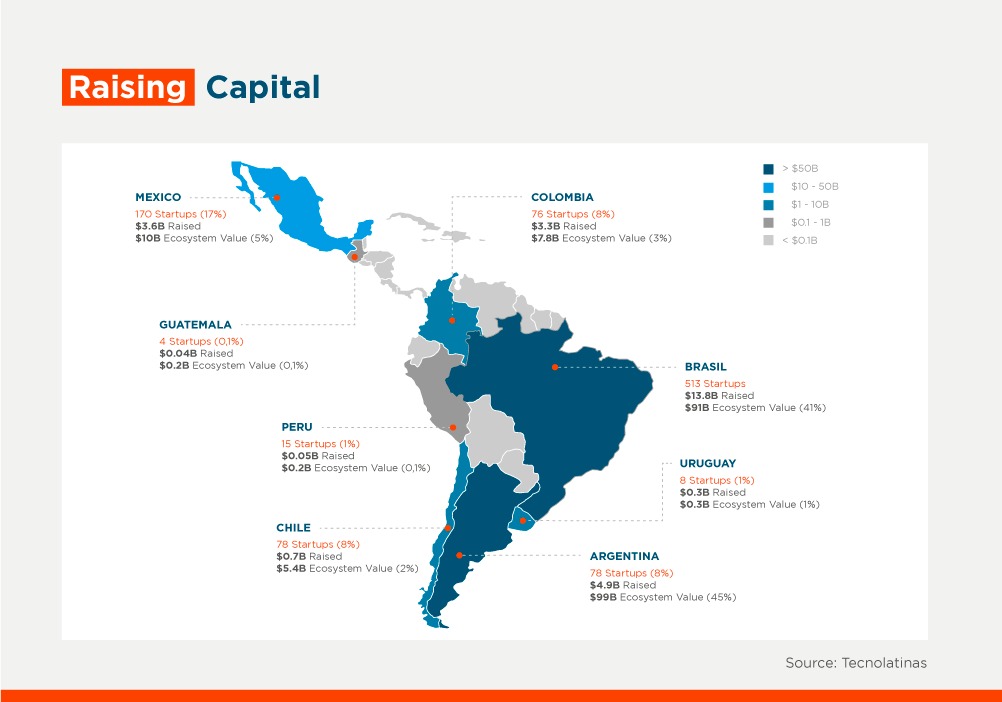
Not long ago, the idea of major tech innovation happening outside Silicon Valley seemed far-fetched. But today, Latin America is proving that big things can happen in unexpected places. Over the last decade, the region has seen a tenfold increase in venture capital investment — jumping from $1 billion in 2012 to a record $15 billion in 2021. Cities like São Paulo, Mexico City, and Bogotá are bustling with startups, and tech communities are flourishing everywhere from Buenos Aires to Medellín.
What’s fueling this boom? A mix of young talent, growing access to funding, and the spread of remote work. As more entrepreneurs call Latin America home, they’re building new companies that help people bank, work, and learn in ways that were hard to imagine just a few years ago. In this article, we’ll dive into the fastest-growing tech hubs in LATAM, explore what makes them thrive, and look ahead at how they’re shaping the tech world’s future.
Why Tech Hubs Are Taking Off Across Latin America
Global investment shifts and local startup energy
In the past decade, global investors have turned their attention southward. Latin America, once overlooked for Silicon Valley or European capitals, is now drawing ever-larger checks from venture capital firms. The data tells the story:  Funding in the region leaped in 2021, more than doubling the volume of previous years. This wave of investment isn’t just blind optimism; it’s powered by a new generation of founders who understand local challenges and can build nimble, high-growth startups designed for the region’s realities.
Startups like Nubank and Rappi, born from a blend of local hustle and global ambition, have proven that Latin American markets are fertile ground for tech innovation. Their success has inspired a surge of entrepreneurial activity, creating a vibrant feedback loop where investors search for the “next big thing” and founders rush to build it.
Key drivers: talent pool, cost, remote work
Why are these healthy ecosystems emerging now? One factor is a young, digitally native workforce hungry for opportunity and unafraid to take risks. Skilled developers, designers, and marketers are eager to work on world-class products—often at a cost that makes sense for both local startups and international collaborators.
Remote work has erased borders. A team in Buenos Aires can build for Miami or Madrid just as easily as for their own city. This global shift has helped Latin American tech scenes attract clients, talent, and funding from every corner of the map. And as more students pursue software engineering or enroll in coding bootcamps, the region’s talent pool only gets deeper, making it ever-more attractive for startups to set up shop.
As tech momentum surges, it’s not just one country or city stealing the spotlight. Across the continent, vibrant communities are forming and breakout cities are quickly earning their reputations as innovation powerhouses. Let’s explore where this growth is happening fastest—and what makes each hub unique.
Breakout Cities: The Fastest-Growing Tech Hubs in LATAM
Mexico City, Guadalajara & Monterrey (Mexico)
Mexico City is the region’s juggernaut: here, young founders meet at buzzing coworking spaces, and investors compete to fund the next Rappi or Clip. The city’s enormous market size and talent pool keep venture capital flowing. Meanwhile, Guadalajara shines with its cluster of electronics and software firms, earning it the nickname “Mexico’s Silicon Valley.” Monterrey, powered by its industrial heritage, is quietly attracting both fintech disruptors and manufacturing tech startups.
São Paulo, Belo Horizonte & Florianópolis (Brazil)
São Paulo pulses with energy and code, now home to unicorns like Nubank and QuintoAndar. The city’s density of tech meetups is unmatched. Belo Horizonte, in contrast, turns university talent into product—often in deep tech and health. Farther south, Florianópolis, wrapped in beaches, draws software engineers seeking a quieter pace and quality of life, but who still crave startup life.
Buenos Aires & Córdoba (Argentina)
Buenos Aires has a knack for producing resilient entrepreneurs. Even economic instability hasn’t kept down its flow of new SaaS and e-commerce ventures. Córdoba builds on its engineering pedigree, investing in accelerators and strong university programs to feed its startup pipeline.
Bogotá & Medellín (Colombia)
Bogotá’s population density and young workforce provide endless sandbox opportunities for fintech and app developers. Medellín’s transformation from industrial city to “Innovation District” has sparked global interest, winning it the nickname “City of Eternal Spring—of startups.”
Santiago (Chile), Lima (Peru), Montevideo (Uruguay)
Santiago leverages pro-entrepreneur government programs and a steady influx of capital, creating fertile ground for regional expansion. Lima’s startups thrive thanks to a youthful tech community and growing access to funding. Montevideo’s stable economy and educated workforce have made Uruguay a safe bet for launching cross-border software ventures.
Emerging hubs: San José (Costa Rica) & Santo Domingo (Dominican Republic)
San José leads Central America’s rise, mixing skilled bilingual talent with a history of multinational tech investment. Santo Domingo is just starting to flash on investor radar, as local startups tap into Caribbean and US markets with agility.
These cities aren’t just producing apps—they’re laying the groundwork for the next generation of Latin American innovation. Up next: what’s fueling these urban tech surges and how local ecosystems set themselves apart.
What Makes These Hubs Thrive? Talent, Funding, and Local Initiatives
Top universities and coding bootcamps
A steady pipeline of software engineers, data scientists, and entrepreneurs flows from institutions like the Universidad Nacional Autónoma de México, Tecnológico de Monterrey, and the University of São Paulo. But the real change-makers aren’t just universities—coding bootcamps and tech academies have popped up everywhere, empowering anyone with ambition to switch careers or level up their skills in a matter of months.
Access to Latin American and global investors
Venture capital is no longer just the domain of Silicon Valley or Western Europe. Investors from the U.S., Asia, and Europe have set their sights south, lured by fast-growing markets and fresh business models. Local VC firms are more active than ever, nurturing early-stage startups and helping Latin American founders go from bootstrap to unicorn.
Government and city-led innovation programs
From tax incentives for tech companies in Mexico, to accelerator programs backed by Brazil’s government, and Medellín’s transformation from manufacturing stronghold to digital powerhouse, local initiatives clear bureaucratic hurdles and offer real-world incentives for entrepreneurs. Public-private partnerships and city-led coworking spaces plug ambitious founders into the networks, mentors, and resources they need to move quickly.
It’s this blend of top-tier talent, eager investors, and proactive policies that sets these cities apart. Curious about which places are leading the charge? Let’s take a tour of the most dynamic tech hubs in Latin America making headlines today.
Thank you for reading EasyVC’s blog!
Are you looking for investors for your startup?
Try EasyVC for free and automate your investor outreach through portfolio founders!
Thinking about tapping into Latin America’s tech surge? Whether you’re scouting for emerging markets, excited by disruptive ideas, or hungry to plug into a thriving digital landscape, now is the time to put LATAM on your radar. The region is bustling with collaboration, unique local solutions, and the sort of raw technical talent that can spark the next big breakthrough.
Get ready to explore which sectors are booming the fastest and what innovations are propelling these hubs—there’s much more than just buzzwords and unicorns waiting beyond the headlines.
[CTA-HOOK]Key Areas of Growth: Fintech, AI, SaaS, and Beyond
Fintech dominance and digital banking
In Latin America’s tech landscape, fintech towers above other sectors. Startups such as Nubank, Mercado Pago, and Ualá are seizing on decades of financial exclusion and distrust in traditional banks. These companies offer intuitive apps, instant accounts, and credit access to millions unbanked. In countries like Brazil and Mexico, even small businesses now process payments and settle invoices on smartphones, sidestepping bureaucracy and complicated paperwork. The region’s appetite for digital wallets, instant transfers, and cryptocurrency has created new standards for convenience, making Latin America ground zero for the global fintech revolution.
Expanding AI, blockchain, and SaaS ecosystems
While fintech grabs headlines, local entrepreneurs are moving fast into emerging territories. Argentine and Brazilian startups apply machine learning to streamline logistics, recommend entertainment, or fight fraud. Uruguayan companies develop blockchain platforms powering logistics and cross-border payments. The SaaS boom means Latin American developers now build tools used by e-commerce retailers, HR teams, and real estate agencies from Texas to Tierra del Fuego.
This rush toward new tech frontiers isn’t happening in isolation. Startups often cross-pollinate, mixing financial tech with AI or building SaaS products for neighbors just a border away. This variety—and a willingness to experiment with what works elsewhere—keeps the region’s innovation engine firing on all cylinders.
But rapid growth brings tough questions. How will Latin American founders navigate shifting regulations, global competition, and a rapidly changing workforce? That’s what we’ll explore next as we dive deeper into the region’s unique hurdles and emerging opportunities.
Challenges and Opportunities Facing LATAM’s Tech Ecosystem
Bridging skill gaps and talent retention
Across Latin America, rapid tech sector growth often outpaces the supply of specialized talent. While universities and coding bootcamps graduate millions each year, deep experience in emerging technologies—like AI or cybersecurity—remains hard to find. Brain drain is another concern: Top engineers and data scientists frequently relocate to North America or Europe in pursuit of higher salaries or cutting-edge projects. Retaining talent requires more than competitive pay. Startups and big players alike are betting on flexible work arrangements, access to mentorship, and investing in upskilling so local teams don’t just fill roles but drive innovation.
Access to capital and scaling beyond local markets
Fundraising looks different in Lima or Medellín than in Silicon Valley. While venture investment surged during 2021, many startups still struggle to secure growth funding once they move past the seed stage. Access to global investors is improving, but regulatory quirks and limited exits create hurdles. At the same time, Latin America’s tech players see opportunities to build platforms that reach Spanish and Portuguese-speaking populations across the region—scaling locally first, then eyeing Europe or the United States. Those who navigate policy complexity and cross-border customer acquisition stand to define Latin America’s next unicorns.
Despite these hurdles, barriers are being chipped away by new initiatives and bold founders. What’s truly exciting: LATAM’s tech hubs now drive innovation not only in finance or software, but in areas that will shape the future of work, investments, and global supply chains. Let’s explore where this momentum is headed next.
The Road Ahead: How LATAM Tech Hubs Will Shape the Future
International partnerships and remote work trends
Latin America’s tech hubs aren’t keeping their innovation locked within national borders. Recent years have seen startups from Mexico to Argentina forging alliances with European, Asian, and North American companies. This cross-pollination lets regional teams collaborate on projects for everything from fintech platforms to biotech breakthroughs. As remote work becomes the norm, LATAM’s talent is connecting with the world without visa headaches, plugging into distributed teams and global contracts. The result? Engineers, designers, and founders from Bogotá to São Paulo are shaping products used in New York or Berlin, while working from home or dynamic local coworking spaces.
Impact on global innovation supply chain
Tech companies in Latin America are now essential links in the world’s innovation chain. Businesses worldwide are turning to LATAM teams for agile software development, creative digital solutions, and fresh approaches to user experience. Larger startups are opening satellite offices in places like Guadalajara, Medellín, and Florianópolis, weaving local insights and cultural adaptability directly into their offerings. This diversification doesn’t just fill in skill gaps for overseas partners: it creates a ripple effect, fostering stronger local industries and nurturing the next generation of homegrown founders.
As these hubs ramp up partnerships and carve out influence across borders, a new chapter of technological growth is underway, one that will reshape work, collaboration, and impact in ways we’ve only begun to see. Next, let’s dig into the sectors and technologies where this momentum is already propelling Latin America ahead of the curve.