
General Partner vs Limited Partner: Key Differences Explained

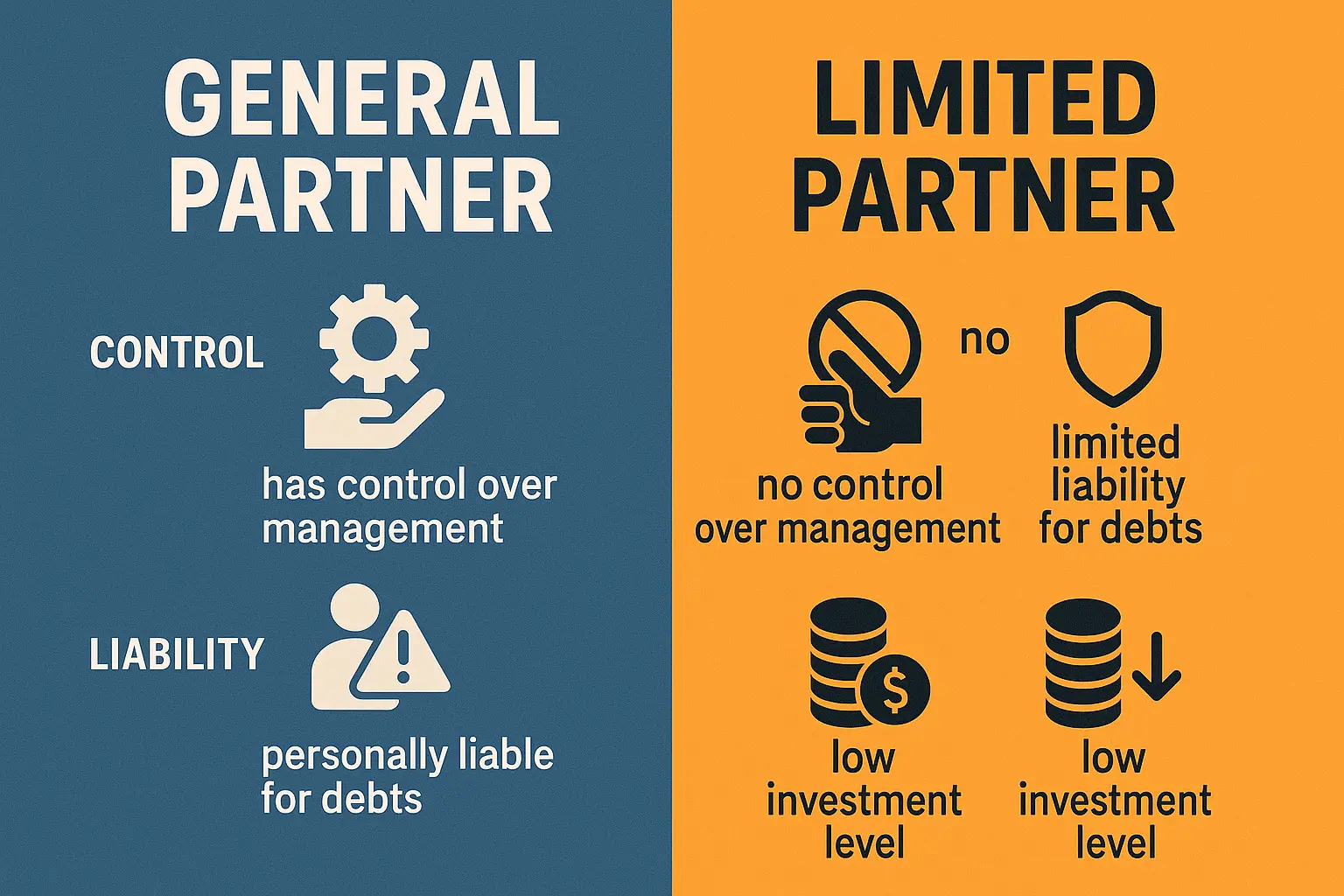
Choosing the right kind of partnership can make or break a business or investment venture. Whether you’re thinking about starting a company, investing in real estate, or joining a private equity fund, the difference between a general partner (GP) and a limited partner (LP) matters more than you might think. In fact, according to the National Venture Capital Association, over 70% of venture capital funds are structured with both general and limited partners, each with very different roles and responsibilities.
But what really sets these two types of partners apart? And why does it matter for your financial safety, decision-making power, or even how much involvement you want day to day? In this article, we’ll break down what it means to be a general partner or a limited partner, where the risks and rewards fall, and how you can decide which role (if any) is right for you.
What Is a General Partner?
Role and Authority
A general partner sits in the driver’s seat of a partnership. This person (or group) makes key business decisions, manages daily activities, and represents the partnership to the outside world. Unlike limited partners, general partners can sign contracts, hire staff, and make calls on investments or expenditures without seeking approval from the rest. Their word carries legal weight, shaping the direction and success of the venture.
Liability and Exposure
What sets a general partner apart is their personal liability. If debts stack up or things go south legally, the general partner’s own assets—house, savings, even personal property—are on the line for the partnership’s obligations. There’s no safety net, and the risk goes far beyond the business itself. This risk is one reason general partners require trust in their partners and a strong grasp on the business’s finances and operations.
Typical Responsibilities
Day-to-day, a general partner juggles a variety of responsibilities. They oversee budgeting and payroll, negotiate deals, approve significant purchases, and ensure legal compliance. Their work may include managing bank accounts, liaising with vendors, or handling tough conversations with clients or regulators. In many partnerships, the general partner is the face of the business, often investing sweat equity as well as funds.
While general partners are hands-on and exposed to more risk, other partners take on a very different role. Next, let’s look at how their counterparts participate and protect themselves within the same partnership structure.
What Is a Limited Partner?
Role and Limitations
A limited partner, often called an “LP,” is an investor in a partnership who supplies capital to the business but does not get involved in day-to-day operations. They have no authority to make management decisions and are specifically prohibited from overseeing or controlling the business. Their primary role is financial support; the limited part refers to both their involvement and their liability.
Level of Involvement
Most limited partners stay entirely in the background. They review periodic reports, and their input is typically restricted to major decisions, like selling the business or bringing in a new partner. The boundaries are clear: as long as an LP doesn’t participate in management, they maintain their limited status. Crossing into daily operations risks losing their legal protections.
Financial Risk
One of the biggest attractions of being a limited partner is capped liability. An LP’s financial risk is limited to the amount they’ve invested. If the partnership takes a hit or faces lawsuits, LPs are not personally responsible beyond what they’ve already contributed—unlike general partners, who can be held personally liable for debts and obligations.
Understanding a limited partner’s position creates a foundation for comparing how general partners and limited partners differ in authority, exposure, and rewards.
Direct Comparison: General Partner vs Limited Partner
Decision Making Power
General partners call the shots. They actively manage the partnership, sign agreements, and steer the business’s day-to-day activities. Limited partners, on the other hand, stay hands-off—offering advice if asked, but with no say over operations or strategy.
Financial and Legal Liability
Liability is where the contrast is starkest. General partners are on the hook for everything, even debts beyond what they’ve invested. Their personal assets are at risk if things go south. Limited partners only risk losing their original investment. If the partnership owes money, creditors can’t go after a limited partner’s personal property.
Profit Participation and Exposure
Both general and limited partners share in the partnership’s profits. However, the split isn’t always even—it depends on what’s laid out in the partnership agreement. General partners often get a larger cut because they take on more responsibility and risk. Limited partners get rewarded for their capital, but their upside is usually capped by their passive role.
This side-by-side look sets the stage for understanding how to apply these roles in real partnerships, whether you’re launching a fund, backing a startup, or investing in real estate.
Thank you for reading EasyVC’s blog!
Are you looking for investors for your startup?
Try EasyVC for free and automate your investor outreach through portfolio founders!
When to Choose a General or Limited Partnership
Business and Investment Scenarios
The decision to form a general or limited partnership often hinges on your appetite for risk and the role you want to play in the enterprise. If you’re aiming to actively steer the direction of the business and have a hand in day-to-day decisions, a general partnership puts you at the control panel—but your personal assets are also on the line for the partnership’s debts.
On the flip side, a limited partnership suits those who want to invest but prefer to stay out of management. Limited partners provide capital and receive a share of profits, but they don’t make business decisions or face personal liability beyond their investment. This setup is common in real estate and private equity funds, where silent investors fuel growth without handling the operational details.
Regulatory and Tax Impacts
Tax considerations and state regulations add another layer to your choice. General partners report their share of business income on their own tax returns, and the partnership itself typically avoids corporate-level taxes. Limited partnerships are taxed in a similar way, but the managing general partners may also be responsible for self-employment taxes, while limited partners are often exempt unless they’re involved in running the business.
Legal paperwork varies, too—general partnerships can be as simple as a handshake agreement, but limited partnerships require formal filing and more detailed recordkeeping. Some states have stricter compliance requirements for limited partnerships, which can affect startup costs and ongoing administration.
Figuring out which partnership structure fits your needs comes down to your involvement level, willingness to take on liability, and tolerance for paperwork. But even after choosing the type, what you agree on with your partners—and put in writing—will shape the way your partnership operates. Up next, let’s explore what every strong partnership agreement should include to protect everyone’s interests.
What to Include in a Partnership Agreement
Essential Clauses
Every partnership agreement should lay down clear ground rules on how decisions are made, profits are shared, and each partner’s role is defined. Spell out the capital contribution for each partner, the process for adding or removing partners, and specifics about how disagreements will be resolved. Specify the distribution of profits and losses, voting rights, and how day-to-day management duties are allocated between general and limited partners. Additionally, don’t forget to include terms governing the dissolution of the partnership if things don’t work out.
Protecting Each Partner’s Interests
A well-drafted agreement sets boundaries and expectations from the beginning. Confidentiality clauses, non-compete provisions, and clear liability limits for limited partners all help prevent unpleasant surprises down the line. Assigning precise responsibilities to each partner avoids confusion and shields everyone’s investments—especially for those who don’t want to be exposed to the partnership’s liabilities. Consider including buyout options and procedures for transferring partnership interests, so every partner understands their options in case circumstances change.
Taking these steps in your agreement means both general and limited partners know exactly what to expect and how to protect themselves—something that becomes even more important when looking at real cases of partnership in action.
Real-World Examples
Startup Investment Fund
Consider a venture capital fund. The fund is structured with one or more general partners (GPs) who source deals, perform due diligence, negotiate terms, and steer day-to-day investment decisions. These GPs may be experienced investors or former entrepreneurs. The limited partners (LPs) typically include university endowments, pension funds, or high-net-worth individuals. LPs provide most of the capital and expect a return, but they aren’t involved in selecting startups or running the fund’s operations. If a startup fails, GPs can be held personally liable beyond their investment, while LPs can only lose what they put in.
Real Estate Partnership
Picture a commercial real estate development. The general partner is usually a property developer or management company. They scout locations, manage construction, handle tenant relationships, and deal with loan providers. Limited partners could be private investors, family offices, or institutions looking for passive income from property rentals. A limited partner’s risk ends with their investment—if the project goes upside down, the GP handles lawsuits and debts, while LPs won’t lose personal assets.

By examining these real-world setups, the distinctions between general partners and limited partners become clear—especially when money and responsibility are on the line. Next, let’s explore the questions people ask most as they weigh these partnership roles in practice.
Frequently Asked Questions
Can you be both a general and limited partner?
Yes, a person or entity can technically be both a general and limited partner in the same partnership. This dual role is sometimes used to maximize control while also enjoying some liability protection. However, acting as both changes your legal responsibilities and exposure, so it’s wise to consult with a legal expert to fully understand the implications and structure it correctly.
What happens if a limited partner becomes actively involved?
If a limited partner steps beyond a passive role and starts participating in management, they risk losing their limited liability protection. In other words, courts may treat them as a general partner for liability purposes, making them personally responsible for the partnership’s debts and obligations. It’s important to clearly define and stick to the boundaries of involvement as set out in the partnership agreement.
Now that your key questions are answered, let’s dig into how differences between these roles influence the choice of partnership structures in different business scenarios.