
Fundraising Levers: Managing Supply and Demand in Your Startup Fundraise

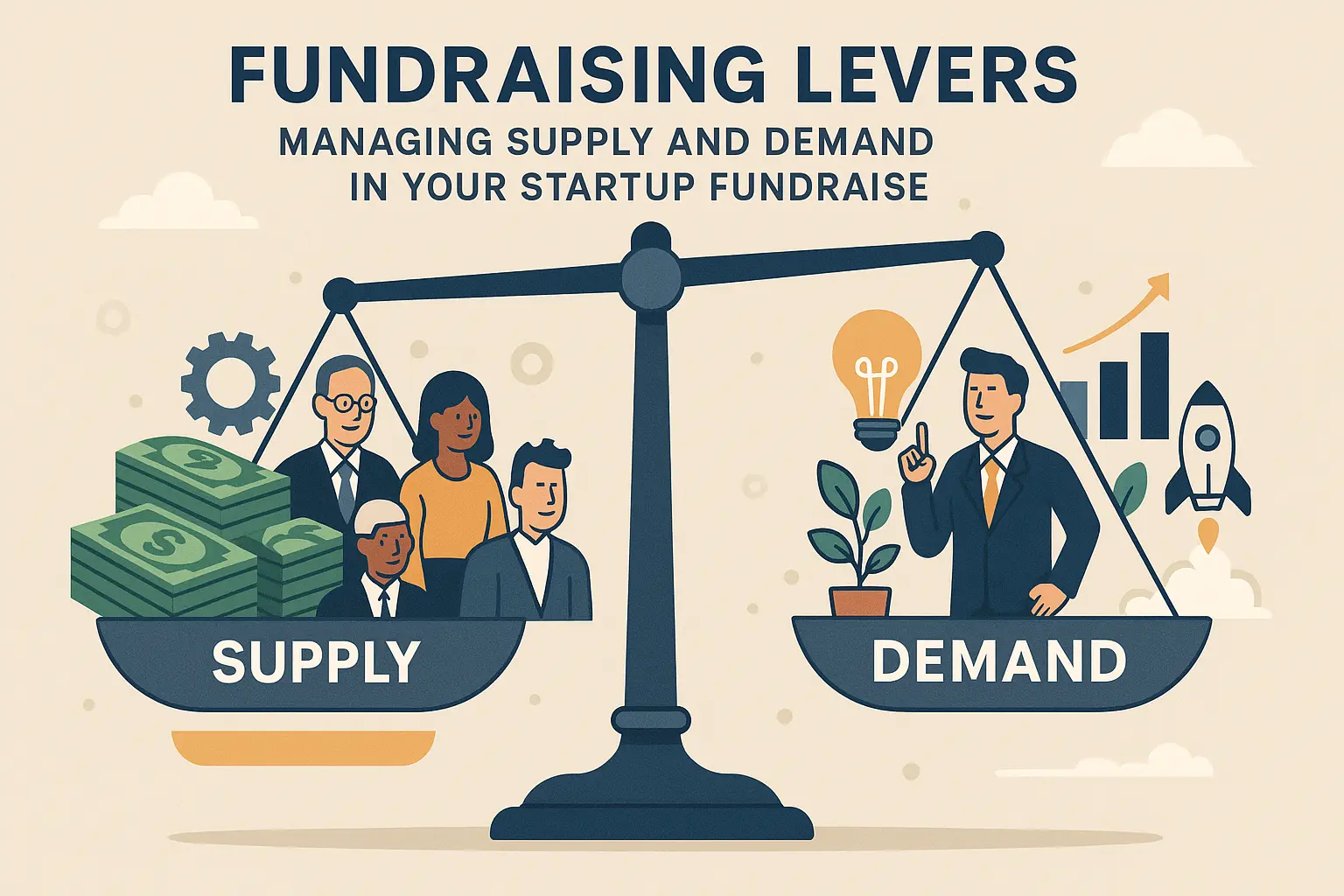
Fundraising is one of the trickiest parts of building a startup. It can often feel like a balancing act, turning knobs and pulling levers but never quite sure if you’ve got it right. The reality is that raising capital is a lot like managing a marketplace: it’s about balancing what you’re offering (supply) with what investors want (demand). According to PitchBook, less than 15% of seed-stage startups go on to close a Series A round—so getting these dynamics right early on really matters.
If you’re a founder, you probably already know that the cards are rarely stacked in your favor. But by understanding how to manage the levers of supply and demand in your fundraise—from setting terms to managing investor interest—you can put yourself in a stronger position. This article walks through the simple but powerful ways you can shape these forces. Whether you’re just starting or gearing up for your next round, thinking more intentionally about fundraising levers can make all the difference.
Understanding Supply and Demand in Startup Fundraising
What Supply and Demand Mean for Early-Stage Startups
Fundraising for a startup may feel unpredictable, but beneath the surface, it follows the logic of supply and demand. “Supply” is the investment opportunity you’re putting out into the world—a unique combination of your product, team, and potential returns. “Demand” is the collective interest and appetite from investors for those opportunities. For early-stage startups, understanding these dynamics isn’t academic—it might determine if your round closes ahead of schedule, or drags on much longer than you planned.
Investor Demand: Sizing up the Market for Your Round
Not every startup round faces the same market. Investor appetite ebbs and flows based on macro trends, sector focus, and even recent exits that catch headlines. The more investors see your space as hot, the more aggressive their interest will be—and the more choices you’ll have. On the other hand, if the sector is cold or capital is tight, you’ll find yourself needing to work harder for every meeting. Recognizing the temperature of investor sentiment helps you set expectations and strategize your approach.
Startup Supply: How Much Equity and Opportunity Are On Offer
On your side, supply isn’t just dollars—it’s the mix of equity, terms, and “room” you make available for potential investors. Are you offering a rare slot in a high-growth company, or a larger allocation with lighter terms? The way you package and present your supply shapes not just how much you raise, but who wants to join your round. Deliberate choices here attract the right investors and maximize momentum.
Mastering these fundamentals gives you a sharper edge as you adjust the levers that shape your fundraising process. Up next, we’ll break down the specific mechanics that can tilt the playing field in your favor.
Core Fundraising Levers Every Startup Should Know
Terms That Attract (or Deter) Investors
Every investor studies the fine print before writing a check. Simple agreements, clean cap tables, and transparent rights stand out. On the flip side, overly complex deal structures, hidden terms, and tricky preferences drive people away. Convertible notes can speed things up, but muddled clauses slow everyone down. Think of your terms as an open invitation—make sure they’re clear, fair, and tempting.
How Traction Influences Both Sides of the Table
Nothing tips the scales more quickly than genuine traction. Recurring revenue, organic growth, and real user engagement give your pitch substance. Investors talk to each other; word of measurable progress spreads. On your side, solid numbers give you room to negotiate, filter who you engage, and fend off lowball terms. Traction is more than a slide—it’s bargaining power you can wield with confidence.
Pitch Scarcity: Creating Real FOMO, Not Fake Urgency
No one wants to be the last investor at the table. Share your progress, mention current interest or soft commitments, but don’t fabricate a bidding war. Be straightforward about where you are in your process. Done well, scarcity flows naturally from genuine demand—not from artificial deadlines or empty threats. Careful scarcity piques interest and can change how quickly investors respond, but it should always be authentic and rooted in real momentum.
Mastering these levers sets the foundation, but timing and market dynamics play a hidden role in how much leverage you’ll wield. Let’s look at how picking your moment can tip the odds in your favor.
Strategic Timing: When to Raise Capital to Maximize Leverage
Seasonality and Investor Mindset
Timing isn’t just about your own needs—it’s also about catching investors in the right mood. The venture calendar is famously lumpy. Interest slows after major holidays and during the summer, when partners are out of office, calls get shorter, and term sheets take longer. Fundraising in December or August? Expect responses to trickle in. January, right after funds refresh their allocation and decision-makers return, can see a spike in activity and openness to deals. Late spring brings a last burst before the summer lull. Tuning your outreach to these patterns puts your deck in front of decision-makers when they’re most receptive, giving you an edge when it matters most.
Milestone-Based Fundraising Windows
Nothing boosts your leverage like hitting a milestone just before you raise. Launching with real user growth, signing a big customer, or shipping a game-changing feature makes your story far more than a pitch—it’s a demonstration. Aligning your fundraise with tangible achievements narrows the risk for investors and lets you justify a firmer valuation. Instead of raising because you’re running out of runway, raise because you’ve unlocked new value and can command better terms. Consider setting tight timelines around these moments to create an organic sense of momentum, rather than trying to manufacture urgency later.
Strategic fundraising isn’t just about when money’s needed—it’s about timing your ask to amplify negotiation power. Up next, we’ll dig deeper into the nitty-gritty of making those numbers work in your favor.
Thank you for reading EasyVC’s blog!
Are you looking for investors for your startup?
Try EasyVC for free and automate your investor outreach through portolio founders!
Balancing Supply: Ownership, Valuation, and Dilution Decisions
How Much to Raise for Realistic Runways
The right fundraising amount is not just a function of your burn rate. Over-raising can dilute your ownership, while under-raising leaves you at risk of running out of cash before hitting key milestones. Start by plotting out essential targets—product, hiring, go-to-market—and add ample buffer for the unpredictable. Founders often fixate on headline numbers, but smart operators reverse-engineer from operational plans. Remember: your round size isn’t just about survival, it’s about maximizing your company’s velocity and optionality until your next inflection point.
Valuation Psychology: Too High, Too Low, Just Right
Valuation is as much about market perception as it is about spreadsheets. Set your price too high, and savvy investors balk—worrying about future down rounds or unrealistic expectations. Too low, and you leave money on the table while signaling a lack of confidence. The “just right” valuation is credible yet ambitious, aligned with your current market traction and the appetite of your investor audience. A helpful lens is the leverage ratio—the balance between how much you give up, and how much you get in resources and support.

This formula above, borrowed from financial leverage, underlines the psychological tug-of-war in fundraising: keeping enough skin in the game, while attracting enough capital to meaningfully grow.
Choosing Instruments: SAFEs, Notes, Equity, or Something Custom
The paperwork you choose isn’t just a matter of legal preference—it impacts your future cap table, investor expectations, and even your next fundraising round. SAFEs are quick, founder-friendly, and standard in early stages. Convertible notes add debt-like features, such as maturity dates. Priced equity rounds anchor your valuation and set precedent for future fundraising. Sometimes, creative hybrids make sense. Always consider how each instrument will affect not just today’s ownership, but the downstream dilution when you grow and fundraise again.
Getting these levers right doesn’t end when you close your round. How you manage them shapes the conversations, connections, and momentum you build for the next phase—where demand becomes the driver, and the stakes only get higher.
Demand Management: Building, Sustaining, and Converting Investor Interest
Relationship Building—Long Before You Need Money
Fundraising rarely starts with a pitch deck—it begins with small, genuine conversations long before you’re asking anyone to sign a term sheet. Investors are far more likely to get excited about founders who keep them in the loop, ask for advice (not just capital), and offer regular updates on progress. Meet them at events, follow up after panels, and share honest stories about your vision, even if you’re years away from a raise. By nurturing these early relationships, you plant seeds for real conviction later on, creating champions who already understand your journey when round discussions finally begin.
Sequencing Outreach and Managing the Funnel
Reaching out to dozens of investors at once can sour your process—word travels quickly if conversations stall. Instead, structure your outreach like a funnel: start with investors most likely to give valuable feedback or offer warm introductions, and learn from their responses. Save your top targets for when your pitch is sharpest and your story refined. Spreadsheet your funnel and track where each investor is in their decision process. This coordination helps you spot bottlenecks, maintain pacing, and control the narrative across the market, preventing mixed signals or lost momentum.
Momentum Signals: Announcements, Traction, and Social Proof
Nothing tilts investor demand in your favor like visible traction and credible endorsements. Share progress updates on well-known milestones—closed customer contracts, product launches, or notable hires—across your networks. Subtle nods from respected insiders, such as a new angel or a well-placed mentor sharing your update, amplify the sense that your raise has heat. Rather than boasting, let the numbers and reputable voices do the talking. Move fast during key announcements, syncing outreach and closing windows so prospective investors feel your round is moving, not stalling.
Mastering these demand tactics puts you in control of your fundraising narrative, but it’s just as easy to lose that edge. Before you make your next move, it’s essential to understand the common pitfalls that can erode your leverage and damage investor relationships.
Mistakes to Avoid When Tweaking Your Fundraising Levers
Burning Bridges with Oversubscription or Over-Demand
It might feel tempting to tout an oversubscribed round — but if you crank up the demand lever without real intent or clarity, you can easily alienate investors. Overplaying the “too hot to touch” narrative sets up false scarcity, leaving passed-over investors slighted and unlikely to re-engage next time. Worse, if an advertised waitlist turns out to be more bark than bite, word spreads that your company loves smoke and mirrors more than clarity.
The same applies if you try to corral too many checks at once, only to find you mismanaged allocation and disappointed those who thought they were in. There’s a fine line between creating enthusiasm and sparking resentment: Cross it, and you’ll find doors quietly closing on your future rounds.
Losing Leverage with Premature Valuation Disclosures
Sharing your valuation before building trust or demonstrating progress can backfire, boxing you into defensive conversations. Once your opening number is out there, it anchors every negotiation, and any future uptick requires substantial justification. If your startup’s trajectory shifts mid-process—new traction, a strategic hire, a changed market—the number you threw out last week suddenly becomes a liability, not a negotiation tool.
Nothing erodes your leverage faster than early-stage valuations being gossiped about among investors before you’ve set the narrative. Be deliberate: Control when you reveal numbers, and only do so once the stage is set in your favor.
Being mindful of these pitfalls helps you maintain credibility and agility as you fine-tune your fundraising approach. Next, let’s distill what truly matters into a checklist for startup founders committed to mastering the fundraising game.
Key Takeaways: Fine-Tuning Fundraising Supply and Demand for Your Startup
Controlling the levers of supply and demand in a fundraise is as much art as it is strategy. In today’s competitive landscape, knowing exactly when to adjust what you offer—and how you court investor interest—directly impacts your runway and momentum.
Start with clarity: define how much capital you truly need, and be prepared to back up your figures with real milestones and progress. Avoid shaping your fundraising “ask” around vague growth forecasts. Instead, tie your targets to clear uses of funds and strategic milestones. This signals both confidence and discipline.
On the demand side, cultivate genuine relationships. Don’t wait for a funding drought to reach out; instead, focus on building investor rapport far before you open a round. Authentic interest takes root over months—not days. Paired with honest storytelling about traction, this approach creates natural momentum.
Remember: scarcity only works if it’s real. Artificially restricting access, overhyping interest, or rushing timelines backfires quickly. Your supply—including valuation, terms, and type of instrument—should be straightforward, fair, and transparent.
Fine-tuning your fundraising means not just pulling one lever, but knowing how much pressure to apply—and when. Balance, timing, and trust form the bedrock of a successful round. Master these, and you’re miles ahead of most founders.
With these principles in your toolbelt, it’s time to look closer at mistakes founders often make while tuning their approach—so you can navigate your next raise without costly missteps.