
Formal Interview Process for Startups: Step-by-Step

Hiring your first team members as a startup can be both exciting and overwhelming. It’s tempting to keep things casual—after all, startups are known for being quick and flexible. But skipping a clear interview process can be risky: according to a 2022 survey by LinkedIn, nearly 89% of hiring failures are linked to poor interview procedures and unclear role expectations.
Building a more structured interview process isn’t about bureaucracy; it’s about giving yourself the best shot at finding people who truly fit—both in terms of skills and culture. In this guide, we’ll break down each step of a formal interview process designed specifically for startups, helping you avoid common missteps and make confident hiring decisions as you grow.
Why Startups Need a Structured Interview Process
Mistakes of Informal Hiring
When startups urgently need talent, interviews can become casual chats rather than intentional evaluations. This relaxed approach often relies on first impressions or gut feelings. Without a clear structure, founders risk picking someone who seems friendly, but may not have the necessary technical skills or mindset for a fast-moving team. Later, this can lead to disappointing hires, missed deadlines, or team culture clashes.
Benefits of Consistency
A structured process draws a roadmap for every interview, making sure each candidate is evaluated using the same criteria. This consistency weeds out personal biases and spotlights true abilities. More importantly, it helps founders compare candidates reliably and spot patterns in skills, attitude, or fit. Structured interviews build confidence not just in your hiring decisions, but also signal to candidates that you run a thoughtful, respectful operation—an important message for attracting top performers.
If you apply deliberate structure to your interviews, every next step—starting from identifying what you really need in your next hire—becomes simpler and more effective. Let’s explore how to lay the groundwork so your interview process sets you up for growth.
Laying the Groundwork: Defining Your Requirements
Clarifying the Role and Key Skills
Start by getting specific about what you actually need. What problems should this person solve in the next six months? Are you seeking a developer fluent in a particular tech stack, or does your tiny team need someone who wears many hats? If you’re not clear here, you’ll waste time—and worse, you’ll hire someone who doesn’t fit.
List the real challenges ahead and distill the “must-have” skills from the “nice-to-haves.” For example, if launching your product quickly is do-or-die, prioritize candidates used to rapid iteration over those experienced in slow-moving organizations.

Aligning with Company Culture
Skills are just half the equation. Early hires shape your company’s rhythm and vibe from day one. Think about your pace, how your team communicates, and the sort of values you want to reinforce—then look for someone who clicks. Can they embrace chaos? Do they challenge ideas without ego? Do they actually like getting their hands dirty?
Write out the key traits that amplify your team’s energy. That clarity will help you attract candidates who thrive in your environment—and gently turn away those better suited for something else.
You now have a clear picture of whom you need to find. Next, let’s shape a hiring approach that fits your startup’s tempo, balancing speed with the care your early team deserves.
Designing the Interview Flow for Startups
Crafting a Simple Interview Structure
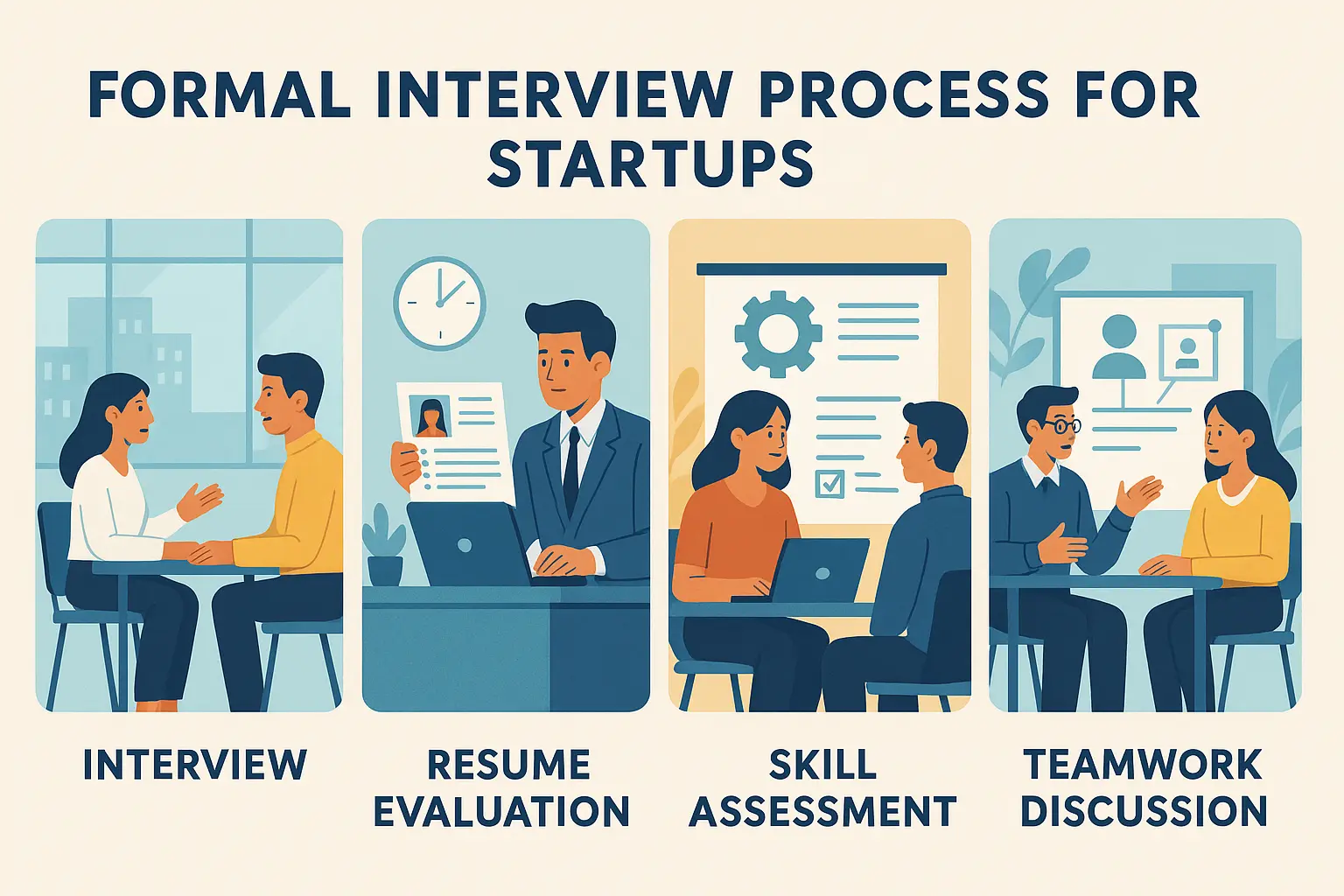
Startups thrive on focus and clarity—your interview process should reflect that. Skip tangled layers and aim for a straightforward path candidates can navigate. For most roles, two to four steps suffice: a quick introduction, an in-depth conversation, a relevant skills check, and a final team discussion. This kind of structure respects everyone’s time while giving you distinct signals at each stage.
Balancing Speed and Thoroughness
Moving too slowly means losing top talent to faster competitors; moving too quickly risks costly hiring mistakes. Blend urgency with intention by scheduling interviews close together and keeping communication snappy. Prepare your questions and exercises ahead of time, so every step confirms something meaningful—fit, skill, or motivation.

The right flow is a scaffold, not a script—it creates room for conversation, small pivots, and genuine connection. With the flow mapped, it’s time to break down what happens at each interview step and what signals to look for in your candidates.
Interview Stages Every Startup Should Use
Resume Screening: What to Look For
The first step is straightforward but vital: sift through applications for substance over style. Focus on accomplishments, relevant side projects, and clear learning growth. For early-stage roles, a history of problem-solving or self-driven projects often tells you more than big-brand names.
Initial Phone or Video Chat
This is your reality check. Have an honest conversation to assess communication skills, motivation, and basic alignment with your mission. Keep it natural; a conversational tone eases nerves and gives real answers.
Technical or Task-Based Assessment
Skip one-size-fits-all whiteboard quizzes. Give candidates a short, practical assignment—like a code sample, product critique, or sales pitch—that mirrors actual tasks of the role. This weeds out guesswork and highlights authentic capability.

Team Interviews and Fit Evaluation
Invite candidates to speak with a few relevant team members. Observe how they approach discussion and consider their collaboration style. A seamless interaction now can spare you headaches when the pressure is on later.
Final Decision and Feedback
Share impressions swiftly and honestly within your team. Once a decision is made, inform the candidate—regardless of outcome. Candid, respectful feedback will strengthen your employer brand, even for those you don’t hire.
With the core interview stages set, it’s time to sharpen the techniques that make each conversation count—especially if you’re new to running interviews. Let’s explore practical tips that founders can use to get the most out of every candidate interaction.
Tips for First-Time Founders Interviewing Candidates
Avoiding Bias
Everyone carries assumptions, even when we wish we didn’t. Before each interview, jot down what you need to learn about the candidate and focus only on those criteria. If your team is small, try not to rely on one person’s gut feeling. Compare notes with someone else, even if they’re not directly involved. This reduces the chances of hiring someone just because they remind you of yourself—or of rejecting someone for the same reason.
Communicating Clearly With Candidates
Most candidates want to know two things: what you expect from them and what the process will be like. Skip vague promises or busywork. Share the interview format and who they’ll meet. It’s better to admit when you don’t have all the answers than to fill the silence. At a startup, honesty about timelines, role evolution, and even uncertainty is appreciated—and it builds trust from day one.
Useful Interview Questions for Startups
Skip questions that could be pulled from a list online. Aim for the kind of conversation that reveals how a candidate thinks and solves problems. Try asking about a time they built or improved something with limited resources, or how they’d handle a sudden change in priorities. Look for curiosity—a great candidate asks almost as many questions as you do, and not just about compensation.

These thoughtful approaches set the tone for your company culture and help you recognize candidates who thrive in uncertainty. Once interviews are done, it’s just as important to step back and sharpen your process each time. This creates a foundation for better hires—and a healthier company as you grow.
Evaluating and Improving Your Interview Process
Collecting Feedback from Candidates
After each hiring round, invite every candidate—regardless of outcome—to share their honest impressions. Short follow-up surveys or quick email exchanges work best. Ask direct questions: Did they feel prepared? Were the steps explained clearly? Did any part of the process feel confusing or disorganized? These answers reveal opportunities you might otherwise miss.
Take a hard look at recurring comments. If several people mention unclear expectations or long delays, treat these as signals, not outliers. Consider scheduling debriefs with your team for every hire and even after unsuccessful cycles. Honest critique—painful as it can be—sharpens your process for each round.
Adjusting Your Steps as You Grow
Start small: a lean process matches a lean team. But growth brings complexity. When your startup expands, revisit your job descriptions, questions, and scoring rubrics often. Remove steps that don’t serve you; add structure where chaos slipped in. Maybe informal chats once worked, but you’ll eventually need team interviews and standardized take-home tasks. Keep what works; fix what doesn’t.
Don’t just adjust your process after bad hires—learn from the right ones, too. What attracted strong candidates? Where did feedback mention a positive experience? Use that information to make the process as efficient and human as possible, even as you scale.
Now that your interview process is tuned and responsive, it’s time to ensure your team knows how to put it into action at every step.