
Financial Modeling for Startups: Step-by-Step Approach

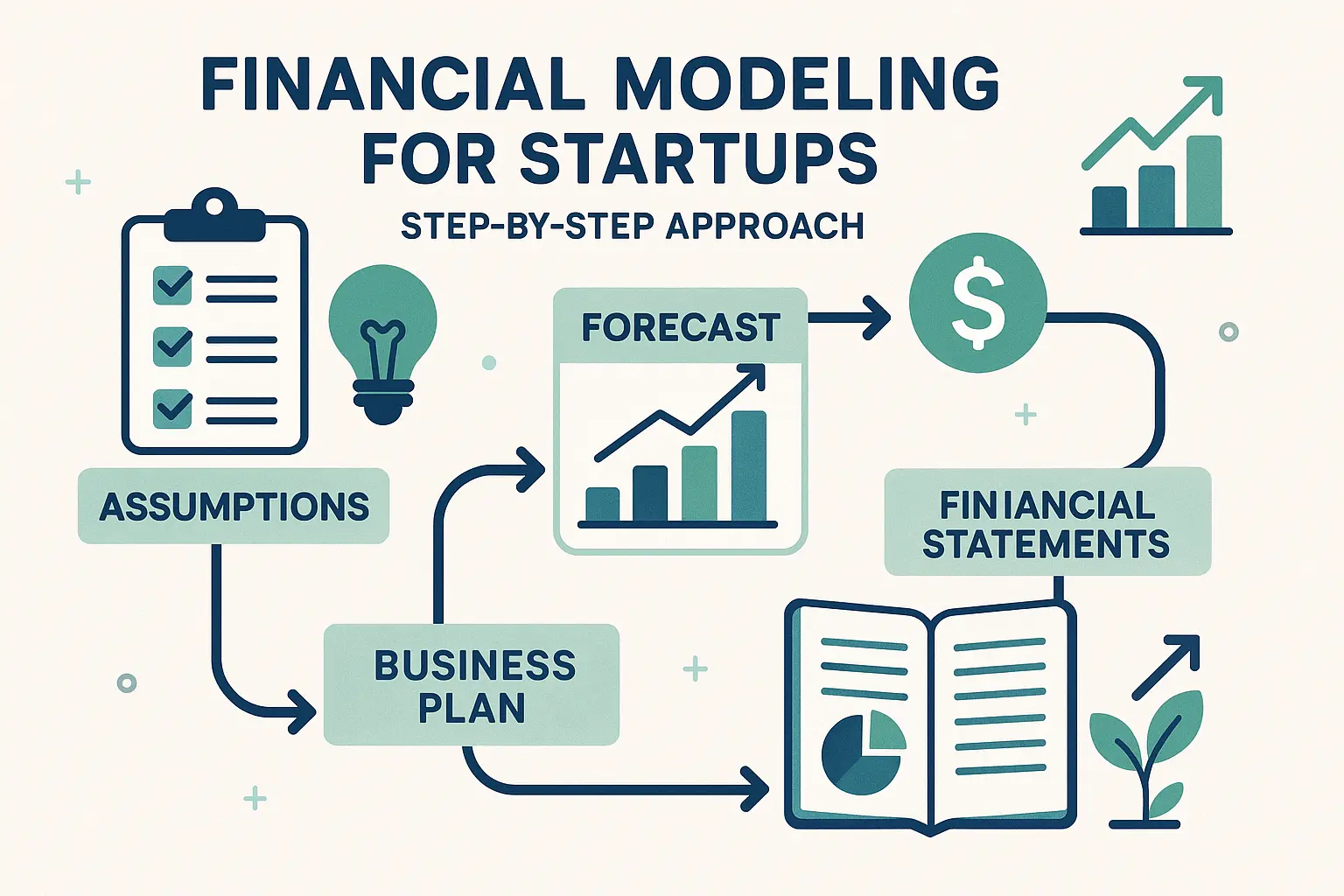
Building a startup is exciting—but also full of unknowns. One of the biggest challenges founders face is figuring out how their ideas translate into real numbers: How much money will you make? How much will you spend? Will you have enough cash to get to the next stage? That’s where financial modeling comes in.
According to CB Insights, 38% of startups fail because they run out of cash or fail to raise new capital. Having a reliable financial model not only helps you see where you stand today, but also lets you plan for tomorrow’s twists and turns. Whether you’re aiming to raise your first round, set spend limits, or just get a handle on your runway, a step-by-step approach to financial modeling can offer clarity—and maybe a bit of peace of mind. In this article, we’ll walk through practical steps any founder can follow, even without a background in finance.
Why Every Startup Needs a Financial Model
Clarifying Business Goals
Without a financial model, ideas for growth or expansion remain vague ambitions. Modeling helps founders distill their vision into measurable, time-bound objectives. It brings focus, encouraging the team to align daily decisions with longer-term outcomes.
Budgeting and Cash Management
Every startup juggles patchy revenue, unexpected costs, and tough spending choices. With a financial model, founders can anticipate runway, spot looming cash shortages, and plan spending—rather than getting blindsided when the bank account runs low. It also reveals where small tweaks in pricing, cost structure, or hiring can lead to major financial differences down the line.
Investor and Fundraising Readiness
Investors rarely say “yes” without seeing believable numbers. A clear financial model answers their core questions: How much will you earn? When? How will expenses shift as you reach new milestones? It signals that the team thinks deeply about the business, not just the product. Even solo bootstrappers benefit, using their model to stay disciplined and time fundraising for maximum leverage. For more on preparing to raise capital, see the art of startup fundraising.
Planning for Future Growth
Markets change, competitors move fast, and what works this year might flop the next. A living financial model lets founders simulate new pricing, market expansion, or cost cuts before risking real dollars. These forward-looking scenarios build confidence for bold moves and highlight warning signs—before they escalate.
With this context in mind, it’s crucial to understand the specific financial modeling approaches available and why some suit certain startups better than others. Let’s explore the different types and their strengths next.
Types of Startup Financial Models
Top-Down vs. Bottom-Up Modeling
Startups usually choose between top-down and bottom-up approaches to project their numbers. The top-down model begins with a market-wide view, estimating potential revenue by sizing up the total market and guessing what piece of the pie your startup might claim. It’s quick but often overly optimistic, especially for newcomers. In contrast, bottom-up modeling builds from scratch: estimating sales, pricing, and conversion rates based on real data, team capacity, and marketing plans. Bottom-up tends to produce more believable, actionable forecasts that founders can improve over time as new data comes in.
Three-Statement Models
The backbone of classic financial modeling is the three-statement model, tying together your income statement, balance sheet, and cash flow statement. For startups, the most vital role of this approach is to capture the ripple effect—if you burn cash faster than you collect revenue, or offer lots of credit to customers, you’ll see the impact clearly laid out. This kind of model brings discipline to forecasting by making sure your numbers actually add up month to month.
SaaS and Industry-Specific Models
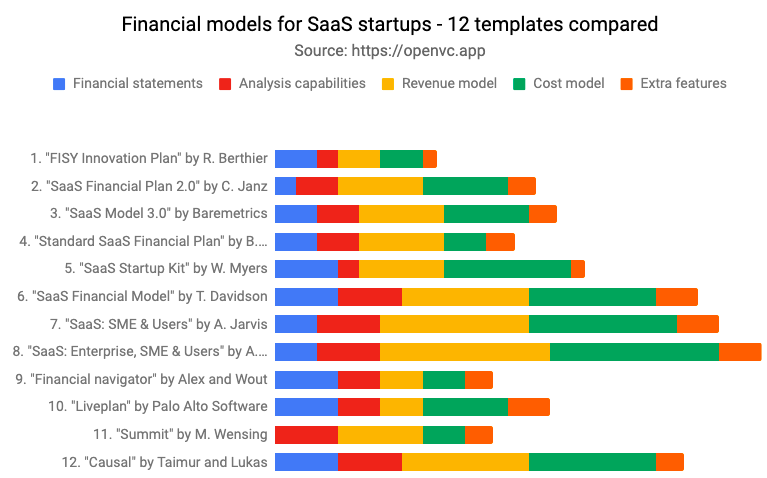
Many founders rely on templates tuned for their sector. For example, SaaS models emphasize recurring revenue, churn rates, and customer lifecycles. A hardware startup, however, might focus more on inventory turnover and production lead times. Picking a model built for your business type makes it easier to track the right metrics and answer tough questions about the path to profitability.
Now that you know the major types of financial models startups use, let’s examine which numbers and forecasts deserve the most attention when you’re building your own.
Essential Components of a Startup Financial Model
Revenue and Pricing Projections
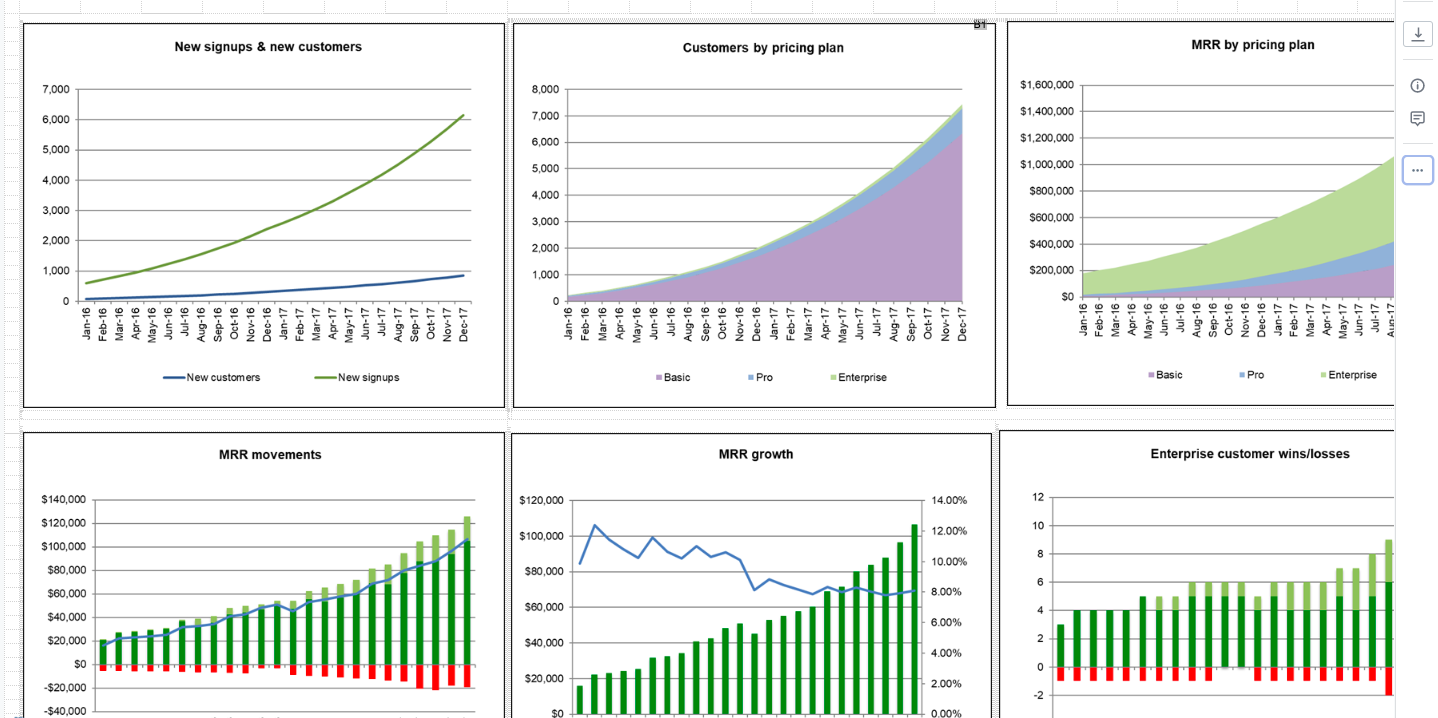
Estimating how money flows in starts with clear revenue and pricing projections. Rather than guessing, map out your anticipated customers, average deal size, and expected purchase frequency. Aim to show not just potential, but the forces that move numbers—such as different pricing tiers, user acquisition rates, and churn. For subscription models, tracking new signups, downgrades, and expansions is vital for accurate monthly recurring revenue (MRR) forecasts.
Direct and Operating Expenses
Break expenses into two groups: costs directly tied to your product or service, and those needed to run daily operations. Itemize categories like salaries, cloud infrastructure, marketing outlays, licensing, and professional services. Don’t just bulk them together; detail what drives each line and how they scale up as you grow.
Working Capital and Cash Flow
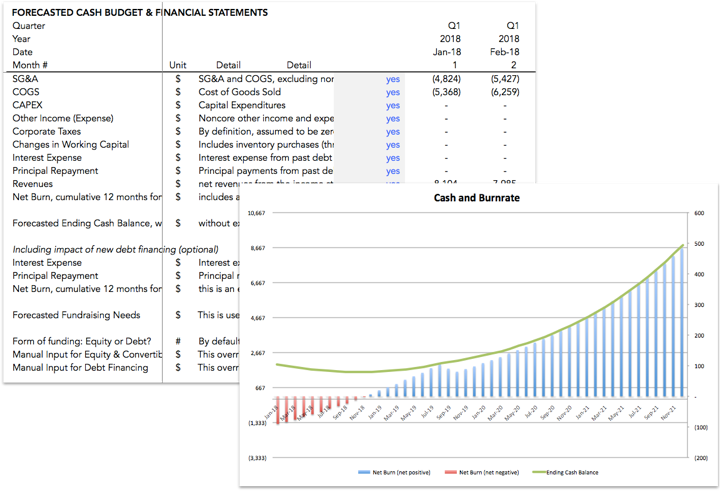
Even a profitable startup can stumble if it runs out of cash. List out payment cycles for customers and vendors, and lay out when cash actually arrives versus when expenses hit the bank account. Consider upfront costs, delayed customer payments, and how much cash stays trapped in inventory or unpaid invoices. Use rolling cash forecasts to spot crunch points well ahead of time.
Key Performance Indicators (KPIs)
Zero in on metrics that reveal your business’s health at a glance. This might mean CAC (customer acquisition cost), LTV (lifetime value), runway, churn rate, or revenue per user—whatever tells your story best. Highlight these KPIs in your model so stakeholders spot strengths and red flags right away.
With these building blocks in place, it’s time to dive into the nuts and bolts of assembling your numbers and formulas—step by step—into a structured, working model you can trust and update as you grow.
How to Build Your Startup Financial Model
Step 1: Gather Data and Set Assumptions
Start by pinning down every relevant number you can find—no guesswork. Pull historical sales (if available), market size research, competitor pricing sheets, user growth benchmarks, and anything else grounded in reality. For what you can’t measure, write down clearly what you’re assuming (like conversion rates or customer acquisition costs). Good models are built on clear, specific, and documented assumptions.
Step 2: Structure Revenue Streams
Map out exactly how cash comes into your business. Identify each route a customer can give you money—subscription, one-off sale, service fee, etc.—and spell out what drives each: user counts, average sale values, frequency of purchase. Connect these numbers to your earlier assumptions. This is your forecast’s foundation.
Step 3: Estimate Costs and Expenses
List every cost line, from server bills and office rent to software licenses and salaries. Don’t gloss over small or irregular expenses; they add up. Split costs into fixed (same every month) and variable (increase with scale), so the model adapts as your forecasts change.
Step 4: Model Cash Flow and Burn Rate
Cash flow isn’t just profit minus expenses—timing is everything. Plot out when you actually expect to receive and pay money. Watch for months where cash dips below zero (the infamous “cash crunch”). Calculate your monthly burn rate so you know exactly how long your startup can survive before needing new money. Understanding your burn rate and startup runway is critical in this step.
Step 5: Layer in Scenarios and Sensitivity Analysis
Real life seldom follows a single path. Tweak your assumptions—what happens if growth slows or churn rises? Build “what if” cases, and let the model show you how robust (or fragile) your plan is under pressure. This helps you prepare—not just impress investors.
Step 6: Regularly Update and Review
A financial model isn’t a one-and-done spreadsheet. Revisit your numbers when new data arrives, when you exceed or miss targets, or when the market changes. Every update makes your roadmap smarter and more useful.
While building a model is a crucial step, using the right tools can make the process smoother and your outputs more reliable. Let’s explore the digital resources and templates that make startup financial modeling less of a headache.
Financial Modeling Tools and Templates for Startups
Spreadsheet Templates
Spreadsheets remain the backbone of early-stage financial modeling. With platforms like Excel and Google Sheets, founders get the flexibility to tweak, experiment, and visualize everything from customer acquisition to churn and monthly recurring revenue. Many startup-focused spreadsheet templates come preloaded with scenario analysis, cohort tracking, and dynamic headcount models—saving hours of tinkering.
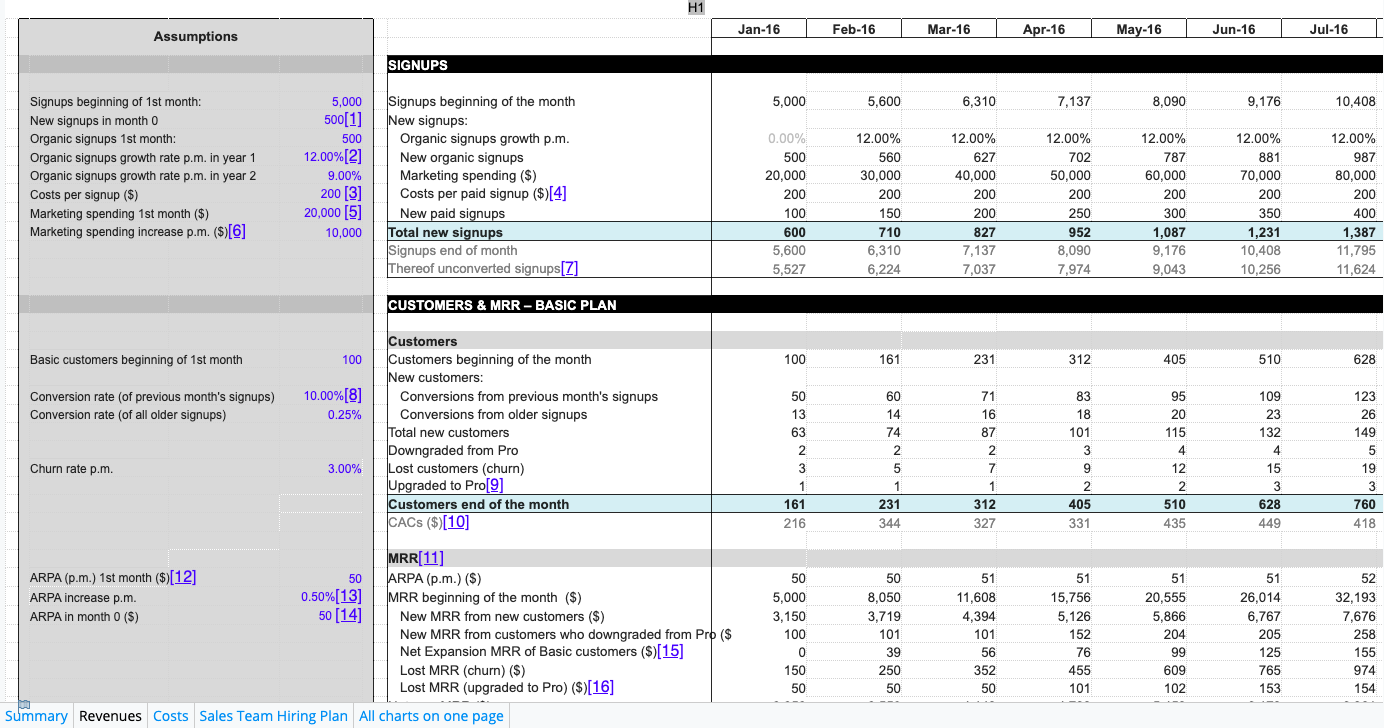
Open-source models surface regularly in communities like Indie Hackers, Reddit’s r/startups, and resource hubs from accelerators. The best templates are not just grids—they link your signups, pricing changes, and cost assumptions, then automatically recalculate cash runway. Founders often adapt templates from peers in similar business models—a shortcut to industry fit.
Software Solutions
Dedicated modeling software moves beyond formulas and static tables. Tools like Finmark, Causal, and Layer help automate data import, scenario toggling, and dashboard-style reporting. These solutions shine when teams want version control, collaboration, or API support for plugging in data from Stripe, QuickBooks, or Shopify. They also flatten the learning curve: no pivot-table expertise required.
Most of these platforms offer guided onboarding for SaaS, e-commerce, or fintech startups, supplying ready-to-go modules for revenue forecasting, expense tracking, and cash flow visualization. For startups in the habit of frequent fundraising, investor-ready outputs and annotation features become valuable when sharing projections.
Finding the Right Fit for Your Startup
The right tool depends on your growth stage and the complexity of your business. Early, pre-revenue startups may need just a simple spreadsheet to map basic costs and signups. Once revenue streams multiply or investors come calling, it’s wise to consider software with collaboration, security, and automated reporting features.
Not sure where to start? Begin with templates, customize as you go, and upgrade to more robust software once the numbers—and the decisions—outgrow manual spreadsheets. Trial versions or freemium tiers let you experiment without a long-term commitment.
With the right tools in your toolkit, building and updating models becomes second nature. Next, let’s see how to turn those forecasts into compelling presentations that resonate with investors and partners alike.
Tips for Presenting Your Model to Investors
Focus on Assumptions and Drivers
Investors aren’t looking for a flawless spreadsheet—they’re looking to see how you think about your business. Start by breaking down your core assumptions: what’s driving customer growth, how you price your product, and why you expect certain churn rates. Rather than getting lost in minutiae, walk them through the logic behind your numbers. Visual aids can help here—consider using simple, annotated graphs that highlight how changing a key variable affects your forecasts.
Be Transparent and Justify Numbers
If an investor can’t trace a number back to a clear explanation, trust evaporates quickly. Tackle the “why” behind your projections: reference historical data (even if limited), mention industry benchmarks, or outline user testing. If you’re unsure about a figure, say so and explain how you plan to validate it as real data comes in. This honesty builds credibility and invites more collaborative discussions.
Highlight Key Metrics and Milestones
Before diving into the details, point out the signals that matter most—monthly recurring revenue, runway, break-even point, or customer acquisition cost. Attach projected milestones to these metrics, like “100 paying users by month six.” This helps investors tie your financials to real-world progress. Crisp and direct visuals, such as a milestone timeline or KPI summary table, can clarify these connections at a glance.
Once you’ve laid your numbers on the table, being ready to answer tough questions—or even admit uncertainty—can set you apart. Next, let’s look at how to avoid some of the most common pitfalls founders encounter when building their models, so you can approach your next meeting with even more confidence.
Avoiding Common Startup Modeling Mistakes
Over-Optimistic Growth Assumptions
Projecting hockey-stick growth is tempting, especially when chasing investment. Resist the urge to simply extend an exponential curve. Instead, anchor your forecasts in real data: user acquisition, retention rates, and historical market sizes. Challenge your assumptions by stress-testing scenarios—what happens if growth is slower and acquisition costs rise?
Ignoring Expense Detail
Burying costs in broad “overhead” buckets can mislead you and your stakeholders. Break out expenses: salaries, marketing programs, software subscriptions, legal, compliance, and—don’t forget—the less obvious ones like payment processing fees or customer support tools. Granular breakdowns not only clarify where cash goes, they surface operational bottlenecks and points for budgeting discipline.
Underestimating Cash Needs
Many founders focus on profit projections and overlook runway. Track both committed costs and variable expenses. Factor in seasonality, payment cycles, and the lag between invoicing and collection. Build in a buffer for the unexpected—a delayed deal or a surprise bill. A great model lets you see precisely when cash dips below a safe threshold, giving you time to act. Understanding startup runway is crucial for this.
Avoiding these traps doesn’t require financial wizardry—just careful attention to detail and a willingness to revise your assumptions as you gather new data. Up next, let’s explore sources, templates, and references that make modeling more accessible, especially if you’re building your first financial model from scratch.
Resource Library
Free and Paid Templates
Accessing quality templates can save hours and help sidestep rookie mistakes. Try open-sourced options like Clean Cap Table’s SaaS template or A Smart Bear’s one-page model, which are tailored for early-stage founders. For more advanced needs, platforms like FinCap and Foresight curate customizable models for various industries and business types. Paid options usually offer scenario planning, cohort analysis, and automated dashboards.
Recommended Reading
For foundational knowledge, pick up “Financial Intelligence for Entrepreneurs” by Karen Berman and Joe Knight or “Venture Deals” by Brad Feld and Jason Mendelson, which both break down financial concepts for startup founders without a finance background. For SaaS specifics, David Skok’s SaaS Metrics essays cut through the noise with practical frameworks and metrics every founder should master.
Online Courses and Tools
If you learn best by doing, consider taking the free Startup Financial Modeling course on Coursera or browse the self-paced Udemy track focused on startup models. For hands-on guidance, Modelyst offers interactive templates with in-tool tips and cohort analysis. Meanwhile, Cubewise and FutureFit AI provide tailored toolsets for growing startups with more complex forecasting needs.
Having these resources at your fingertips puts a wealth of expertise within reach. Next, let’s explore practical steps to present your model and numbers in the best light when it’s time to impress investors.