
Down Round Funding: What It Means and How It Impacts Startups

When a startup is fundraising, most people picture surging valuations and excited investors. But what happens when things don’t go as planned? Sometimes, a company is forced to raise money at a lower valuation than its previous round—a scenario known as a down round. This might sound rare, but according to PitchBook, over 20% of late-stage VC deals in 2023 were down rounds—a sharp increase from previous years. With changing market conditions and tougher investor scrutiny, more founders and teams are finding themselves in this situation.
Down rounds can feel like a setback, but they’re also a real part of the startup journey—especially during economic slowdowns or after periods of inflated valuations. Understanding what a down round really means, why it happens, and how it impacts ownership and team morale isn’t just useful for founders, but for anyone interested in the startup ecosystem. In this article, we’ll break down the facts, share real insights, and help you navigate what happens when the funding path gets bumpy.
Understanding Down Round Funding
When startups raise new capital, investors assess the company’s value to decide how much ownership their money buys. If a startup receives funding at a lower valuation than a previous round, it’s called a “down round.” This scenario can be a shocking reality check, especially in a world where founders celebrate rising valuations at every milestone.
Down Round vs. Previous Funding Rounds
In early funding rounds, such as seed or Series A, startups often see their valuations jump with each investment. A down round interrupts that upward trajectory. For instance, if a company was valued at $50 million during its last round but now raises funds at a $30 million post-money valuation, investors in the new round are buying shares at a significantly lower price than earlier backers did. The implication: the market now believes the startup is worth less than before, despite months—or even years—of progress.
How Down Rounds Are Structured
Down rounds are generally structured similar to other funding rounds, using preferred stock or convertible instruments. However, new terms and protections often emerge to compensate investors for taking a perceived higher risk. These might include tougher liquidation preferences, stricter anti-dilution clauses, and greater influence over company decisions. Existing shareholders often find their ownership diluted more heavily than in previous rounds, as the price per share falls and sometimes more shares are issued to attract reluctant new investors or appease old ones.
Recognizing the characteristics of a down round is only the beginning. To understand why a startup’s valuation might tumble, it’s important to look at the market forces and company-specific events that set the stage for such rounds.
Why Down Rounds Happen
Market Dynamics and Valuation Shifts
Startup valuations do not exist in a bubble—they rise and fall with the outside world. When public markets tumble or economic uncertainty takes over, investors get cautious. Risk appetite shrinks, cash becomes scarcer, and high-flying valuations from previous years start to look unsustainable. Even successful startups can find themselves caught in a downdraft if the market resets what it’s willing to pay for growth or future potential. Sudden changes in technology trends or investor sentiment can also yank the rug out, forcing startups to accept lower valuations just to stay afloat.
Company-Specific Triggers for Down Rounds
Sometimes, the reasons are closer to home. Maybe sales missed projections, or a key product launch got delayed. Leadership shake-ups or negative news—like a failed acquisition, regulatory setback, or lost customer—can rattle investor confidence fast. If a company burns through its cash reserve faster than expected, or it struggles to raise new money as competitors thrive, investors wield more bargaining power. The result is a lower valuation that reflects new doubts about the startup’s immediate future.
Regardless of the cause, recognizing these triggers early helps founders plan their next move. Understanding what sparks a down round is only half the story; what really matters is how those lower valuations shape the lives of founders, employees, and early backers. Let’s explore the concrete ways these funding rounds ripple through a startup’s ecosystem.
Key Implications for Founders and Investors
Dilution and Cap Table Changes
When a startup accepts a down round, both founders and existing investors see their ownership trimmed. Since new shares are issued at a lower price, earlier stakes shrink, sometimes dramatically. For founders, this can mean losing significant control—enough to complicate major decisions or even board composition. For investors, dilution affects the future profitability of their investment and may prompt them to participate defensively in the new round just to hold on to their influence.
Anti-Dilution Provisions and Their Impact
Anti-dilution rights, often baked into investor agreements, kick in during a down round. These terms decide how much extra equity early investors receive to compensate for the lowered valuation, usually at the expense of common shareholders and later entrants. Two main types show up:
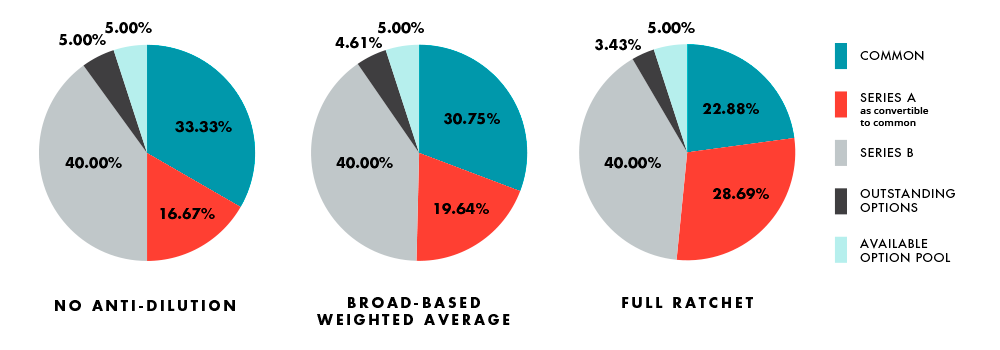
– Full Ratchet protection recalculates prior investors’ conversion prices as if they’d invested at the new, lower valuation, maximizing their share increase. – Weighted Average methods soften the blow, granting extra shares based on how many new shares are issued and at what price, balancing interests between old and new money.
The result? Founders and team members may see their stakes shrink swiftly if anti-dilution is aggressive—fueling hard conversations about fairness and risk.
Effect on Team Morale and Company Culture
A down round rarely goes unnoticed inside a startup. As options lose value and headlines trickle through the tech press, employees may feel anxious about the company’s future and their own upside. Staff worried about their equity payout can become distracted or may jump ship, especially if they sense instability or an exodus among company leaders. Transparent communication and creative retention packages—like repricing existing stock options—are sometimes the only way to keep the team motivated through tough times.
Understanding these shifts is crucial for founders and investors alike. With these implications in mind, it’s worth exploring what alternative funding paths exist—and whether they might help a startup avoid a down round altogether.
Alternatives to Down Round Funding
When a startup faces dwindling runway or shifts in valuation, accepting a down round isn’t the only path forward. Before agreeing to a lower valuation, startups often weigh other funding strategies that might preserve more ownership and keep morale intact.
Bridge Financing and Venture Debt
Bridge financing offers a short-term boost, usually from existing investors, to help a company reach its next big milestone—be it a product launch or unlocking a major partnership. Rather than setting a new (and lower) valuation, the company receives funds now, with the expectation of raising a more favorable round later. Bridge notes are often structured as convertible notes or simple agreements for future equity (SAFEs).
Venture debt is another avenue. Unlike equity investment, venture lenders provide capital as a loan, secured against the company’s assets or future revenues. Startups get cash without immediate dilution, but need steady performance to meet repayment terms. Venture debt makes sense for revenue-generating startups confident they can navigate the added financial commitment.
Recaps and Extension Rounds
Recapitalizations, or “recaps,” involve restructuring the cap table—often by converting certain shares or reshuffling investor positions—to create new incentive structures without immediately lowering valuation across the board. This approach can reset expectations among founders, employees, and investors, allowing new capital to come in on renegotiated terms.
Extension rounds, sometimes called “inside rounds,” involve current investors adding more money to the previous round, preserving the last valuation and avoiding a public down round label. While this can signal continued support, it may only delay a valuation reset if larger, outside investors remain unconvinced.
Each alternative reflects different priorities—whether it’s speed, retention of equity, or setting up for future growth. Once these avenues are explored, founders still facing a lower valuation need to approach the process with care and clarity, making the right moves to maintain trust both inside and outside the company.
Navigating a Down Round: How to Prepare
Communicating with Stakeholders
Transparency is crucial at this stage. Founders need to explain to employees, early investors, and advisors why a down round is necessary, what it signals, and what everyone can expect next. When people know what’s going on, rumors are less likely to spiral and panic is much easier to avoid. Take the time to walk your team through the implications honestly—answer questions about dilution, option pool adjustments, and the broader strategy in play. Reinforce your commitment to the company’s future, and emphasize the tangible steps being taken to strengthen its foundation.
For existing investors, tailor your message to address their biggest concerns—dilution, liquidation preferences, or anti-dilution triggers. Be specific about the terms under discussion and invite constructive input. When everyone understands the rationale and potential upside, they’re more likely to stay engaged and supportive.
Managing Legal and Fiduciary Responsibilities
Preparing for a down round isn’t just about numbers—it’s a legal balancing act. Dive deep into your company’s charter and previous funding agreements to spot any anti-dilution clauses, voting thresholds, or protective provisions. Work closely with your legal counsel to model out different scenarios, so there are no surprises once negotiations start. Pay attention to board approvals and special voting rights, making sure every procedural step is airtight to avoid disputes later.
Beyond legal mechanics, remember the duty to act in all shareholders’ interests. Down rounds can raise questions about fairness and process, especially for insiders participating on both sides of the table. Keep meticulous records of valuations, term sheets, and board deliberations. This safeguards both the company and its decision-makers if anything is challenged down the road.
By taking these concrete steps now, founders can reduce uncertainty, build trust, and move into negotiations from a position of clarity. Once preparations are in place, it’s time to look at how the broader financing landscape is shifting—and what recent trends reveal about the current climate for startups.
Recent Trends in Down Round Funding
2023-2024 Down Round Data at a Glance
In the wake of the 2022 market correction, down rounds moved from rare exceptions to common events, particularly for late-stage startups. Crunchbase reported that in 2023, over 20% of U.S. venture rounds were classified as down rounds—up from single-digit percentages in the preceding years. Rather than a passing phase, this spike signals a normalization of valuations after the exuberance of 2021. Median valuation cuts ranged from 30% to as high as 70%, with companies in Series C and beyond most affected because their prior valuations were more aggressively inflated during the pandemic tech boom.
Another notable shift in 2023-2024 is the increase in investor-led restructurings, as funds become more selective and negotiate tougher terms, including enhanced liquidation preferences and more stringent anti-dilution protections. Startups now need to demonstrate not just growth, but unit economics and clear paths to profitability to justify their new, lower valuations.
Sector-Specific Observations
While down rounds have been seen across the startup spectrum, some industries have been hit harder than others. Fintech and enterprise SaaS companies—favorites of the 2021 fundraising surge—saw the largest drops in valuations, with more than a third of deals in these sectors during 2023 qualifying as down rounds. Consumer tech has also faced a correction, especially for companies where market saturation or shifting user behavior challenge future growth assumptions.
In contrast, climate tech, AI, and certain healthcare startups have largely weathered the market downturn, securing flat or even up rounds in some cases. These niches benefit from strong tailwinds: robust demand, regulatory support, and investor appetite for transformative solutions. As a result, down rounds in these sectors were the outliers rather than the norm.
This convergence of tough funding conditions and sharper sector divergence means founders must be particularly strategic in responding to today’s environment. Next, we’ll look at practical tactics startups can use to navigate these challenges and prepare their companies for fundraising conversations in a risk-averse market.