
Diluting Shares: What It Means, How It Happens, and Why It Matters

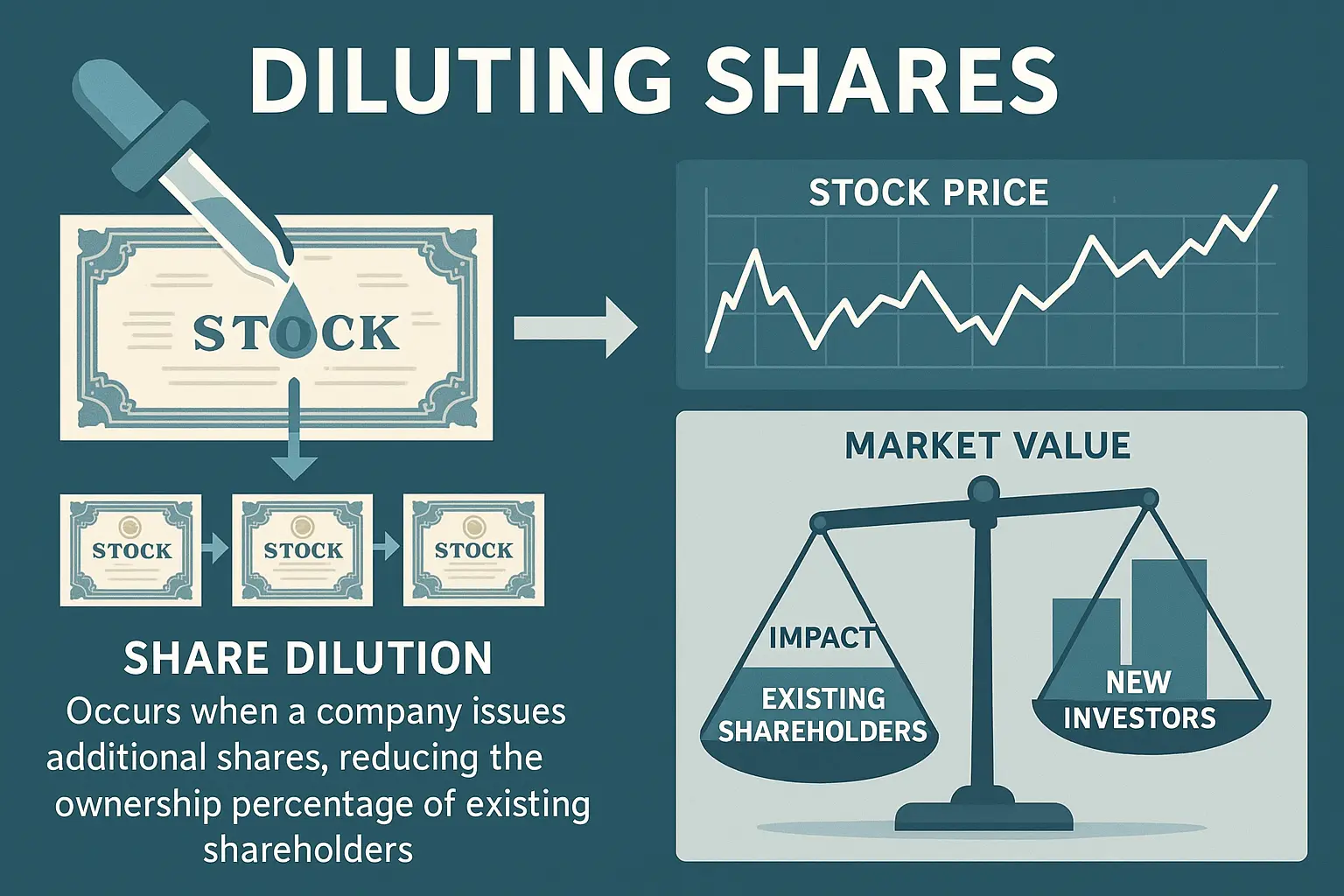
What Does Diluting Shares Mean?
Share Dilution Explained in Plain Terms
When a company “dilutes” its shares, it increases the total number of shares that exist. Imagine a pizza cut into four big slices—each slice is worth a quarter of the whole. Now, if you cut that same pizza into eight slices, each slice becomes smaller. Your piece of the pizza, and what it’s worth, is reduced even if the pizza hasn’t changed size. For shareholders, dilution means their slice of ownership gets smaller as more slices (shares) are added.
Example: How Dilution Changes Ownership
Let’s say you own 1 out of 4 existing shares in a small company. You effectively own 25% of the business. If the company issues 4 new shares (for a total of 8), you still own only one share, but your ownership drops to 12.5%. Unless you buy more shares, you now own a smaller percentage of the company. This change directly affects your influence on company decisions and your share of future profits.
Understanding this shrinking “slice” is the first step. But why do companies dilute shares in the first place, and how do they actually go about doing it? Let’s look closer at the different ways a company might add more slices to the pie.
How Shares Get Diluted
Share dilution doesn’t happen out of thin air—it results from specific decisions and events that increase the total number of shares a company has in circulation. Each event slightly or significantly shifts the balance of ownership among existing and new shareholders. Let’s look at the main ways dilution unfolds.
Issuing New Shares
The most straightforward way shares get diluted is when a company decides to issue new shares. Companies often do this to raise money, whether for investing in growth, paying off debt, or funding an acquisition. When new shares hit the market, existing shareholders end up holding a smaller piece of the company, simply because the total “pie” has grown larger.
Stock Options and Employee Equity
Many companies, especially startups and tech firms, reward employees with stock options or other forms of equity. When employees exercise these options, new shares get created. Though this motivates employees and attracts talent, it can shrink the ownership percentage of everyone else.
Convertible Securities and Warrants
Sometimes, companies raise funds by issuing convertible bonds or preferred shares that have the potential to morph into regular shares. Similarly, warrants let holders buy company stock at a set price. When these are exchanged for common shares, the total share count goes up, and dilution occurs.
Mergers and Acquisitions
In certain deals, a company may pay for an acquisition using its own shares rather than cash. By issuing new stock to the owners of the acquired company, the original shareholders’ ownership shrinks to make room for the newcomers.

Understanding exactly how shares are diluted makes it easier to grasp the real-world impact on those who already own stock. Next, let’s see how dilution changes what being a shareholder means in practical terms—beyond just a percentage on paper.
How Diluting Shares Impacts Shareholders
Changing Voting Power
When a company issues more shares, each existing share represents a smaller slice of the company. Imagine sitting at a table where more chairs keep getting added—the piece of cake you get shrinks. This means if you once held 10% of the votes, after dilution, your influence declines. For shareholders who care about steering company decisions or voting on big issues, this loss of clout can be significant.
Effect on Earnings Per Share (EPS)
Companies often brag about their earnings per share—how much profit they’re making for each slice of ownership. After dilution, those slices multiply. Unless the company’s profits grow, each share earns a little less. Lower EPS can turn off investors because it makes the company look less profitable on a per-share basis, which can ripple through to the stock price.
Share Price and Value
Share dilution doesn’t always mean the stock price drops overnight, but it does change the math behind what each share is worth. If the new capital raised by issuing extra shares doesn’t boost the company’s future earnings or growth prospects, investors might see dilution as a red flag. Sometimes, the market reacts right away with a price dip. Other times, the impact is more subtle, slowly chipping away at the stock’s appeal.

The chart above illustrates how dilution slices up the ownership pie into slimmer portions and, in many cases, pressures the stock price downward.
Dividend Payments
Dilution can also change dividend math. If the company pays out a fixed dollar amount in dividends, but spreads that total over more shares, each investor receives a smaller chunk. Unless the company increases the total dividend payout, the result often shows up as a thinner dividend check for everyone.
Understanding these impacts helps paint a clearer picture of how and why dilution matters for anyone holding company stock. Next, we’ll explore how to spot the difference between shrinking ownership due to dilution and what happens during a different kind of share maneuver that many confuse with dilution.
Diluting Shares vs. Stock Splits
The terms “share dilution” and “stock split” often get tossed around together, but they’re not twins – in fact, they behave very differently and impact shareholders in separate ways.
When a company dilutes its shares, it’s growing the number of shares available by issuing new ones, often to raise money or compensate employees. This means every existing slice of the pie gets a little bit smaller—your ownership percentage drops, and the company’s overall value is now divided into even more pieces.
A stock split, on the other hand, simply divides what you already have. Suppose you own 100 shares and the company announces a 2-for-1 split. Now you have 200 shares, but each is worth half as much. Your total ownership doesn’t change, and neither does the company’s value. If you prefer food analogies, picture slicing a pizza into more pieces—the pizza itself doesn’t grow, you’re just holding more (smaller) slices.

Visually, while dilution shrinks everyone’s percentage, a split keeps percentages the same but increases the share count. Markets might react to these events (sometimes dramatically), but only dilution leaves shareholders with a thinner stake in the business.
Confusing these two can lead to costly missteps. Understanding the real-life consequences of dilution helps investors anticipate what might happen when new shares join the party. But is there any way for shareholders to fight back when dilution looms? Let’s explore what protections might be in place.
Can Shareholders Protect Themselves from Dilution?
When new shares are issued, existing shareholders may worry about their slices of the pie shrinking. While dilution can’t always be stopped, some investors have ways to shield their ownership.
Anti-Dilution Clauses
Anti-dilution clauses act as protective armor for investors, especially those putting in early money like venture capitalists. If the company later sells shares at a lower price, these clauses kick in, letting early investors adjust their deal—usually by increasing the number of shares they hold. The most common types are “weighted average” and “full ratchet,” with the latter offering the strongest shield. Regular public shareholders usually won’t have these rights; they’re mostly reserved for big, early backers who negotiate them upfront.
Preemptive Rights
Preemptive rights are like a “right of first refusal” for shareholders. When the company issues new shares, holders with preemptive rights get the option to buy enough to keep their ownership unchanged. Picture it as a way to avoid getting pushed to a smaller table when more people show up to dinner. Some companies build these rights into their corporate charter, while others don’t offer them at all. In the U.S., preemptive rights aren’t guaranteed unless specifically written into the company’s rules.

While no method can erase dilution entirely, knowing the fine print of your investment—especially when investing in startups or private companies—can make a real difference. Next, it helps to ask whether all dilution spells disaster, or if it sometimes signals growth and opportunity instead.
Is Dilution Always Bad?
Good Dilution vs. Bad Dilution
Dilution often sounds negative—after all, it means your percentage of ownership in a company is getting smaller. But it’s not always a sign of trouble. Sometimes, dilution is the result of a company expanding, raising money to fund new ideas, or bringing in talented employees with stock options. If that new capital leads to better products, bigger markets, or higher profits, both the company and its shareholders could end up better off. In these cases, the value of each share might climb over time, softening the effect of a reduced ownership percentage.
On the flip side, “bad” dilution happens when a company issues new shares just to pay the bills or cover losses, without a clear plan for growth. Here, more shares often mean weaker investor confidence, a shrinking share price, and ownership slices that actually lose value instead of gaining it.

This image illustrates how ownership gets divided among more people after dilution. Whether that’s a good or bad thing depends on why dilution is happening.
Signs Share Dilution Might Be a Problem
If new shares keep hitting the market with no clear benefit—like extra cash just getting burned through or executive pay ballooning—watch out. Consistently falling earnings per share, or regular drops in share price following new share issues, can signal that dilution is eating into the company’s value instead of helping it grow.
Finally, if you start noticing that your voting power is slipping away while company performance flatlines, it’s time to ask whether dilution is helping—or just covering up deeper issues.
Understanding the difference between healthy growth and worrisome dilution is key. To take things a step further, you might want to know what practical rights and protections shareholders have when new shares are issued.
Frequently Asked Questions about Diluting Shares
Does share dilution always hurt current investors?
No, not every case of share dilution is negative. If a company raises money to expand or invest in new projects, the resulting growth can sometimes benefit shareholders, even as their percentage ownership shrinks.
How does share dilution actually happen?
Share dilution usually happens when a company issues new shares—think of things like employee stock options, convertible bonds becoming common stock, or secondary offerings to raise capital.
Can companies dilute shares as much as they want?
Companies can’t create shares endlessly. There’s usually a cap, set by their “authorized shares” in corporate documents. Issuing more often needs board and/or shareholder approval.
Will I be notified if dilution is about to occur?
Most of the time, yes. Companies have to disclose new share issuances in press releases or regulatory filings. For big moves, like new stock offerings, you’ll likely see headlines or get notified as a shareholder.
Do stock splits dilute my shares?
Stock splits don’t dilute ownership. The number of shares increases, but the value per share drops equally, so your overall ownership stays the same.
How can I check if my holding has been diluted?
Compare the number of shares you own to the total shares outstanding over time. Rising total shares (without you buying more) means you own a smaller slice—dilution in action.
Now that you’ve cleared up the classic questions, let’s take a closer look at ways investors can shield themselves from dilution—and the tools companies use to balance equity and growth.