
Customer Lifetime Value Calculation: How to Measure and Apply CLV

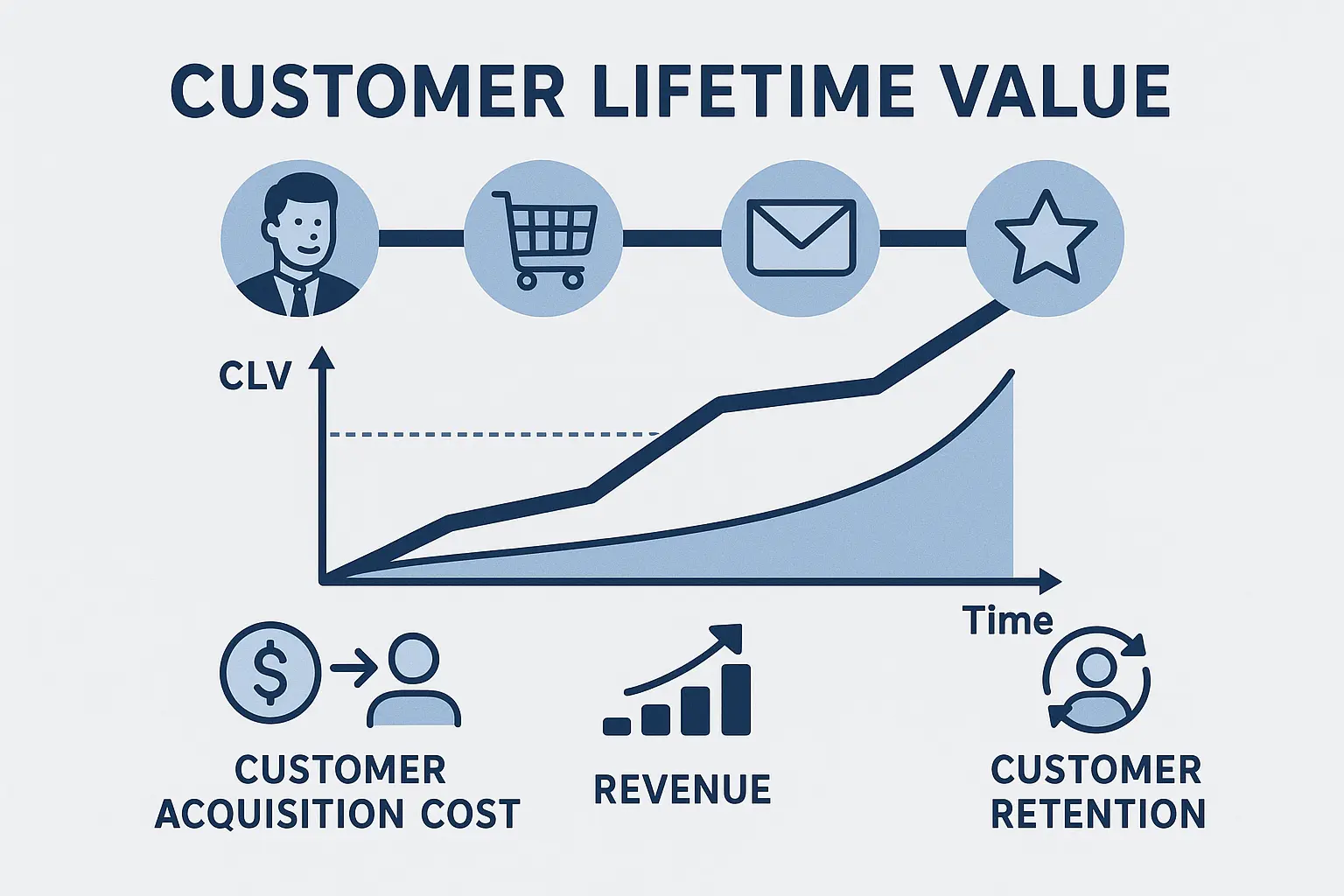
Have you ever wondered how much a single customer is really worth to your business over time? That’s what Customer Lifetime Value (CLV) helps you figure out. Instead of just focusing on the next sale, CLV encourages us to look at the bigger picture—how every interaction, purchase, and experience adds up across the whole relationship with a customer.
Understanding CLV isn’t just for big corporations. Whether you run an online shop, a coffee stand, or a subscription service, knowing your average customer’s lifetime value can help you make better choices—like where to spend your marketing budget or which customers to focus on keeping happy. In fact, research shows it can cost five times more to get a new customer than to keep an existing one, and increasing customer retention rates by just 5% can boost profits by up to 95% (according to a Bain & Company study). Clearly, there’s a lot at stake.
This guide will walk you through what CLV is, how to calculate it step by step, and practical ways you can use it to help your business grow sustainably. If you want to get more out of your customer relationships, understanding CLV is a great place to start.
What Is Customer Lifetime Value?
Customer Lifetime Value, or CLV, is a way of measuring how much revenue a business can expect from a single customer over the span of their relationship. Instead of focusing just on what a customer spends in one purchase, CLV tallies up every transaction across months or years. This gives you a long-term view of each customer’s importance to your business, beyond the quick wins of single sales.
Think of it like this: a customer who returns time and again—not just once—delivers far more value. CLV puts a number to this idea, helping you see which relationships are truly worth nurturing and where your business’s real growth comes from.
Why CLV Matters to Your Business
Knowing your CLV shifts your focus away from chasing new customers and highlights the power of keeping existing ones happy. When you understand the potential earnings from each customer, you can make smarter choices about where to invest your marketing budget and how much you can afford to spend to win a new client. In essence, CLV is a compass guiding resource allocation, pricing, and customer service efforts.
CLV in Different Industries
CLV looks different depending on what you sell. In ecommerce, CLV might rely on how often someone buys and the average basket size. For subscription services, it hinges on how long subscribers stick around. Retailers, SaaS companies, and even nonprofits can apply CLV, adjusting the calculation to fit the way their own customers interact and purchase.
To get the most out of CLV, you’ll need to know exactly how it’s calculated. Next, we’ll break down the main formulas and show you which numbers to plug in, so you can start measuring and optimizing your own CLV right away.
Customer Lifetime Value Calculation: Key Formulas
Simple CLV Formula
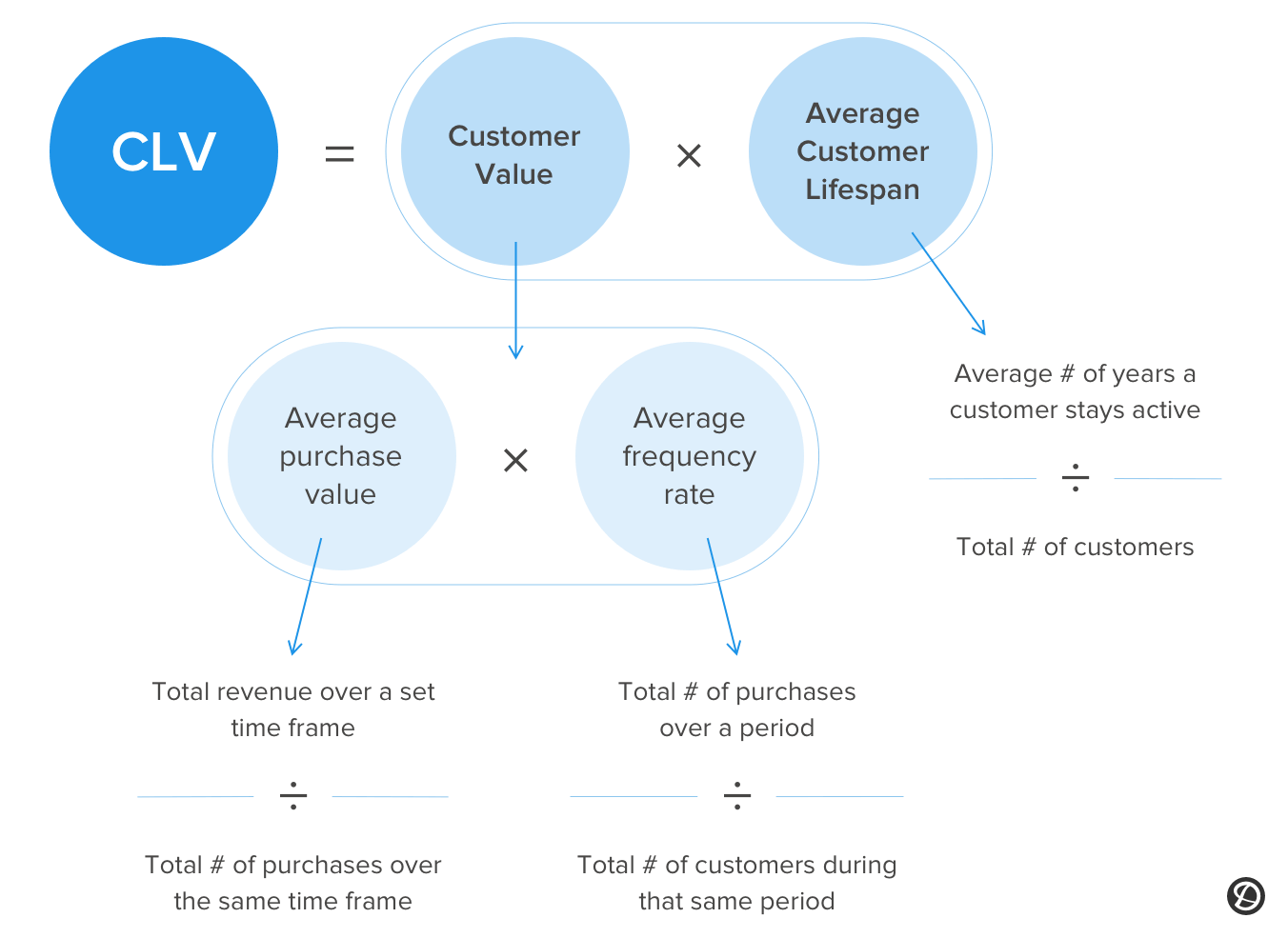
The simplest way to estimate Customer Lifetime Value is to multiply two values: how much a customer spends with you in a typical period, and how long they remain a customer. The formula looks like this:
CLV = Customer Value × Average Customer Lifespan
To break this down further:
This straightforward approach offers a fast snapshot, perfect when you want an immediate sense of what each customer is worth over the long term.
Advanced and Predictive CLV Models
For companies with more robust data and analytics capabilities, CLV can get more advanced. Predictive models take purchase patterns, churn risk, and even seasonality into account to estimate future value, not just what’s happened in the past. You’ll likely encounter two main flavors:
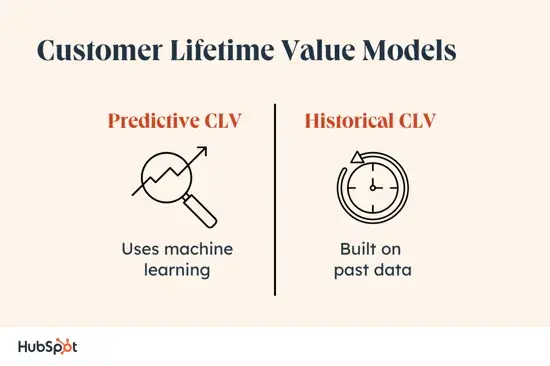
Predictive models are more complex but can provide a more accurate forecast of future customer behavior. However, they rely on high-quality data and regular maintenance.
Dynamic vs. Static CLV Approaches
The choice between static and dynamic CLV comes down to how often you update your calculations and incorporate new data. Static CLV uses a fixed formula—helpful for benchmarking or getting started. Dynamic CLV continuously evolves as new transactions and customer behaviors occur. Companies focused on personalization, rapid iteration, or shifting markets benefit from dynamic CLV since it adapts in real-time.
Understanding these formulas unlocks the door to tailored calculations. Up next, you’ll see how to gather the right data and work through each calculation using your own business numbers.
Step-by-Step Guide: Calculating Customer Lifetime Value
1. Gather Essential Customer Metrics
Before diving into calculations, collect the foundation: total revenue, number of purchases, total customers, and the average lifespan of customers. These raw numbers provide the building blocks for all following steps.
2. Calculate Average Purchase Value
Determine how much, on average, a customer spends per order. Use this formula: Total Revenue over a specific period ÷ Number of Purchases during the same period.

3. Find Average Purchase Frequency
Next, understand how often customers buy. Calculate this by dividing the total number of purchases by the total number of unique customers for your chosen timeframe.

4. Estimate Customer Lifespan
Figure out the average time a customer stays engaged with your brand. This often means calculating the average number of years between a customer’s first and last purchase. More simply, divide the sum of customer lifespans by the total number of customers.

5. Compute CLV for Segments and Individuals
Combine your findings. Multiply Average Purchase Value by Average Purchase Frequency, then multiply the result by Average Customer Lifespan. This gives you the overall CLV. To get deeper insights, perform these calculations for customer segments or even individual accounts, allowing you to identify your most valuable groups.
Now that you’ve mastered each step, putting these calculations into practice will bring the numbers to life. In the following section, you’ll see hands-on examples for different business types to help translate theory into action.
Practical Examples of Customer Lifetime Value Calculation
Sample Calculation for Ecommerce
Picture a mid-sized online apparel store. Over the past year, they observed the following:
Applying the simple CLV formula:
CLV = $60 × 3 × 4 = $720
This means the average customer is expected to generate $720 over their entire relationship with the store. This number gives the shop insight into sustainable marketing budgets or loyalty incentives worth offering to keep customers engaged.
Sample Calculation for Subscription Businesses
Let’s take a streaming service with a $12 monthly subscription. From their records:
The CLV for a typical subscriber becomes:
CLV = $12 × 28 = $336
Here, the focus is less on individual purchase behavior and more on consistent retention. This clarity helps the company project expected earnings from every new sign-up and fine-tune customer retention strategies.
By working through these examples, you can see how CLV adapts to different business models and guides decision-making. Next, let’s look at turning these insights into action, whether it’s shaping marketing strategy or prioritizing long-term customer relationships.
How to Use CLV: Real-World Applications
Informing Marketing Spend
Customer Lifetime Value (CLV) transforms scattershot marketing into strategic investment. When you know how much future revenue each customer is likely to generate, you can confidently set your paid advertising and acquisition budgets. For example, if your average CLV is $600 and it costs $100 to acquire a customer, that’s an attractive return. Marketers often use CLV as a ceiling for their customer acquisition cost, ensuring every campaign drives worthwhile long-term value.
Customer Segmentation Based on CLV
Not all customers bring equal value. Segmenting your audience based on CLV uncovers your most valuable groups. You can identify which segments deserve VIP treatment, exclusive offers, or early access to new products. Conversely, it highlights segments that might need nurturing or a fresh retention strategy. CLV-driven segmentation also reveals which products or channels foster loyal, high-value relationships, guiding smarter resource allocation across your business.
Boosting Retention and Profitability
By focusing on customers with high CLV, businesses can tailor retention strategies that deliver outsized returns. For example, you might develop targeted loyalty programs, proactive support, or personalized offers for these high-value individuals. Monitoring shifts in CLV over time can also help you spot churn risks early and intervene before valuable customers disappear. In essence, CLV becomes your signal for where to invest in retention for the greatest long-term profitability.
Once you’ve put CLV insights to work in these everyday business decisions, you’ll naturally want to understand how to increase the lifetime value of your customers even further—a process that unlocks compounding growth for your business.
How to Improve Customer Lifetime Value
Increase Average Order Value
Bump up your average order size by offering smart product bundles, relevant add-ons, or targeted upsells as customers browse or check out. If your data reveals frequently paired products, suggest them together. A well-timed upgrade can nudge buyers to spend more without feeling pressured. For example, in a skincare store, recommending a gentle cleanser alongside a moisturizer turns a single purchase into a complete routine.
Reduce Churn and Extend Lifespan
Every additional month a customer sticks around increases their lifetime value. Keep your retention strong by monitoring customer behavior and acting before dissatisfaction takes root. Set up trigger-based emails or texts when signs of declining engagement appear—like missed repeat orders or support tickets. Reengagement campaigns, proactive support follow-ups, and easy cancellation policies help customers feel valued and more likely to stay.
Personalization and Reward Programs
Customers notice when you remember their preferences, birthdays, or shopping patterns. Use purchase history to personalize recommendations, reminders, and even content. Launch a loyalty program that gives clear, tangible rewards—think early access, exclusive deals, or points that actually add up to something worthwhile. Done well, these perks encourage more frequent purchases and deeper brand attachment.
Boosting CLV isn’t about a single fix—it’s about consistent, thoughtful effort across every customer interaction. Up next, let’s explore common questions and challenges businesses face as they measure and apply these tactics in real life.
Frequently Asked Questions About Customer Lifetime Value
What Is a Good CLV?
A “good” customer lifetime value depends entirely on your business model, product margins, and industry. For example, a SaaS business with recurring revenue expects a higher CLV than a fast-food restaurant. Instead of looking for a universal number, compare CLV to your customer acquisition cost (CAC)—usually, a healthy CLV is at least three times your CAC. If your CLV is lower, you might be overspending on acquiring customers or underdelivering after the first sale.
How Often Should You Calculate CLV?
Customer buying behavior changes over time, so your CLV shouldn’t be static. For stable businesses, recalculating quarterly is typical. Fast-moving startups or companies with frequent promotions might look at CLV monthly. If you spot major shifts in customer habits, launch a new product, or make pricing changes, recalculate right away to keep your figures fresh.
What Data Is Needed for an Accurate CLV?
You’ll need a mix of historical and behavioral data: average purchase value, purchase frequency, and the typical customer lifespan. It helps to have data segmented by customer type or channel, since big spenders can skew the average. The more granular your data, the clearer the patterns become—especially if you track cohort behavior over time instead of just relying on global averages.
Can CLV Be Predicted for New Products?
Yes, but predictions carry a grain of salt. For new products, use data from beta testers or customers of similar products as a baseline. Predictive models can help, especially if you combine early sales data, customer acquisition cost, and marketing attribution. Just keep reassessing as real numbers start to roll in—first estimates are rarely perfect.
Understanding the practical side of CLV can feel abstract until you see it at work. Let’s explore how these calculations play out with real business examples, so you can spot opportunities in your own numbers.