
Customer Acquisition Cost: How to Calculate, Benchmark, and Optimize CAC

Every business, no matter the size or industry, faces the same challenge: how much does it really cost to win a new customer? That answer lies in understanding your Customer Acquisition Cost, or CAC. Getting a clear picture of CAC isn’t just about crunching numbers—it can reveal whether your business is set up for healthy growth or at risk of spending more on customers than they’re worth.
Why does this matter? According to industry studies, acquiring a new customer can cost five to seven times more than retaining an existing one. For SaaS companies, for example, the average CAC is estimated to be around $200–$1,000 per customer, depending on the market. As advertising costs increase and competition grows, keeping CAC in check makes all the difference between thriving and just surviving.
In this article, we’ll break down how to calculate CAC (without getting lost in the details), look at what’s normal for your industry, and share practical ways you can optimize CAC so you spend smarter, not just more. Whether you’re new to CAC or just want a refresher, you’ll find actionable insights for every stage of your business.
What is Customer Acquisition Cost (CAC)?
Customer Acquisition Cost, often shortened to CAC, measures the average price you pay to win a new customer. It puts a concrete figure on all the work and money that go into turning a potential buyer into someone who actually pays for your product or service. In practice, CAC adds up everything from ad spend and software costs to sales staff salaries and creative fees, dividing the total by the number of new customers gained during a set period.
The Role of CAC in Business Growth
Knowing your CAC is like having the pulse of your growth strategy. If your costs to acquire each customer balloon out of control, even a strong stream of new sign-ups won’t guarantee profit. CAC is a reality check, showing you when growth is efficient—when what you spend to bring in customers sets your business up to earn more than it puts in. Monitoring CAC helps companies decide when to fuel marketing, adjust sales tactics, or even re-price their products.
Key Terms: CAC vs. Cost Per Acquisition (CPA)
CAC and CPA sound similar, but they aren’t interchangeable. CAC looks at the average cost to gain a paying customer. Cost Per Acquisition (CPA) is broader: it’s what you pay for a user to complete any action, such as signing up for a newsletter, installing an app, or downloading a resource—not always making a purchase. For companies focused on actual revenue and sustainable growth, CAC gives the clearer picture.
Now that you know what CAC is and why it’s essential, let’s break down how to actually calculate it—and which numbers to watch—so you can start putting these insights to use.
How to Calculate Customer Acquisition Cost
Customer Acquisition Cost Formula
The heart of CAC calculation is simple: add up everything you’ve spent on sales and marketing efforts during a specific period, then divide that total by the number of new customers gained in that time. This gives you the average amount it cost to win each customer.

So, the formula looks like this:
CAC = Total Sales & Marketing Costs / Number of New Customers Acquired
What Costs to Include in CAC
Not every business tracks the same expenses, but accuracy matters. To get a true picture, include:
Leave out costs dedicated solely to retaining or upselling existing customers—CAC is focused only on new arrivals.
Choosing the Right Time Frame
The period you analyze can change the story the numbers tell. Monthly snapshots work for fast-moving businesses, while quarterly or yearly calculations suit longer sales cycles. Just stay consistent—compare like for like to spot real trends.
Customer Acquisition Cost Calculation Examples
Let’s look at a practical scenario. Say you spent $10,000 in June across Google Ads, social media, and your sales team, bringing in 100 customers. Your CAC for June is $100.

This comparison of ads shows how your channel mix and tactics can lead to very different CACs—even with similar budgets. That’s why it’s key to dig into where your spend is most effective.
Now that you’ve broken down your own CAC, it’s time to see how your numbers measure up. Next, we’ll explore typical CAC figures across different sectors to give your results some context.
Customer Acquisition Cost Benchmarks by Industry
SaaS and B2B Benchmarks
In SaaS and B2B companies, customer acquisition often involves long sales cycles, consultations, and personalized demos—factors that drive up costs. On average, SaaS startups see customer acquisition costs ranging from $500 up to $2,000 per customer, with enterprise-focused software routinely pushing those numbers higher. Companies serving smaller businesses may land closer to the low end, while those targeting large enterprises can face acquisition costs upwards of $5,000–$10,000 per customer. In B2B services, salespeople’s salaries and longer education-based funnels add to the total, often yielding similar or even higher CACs than you’d find in SaaS.
E-commerce and Retail Benchmarks
For e-commerce and retail brands, benchmarks vary by product category and typical order value. DTC consumer goods and fashion brands frequently see CACs in the $30–$80 range. Specialty stores, where high-ticket purchases are the norm—think furniture or luxury accessories—might tolerate CACs well above $150 if customer lifetime value justifies the spend. Heavy competition in paid channels (like search and social) continues to push CAC up, making it crucial to keep a close eye on returns from every marketing dollar.
How to Find Reliable CAC Benchmarks
Context really matters—benchmarks aren’t one-size-fits-all. Industry reports, annual surveys (such as those from SaaS Capital, Shopify, or HubSpot), and financial filings from public companies are all good sources for acquisition cost data. Dig into data that matches your company’s size, geography, or market segment to avoid misleading comparisons. Peer forums and investor decks can also offer a behind-the-scenes look at what’s normal (and what’s not) in your space.
Knowing where you stand compared to these benchmarks is helpful—but to make it count, you’ll need to use those numbers to sharpen your strategy and business focus. Next, let’s explore how customer acquisition cost shapes critical business decisions and long-term planning.
Why CAC Matters: Using CAC to Inform Business Decisions
Customer Acquisition Cost (CAC) is more than a single metric—it’s the lens through which you spot inefficiencies, spot growth opportunities, and answer a core business question: are we spending too much to win each customer?
CAC and Customer Lifetime Value (LTV): The LTV/CAC Ratio
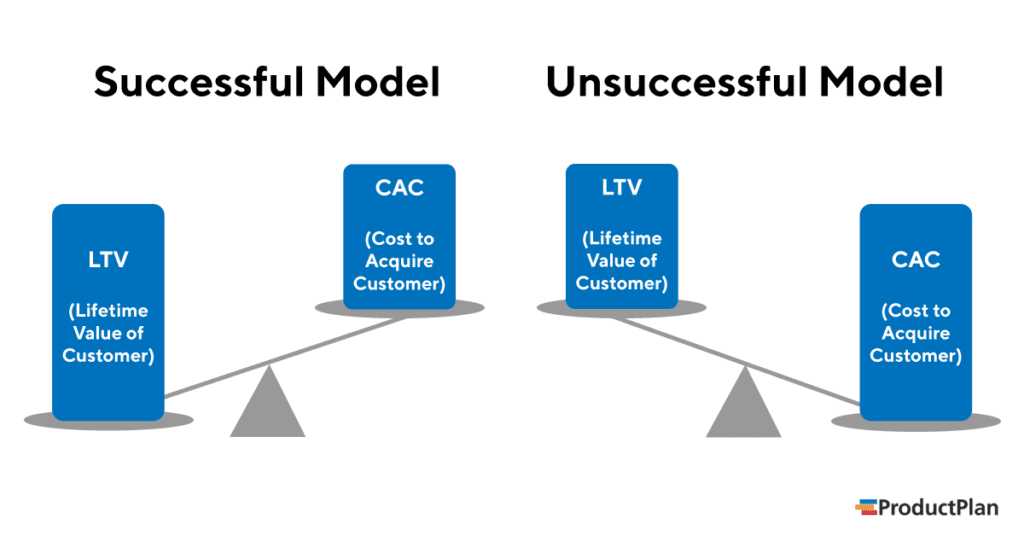
The relationship between what you pay to land a customer (CAC) and what you earn from them over time (LTV) says everything about your business model. If you routinely spend $100 to acquire a customer who brings in only $90, you’re burning cash with every signup. A healthy LTV/CAC ratio—usually 3:1 or higher—signals you have room to reinvest or scale. Anything less, and it’s time for a closer look at your sales, pricing, or retention tactics.
CAC Payback Period
How quickly does a new customer cover what you paid to acquire them? That’s your CAC payback period—the clock starts ticking the moment you spend the first marketing dollar. In capital-hungry industries or fast-growth startups, a shorter payback period frees up resources for reinvestment and lowers risk. Long payback periods may stretch your cash flow thin, leaving you vulnerable if churn spikes or markets shift.
Channel-Level and Segment-Level CAC Tracking
Not every marketing dollar works equally hard. Tracking CAC by acquisition channel reveals where money flows into dead ends, and where it sparks growth. Perhaps social ads drive signups, but SEO taps a more loyal customer audience. Segment-level CAC comparison—looking at customer cohorts such as location, plan type, or device—helps you double down on the profitable pockets while phasing out underperforming efforts. This precision makes scaling easier and budgets more predictable.
With clarity on how CAC influences decision-making across customer value, payback timeframes, and marketing channels, let’s explore the most effective strategies for improving acquisition efficiency and driving down costs.
How to Optimize and Reduce Customer Acquisition Cost
Optimizing Your Marketing and Sales Funnel
Take a close look at every step a lead takes before becoming a customer. Identify where people drop off during the journey, whether that’s after clicking an ad, filling out a form, or during a sales call. Use analytics tools like heatmaps and conversion tracking to pinpoint friction points. Remove unnecessary steps, simplify forms, and tailor follow-up emails to encourage smoother progression from visitor to customer.
Improving Website and Onboarding Conversion Rates
Your website and onboarding are often where prospects make their final decision. Test new versions of your landing pages with clear calls to action and remove distracting elements. Speed matters, so optimize page load times. For software products, streamline your signup process and give new users one simple action to take—a “next-best-step” feature rather than an overwhelming dashboard.
Leveraging Organic and Referral Channels
Paid ads alone can drive CAC up fast. Shift focus to organic search by updating your blog, creating educational resources, and optimizing pages for long-tail keywords your customers are searching for. Encourage referrals by setting up a simple, enticing referral program—think small rewards or early access to features for customers who share your product with friends or colleagues. A strong referral loop can turn happy customers into your best marketers at almost zero cost.
Enhancing Customer Value to Offset CAC
Sometimes the quickest way to “reduce” CAC is to earn more from each customer. Introduce features or services that encourage higher spending, such as premium plans or one-click upsells. Nurture long-term relationships with training, community, or support that keeps customers invested. The more loyal your customer base, the easier it becomes to balance your acquisition cost with increasing customer lifetime value.
Using Automation to Lower CAC
Manual tasks in marketing and sales quietly burn through budgets. Automate repetitive outreach—such as lead nurturing emails, appointment scheduling, or segmented content delivery. Use chatbots for quick answers on your site, and trigger emails based on visitor actions. Automation ensures every lead is engaged without requiring extra headcount or hours.
While trimming acquisition cost is crucial, knowing how your numbers compare to others in your industry provides vital context. Next, we’ll look at typical benchmarks so you can see where you stand and spot further opportunities for improvement.
FAQs on Customer Acquisition Cost
What is a good customer acquisition cost?
A “good” CAC is not universal—it depends on your business model, margins, and average customer lifetime value. For high-margin SaaS products, you might spend hundreds (or even thousands) to win a customer; for retail, acceptable CACs may be just a few dollars. A healthy rule of thumb: your CAC should be much less than your customer’s lifetime value. In many industries, a 3:1 LTV/CAC ratio is considered solid, but aim for better if possible.
How often should I calculate and review CAC?
Monitor CAC monthly if possible, or at least once per quarter. Markets, ad costs, and conversion rates shift quickly, and waiting too long can let underperforming campaigns linger. If you’re experimenting with new channels, shorter review cycles catch problems (and successes) early.
Does CAC include retention and upsell costs?
CAC measures what you spend to secure new customers only. It covers sales outreach, advertising, promotions, and onboarding—everything up to the first purchase or subscription. Ongoing retention activities (like customer support, upselling, or loyalty programs) don’t count toward CAC, but are crucial when calculating total customer profitability and lifetime value.
Now that you have answers to the most common CAC questions, it’s time to put this knowledge into action and start refining your strategy for acquiring new customers more efficiently.