
Accredited Investor vs Qualified Investor: Understanding the Differences

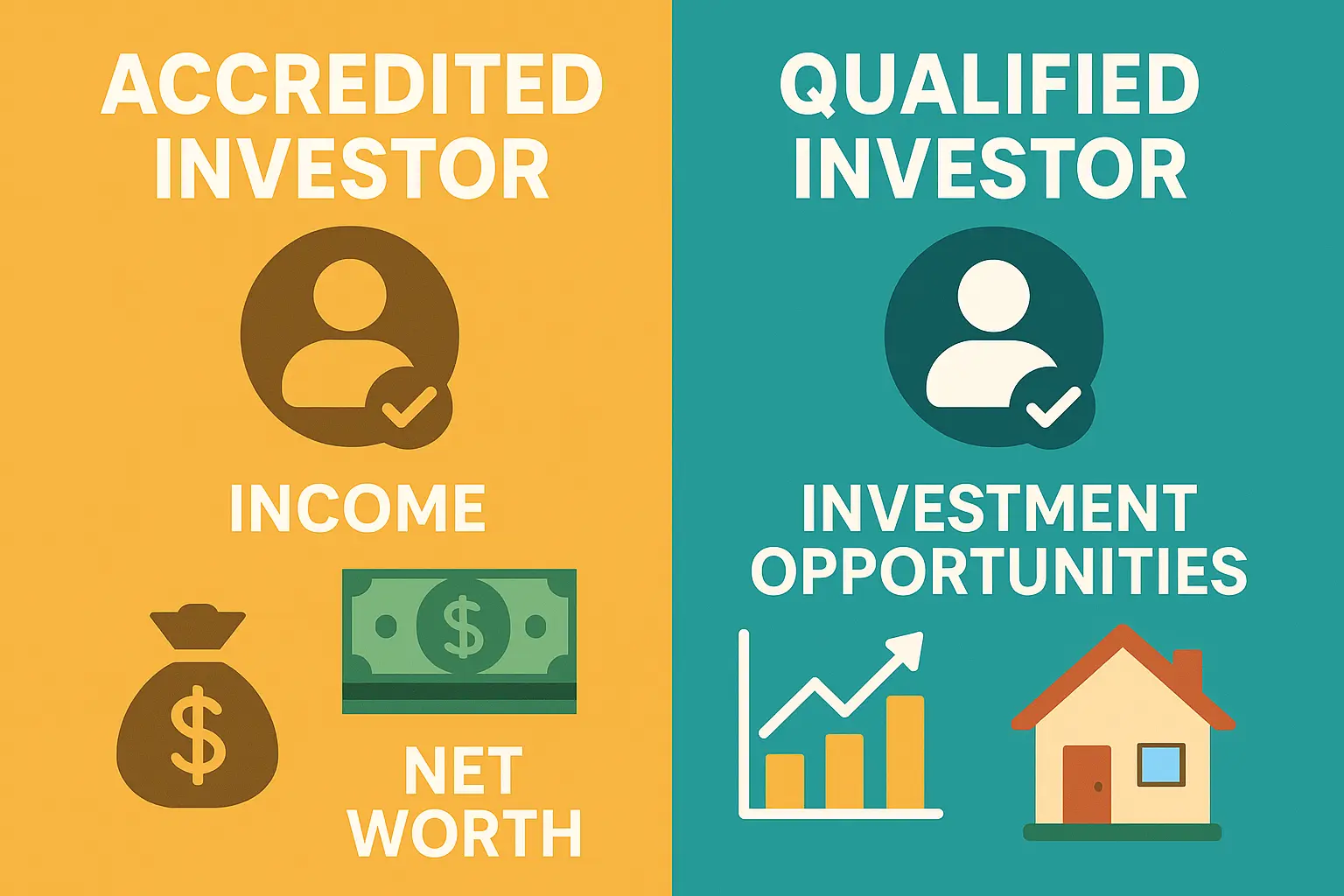
In the ever-evolving landscape of investment opportunities, understanding the nuances of investor classifications is crucial. Two prominent categories often discussed are accredited investors and qualified investors. While both statuses afford individuals and institutions access to unique investment opportunities, they come with distinct criteria, benefits, and implications. This post aims to unravel the complexities surrounding these classifications, providing a clear understanding of what sets them apart and what they mean for investors looking to leverage their financial potential. Whether you’re new to investing or seeking clarification to refine your strategy, understanding these terms will help you navigate the financial markets more effectively and make informed investment decisions.
Defining Accredited Investors
Criteria and Requirements
An accredited investor is defined by the U.S. Securities and Exchange Commission (SEC) as a person or entity that meets specific financial criteria, enabling them to invest in higher-risk or complex asset classes not readily available to the general public. To qualify as an individual accredited investor, a person must have an income exceeding $200,000 (or $300,000 combined with a spouse) over the last two years, with an expectation to maintain this level. Alternatively, the individual can qualify by having a net worth exceeding $1 million, excluding the primary residence.
Entities such as banks, insurance companies, and trusts with assets exceeding $5 million can also qualify as accredited investors under SEC guidelines. This classification provides access to a broader range of investment opportunities, including private placements, hedge funds, and venture capital funds.
Benefits of Being an Accredited Investor
Accredited investors are afforded the opportunity to diversify their investment portfolio with alternative investments, often reaping higher returns compared to traditional securities available to the general public. Additionally, they can participate in early funding rounds of startups, gaining access to potentially lucrative opportunities. Beyond tangible financial gains, accredited investors often gain exclusive insights and networking opportunities within elite investment circles, enhancing their financial literacy and market understanding.
Steps to Become an Accredited Investor
While there is no formal certification process to become an accredited investor, individuals must meet the outlined financial criteria. Verification typically occurs during investment offerings, where issuers may require documentation such as tax returns, financial statements, or confirmation from a financial advisor. It’s crucial for potential accredited investors to maintain accurate financial records and seek professional advice to ensure compliance with the SEC’s requirements.
As we transition to explore qualified investors, it’s worth noting the distinct pathways and opportunities each category unlocks, highlighting their unique roles in the broader financial landscape.
Understanding Qualified Investors
Criteria and Requirements
Qualified investors, often referred to as sophisticated investors, must meet specific criteria to demonstrate their understanding and capability to participate in higher-risk investments. Unlike accredited investors who primarily qualify based on income or net worth, qualified investors need to show a deeper level of investment expertise. This often includes possessing a certain amount of investment experience or professional certifications in related financial fields.
Advantages of Qualified Investor Status
Being recognized as a qualified investor provides several advantages. This status allows individuals to access a broader range of investment opportunities that are typically not available to the general public. These opportunities often include hedge funds, private equity deals, and complex derivative products. As a result, qualified investors can potentially achieve higher returns by diversifying their portfolios with these unique financial instruments.
How to Achieve Qualified Investor Status
Achieving the status of a qualified investor involves demonstrating financial acumen and understanding of investment risks. This can be attained through educational qualifications such as financial degrees or certifications like the Chartered Financial Analyst (CFA). Additionally, investment experience and a successful track record in managing sizable portfolios can also contribute to achieving this status.
With a clearer understanding of the characteristics and intricacies of both accredited and qualified investors, it’s essential to delve into a side-by-side analysis to truly comprehend how these categories align or differ. By exploring their unique features, investors can better determine which status suits their financial aspirations and capabilities.
Comparative Analysis: Accredited vs Qualified Investors
Key Similarities and Differences
While both accredited and qualified investors serve as benchmarks in the financial industry, they have distinct criteria and implications. Accredited investors are defined primarily by income thresholds and net worth, allowing them more direct access to certain high-risk investment opportunities. On the other hand, qualified investors, often referred to as “qualified purchasers” in the United States, usually meet even higher financial criteria, providing them access to even more exclusive investment opportunities, such as private equity funds and hedge funds. The major similarity between the two is the overarching goal to ensure that investors have sufficient financial acumen and stability to handle higher-risk investments. However, the financial requirements and range of accessible investments can vary significantly.
Impact on Investment Opportunities
The investor status directly impacts the type of investment opportunities one can pursue. Accredited investors can access a variety of investments such as private placements, venture capital, and startup investments. However, their choices are still somewhat more limited compared to qualified investors who can access more exclusive and often higher-yield investments. This provides qualified investors with the potential for more significant returns, albeit with increased risk.
Which Investor Status is Right for You?
Your path in selecting the right investor status largely depends on your financial situation, investment knowledge, and risk tolerance. For individuals with substantial financial resources looking to explore a broader range of investment opportunities and are capable of underwriting higher risks, becoming a qualified investor could be beneficial. Conversely, those who meet the requirements for accredited investors can also benefit significantly by accessing alternative investments without being full-scale qualified investors.
Understanding the difference between these investor statuses is essential in making informed decisions regarding your investment strategy and financial planning. Next, we delve into the regulatory landscape, exploring the role of the SEC in shaping the qualification requirements and the importance of these regulations in protecting investors and maintaining market stability.
The Role of SEC in Investor Qualification
Why Certain Investments are Restricted
The U.S. Securities and Exchange Commission (SEC) plays a pivotal role in determining who qualifies as an investor under various categories. The primary objective of the SEC in imposing qualifications such as accredited and qualified investor statuses is to protect individuals from investing in high-risk opportunities that may not be suitable for them. By restricting certain investments to those who meet these specific qualifications, the SEC aims to ensure that investors possess a level of financial literacy and the capacity to bear potential losses.
Many investment opportunities, particularly those that are not registered with the SEC, pose high risks due to their speculative nature. These include private placements, hedge funds, and certain types of start-up investments. The restriction to accredited and qualified investors helps to ensure that participants in these investment vehicles are sufficiently sophisticated and financially stable to handle the associated risks.
Future Trends in Investor Qualifications
The landscape of investor qualifications is not static. As financial markets evolve, so too do the rules and regulations governing investor credentials. The SEC regularly reviews its criteria to adapt to new market realities, including advancements in technology and changes in the economic environment.
Recently, there has been a movement towards expanding the criteria to include metrics beyond purely financial measures. For instance, individuals with relevant financial knowledge, demonstrated through certifications or professional credentials, may qualify as investors. This change reflects the broader recognition that financial aptitude may extend beyond wealth and income factors.
Understanding the role of the SEC in shaping investor qualifications reveals the delicate balance between allowing market participation and safeguarding individuals. As we delve into the evolution and implications of these qualifications, it is equally important to examine how an investor can position themselves within these frameworks to maximize their financial opportunities.
The next section dives deeper into actionable strategies that can help potential investors take advantage of their respective statuses, offering a practical guide for navigating this intricate landscape.