
Investor Agreement Template: What to Include and How to Use One

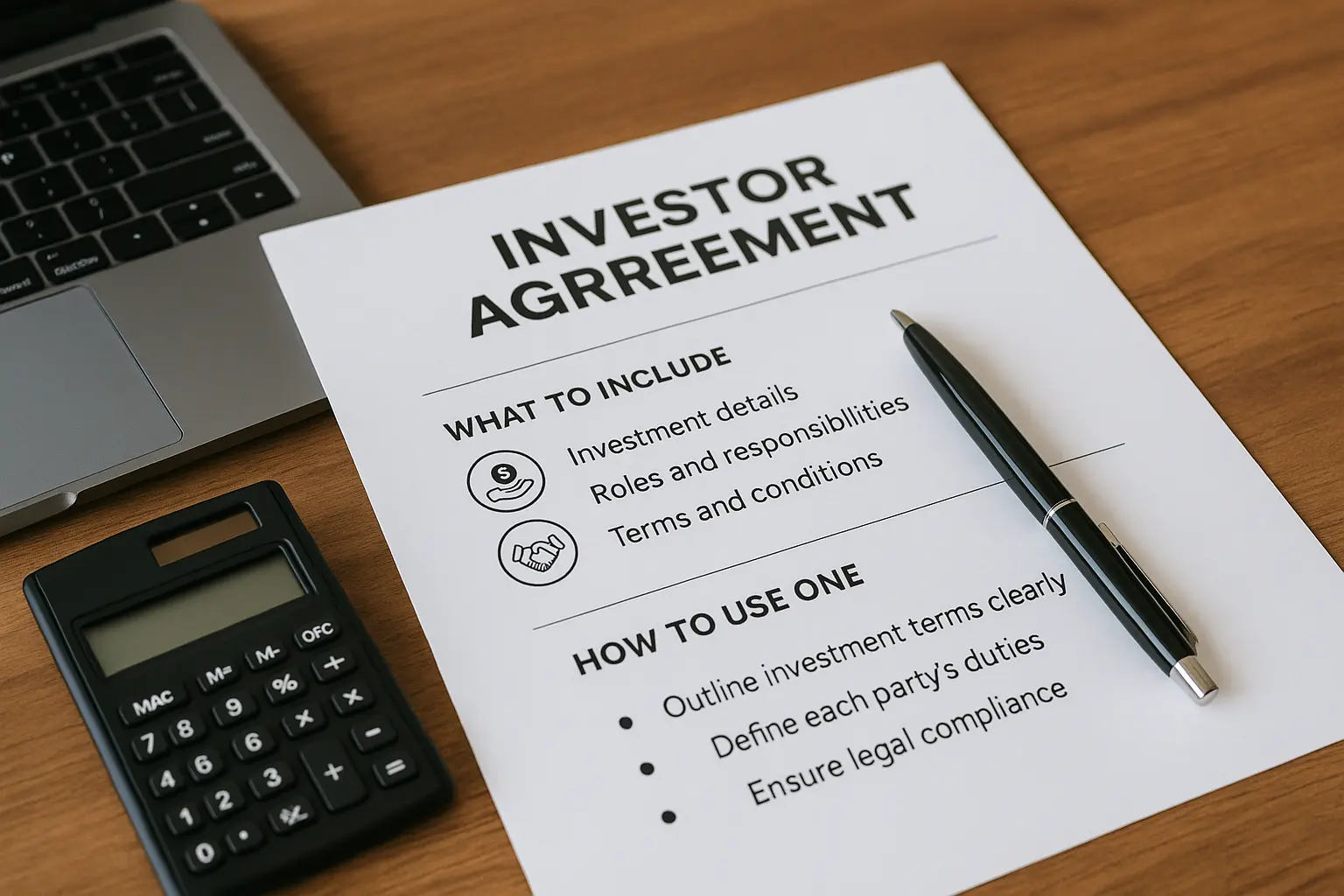
Bringing in investors can fuel your business’s growth, but it also means sharing ownership, making big decisions together, and handling money that isn’t just your own. In fact, according to a Harvard Business Review study, over 65% of startup failures stem from co-founder and investor disagreements. Having a clear investor agreement in place isn’t just about covering legal bases—it’s about setting expectations, defining everyone’s roles, and preventing misunderstandings down the road.
If you’re starting out, especially with friends, family, or angel investors, it’s easy to skip the paperwork in favor of handshakes. But an investor agreement template helps you lay out the key details, like how much is being invested, what rights each person has, and what happens if things don’t go as planned. This article walks you through what to include in an investor agreement and how to customize a template, so you can focus on building your business with confidence and trust.
Understanding Investor Agreements
What is an Investor Agreement?
An investor agreement is a legal contract that spells out the specific terms between a company and its investors. This document sets the ground rules for how funds are provided, how ownership is shared, and what rights and responsibilities each party has moving forward. Unlike a handshake or a basic promise, an investor agreement turns good intentions into clear, enforceable commitments.
These agreements can take different shapes—sometimes called investment agreements or subscription agreements—but they always serve one main purpose: defining exactly what both the investor and the business founder are agreeing to. Common elements include the amount invested, equity given, voting rights, expectations for involvement, and the process for exiting the partnership.
Why an Investor Agreement Matters
Without a written agreement, investors and founders risk serious misunderstandings. Key details—like who gets what share of profits or who makes critical decisions—can quickly become points of conflict. An investor agreement helps avoid this friction by putting every detail in writing before money changes hands.
This document also adds a layer of trust and professionalism to your working relationship. Investors feel reassured that their contribution won’t be misused, and founders have assurance about the terms of the deal. In the event things don’t go as planned, a solid agreement becomes the reference point for resolving disputes.
Up next, we’ll explore the best moments to put an investor agreement in place and discover situations where having a reliable template saves both time and trouble.
When to Use an Investor Agreement Template
Scenarios for Early-Stage Startups
Launching a new venture comes with a whirlwind of decisions. One of the first critical steps is defining the relationship between founders and outside investors. Using an investor agreement template can save time and prevent misunderstandings when your company is just getting off the ground. Early-stage startups typically lean on templates when they’re configuring seed rounds, bringing on their first outside partners, or formalizing convertible note arrangements—before in-depth legal customization is feasible.
Family, Friends, and Angel Investments
Money from relatives, friends, or local angel investors often arrives informally, but handshake agreements can backfire. An investor agreement template offers a straightforward way to document expectations right from the start. This protects relationships, clarifies what each party expects, and lays out what happens if things don’t go as planned. Templates guide you to cover key points often overlooked in informal deals, reducing the risk of disputes or confusion down the road.
Knowing exactly when to use an investor agreement template lets you approach new investments confidently. Next, we’ll explore the essential components your agreement should include, so you can prepare the right document for any situation.
Key Elements of an Investor Agreement Template
Investment Amount and Structure
Every investor agreement begins by spelling out how much money is being invested and under what terms. Is this a straight equity investment, convertible note, or a SAFE (Simple Agreement for Future Equity)? Defining the investment vehicle helps both sides understand obligations from day one.
Ownership, Equity, and Voting Rights
Make it crystal clear what ownership percentage the investor receives, how voting rights are handled, and whether any special shares are involved. Detail how dilution works if more funding rounds happen, so there are no surprises down the line.
Control and Management Provisions
Control provisions state who’s steering the ship. Will the investor get a seat on the board, approval rights on major decisions, or observer status? Outlining these points sets expectations for involvement and keeps everyone aligned.
Payouts, Returns, and Exit Plans
Specify how and when profits or dividends are shared, how exits work, and what happens if the business is sold or goes public. The agreement should document any preferences investors have for their return—such as liquidation preferences, or rights of first refusal.
Non-Disclosure and Non-Compete Clauses
To protect confidential business information and avoid conflicts of interest, include clear confidentiality terms and, if needed, non-compete clauses. This safeguards your business from leaks or future competition.
Dispute Resolution and Termination
Outline what happens if things go sideways. Will disputes go to mediation, arbitration, or court? Be clear about how either party can terminate the agreement and what triggers a potential early exit for the investor.
With the key ingredients laid out, the next step is understanding how to tailor your agreement so it genuinely fits your company’s structure and stage. This will help ensure it works as a practical tool—not just paperwork—for safeguarding your vision and your investors’ interests.
Thank you for reading EasyVC’s blog!
Are you looking for investors for your startup?
Try EasyVC for free and automate your investor outreach through portfolio founders!
Ready to take the guesswork out of structuring your next investment deal? Download our investor agreement template to save hours drafting documents and start negotiations on solid ground. Get clarity, minimize disputes, and protect everyone at the table from day one.
Now that you know why a sound agreement matters, let’s roll up our sleeves and get your template tailored for your unique business structure and goals.
[CTA-HOOK]Step-by-Step: Customizing the Template for Your Business
Adapting for LLCs, Partnerships, or Corporations
No two businesses look alike—and neither should their investor agreements. Start by identifying your legal structure. For LLCs, you’ll want to clarify member rights and profit distribution rules. Partnerships require language stating each partner’s obligations and management voice. Corporations demand precision about share classes, board seats, and voting power.
Edit the template so that the investment terms match your business’s reality. For example, if you’re an LLC, swap out “shareholder” for “member,” and adjust any default clauses around dividends to reflect how profits get distributed in your setup. If you’re a corporation issuing preferred shares, outline those preferences directly—don’t leave stakeholders guessing. Take the time to align terminology and expectations so the agreement truly fits your situation.
Adding Optional Clauses for Your Needs
Every founder has unique priorities. Some want to control how investors exit; others may need strict confidentiality. The template offers a solid foundation, but don’t hesitate to insert new clauses or remove boilerplate sections. Consider including specifics about information rights, anti-dilution protections, or non-compete obligations as needed.
If planning for future funding, write in how new investments will affect current ownership. Want a simple dispute resolution process? Spell it out now, not later. This customization will save endless headaches down the road. Remember, a “one-size-fits-all” agreement rarely works for long.

Once the template matches your business’s reality and priorities, you’re just about ready to put it into action. Next, let’s look at where to find a reliable investor agreement template, and how to make your first draft rock solid.
Investor Agreement Template: Download and Sample
Free Investor Agreement Template (Example Format)
If you’re ready to create your own investor agreement, starting with a clear sample can make the process faster and less overwhelming. Here’s a straightforward example that covers the essentials for most early investment deals:
Download a free, editable investor agreement template (Word & PDF) here to get started.

The image above gives you a peek at what a completed investor agreement might look like, including practical highlights.
Tips Before You Sign
Before anyone signs, double-check that each clause fits your situation. Make sure names are spelled correctly, terms are clear, and everyone’s expectations are spelled out. It pays to walk through each section with both investors and founders together to avoid missed details.
Also, remember to clarify how updates and amendments will work in the future. Agreements often need to adapt as companies grow or investors change, so plan for flexibility.
Once you have the template ready, the next step is making it truly your own—fitting it to your business structure, unique risks, and future plans. Let’s walk through how to customize the agreement so it actually serves your goals and avoids common mistakes.
FAQs about Investor Agreement Templates
Do I Need a Lawyer to Write or Review My Agreement?
While a template helps cover the basics, having a lawyer review your investor agreement is smart if you want to avoid headaches later. A lawyer can spot gaps, highlight confusing terms, and check your agreement matches local laws. Think of them as insurance against misunderstandings or legal surprises that could cost far more down the road.
What’s the Difference Between Investor and Shareholder Agreements?
An investor agreement often covers how and when someone invests, what they receive in return, and the rights attached to their money. Shareholder agreements, on the other hand, usually dig into how owners interact with one another, governance rules, and what happens if someone wants out. The two can overlap, but investor agreements are typically the first step for new money coming in, while shareholder agreements manage ongoing relationships between company owners.
Can This Template Be Used Internationally?
An investor agreement template is a starting point, not a universal solution. Legal requirements for investments change from country to country, and sometimes even from state to state. If you or your investor are located abroad, it’s wise to double-check local laws—and translation might be needed, too. For cross-border deals, get legal input to avoid surprises.
Understanding these common questions sets you up for smooth sailing when you dive into customizing an agreement for your own venture. Next, let’s walk through the practical steps to make your template the perfect fit for your unique business and investment scenario.