
Investment Memo Template: Structure, Examples, and Downloadable Format

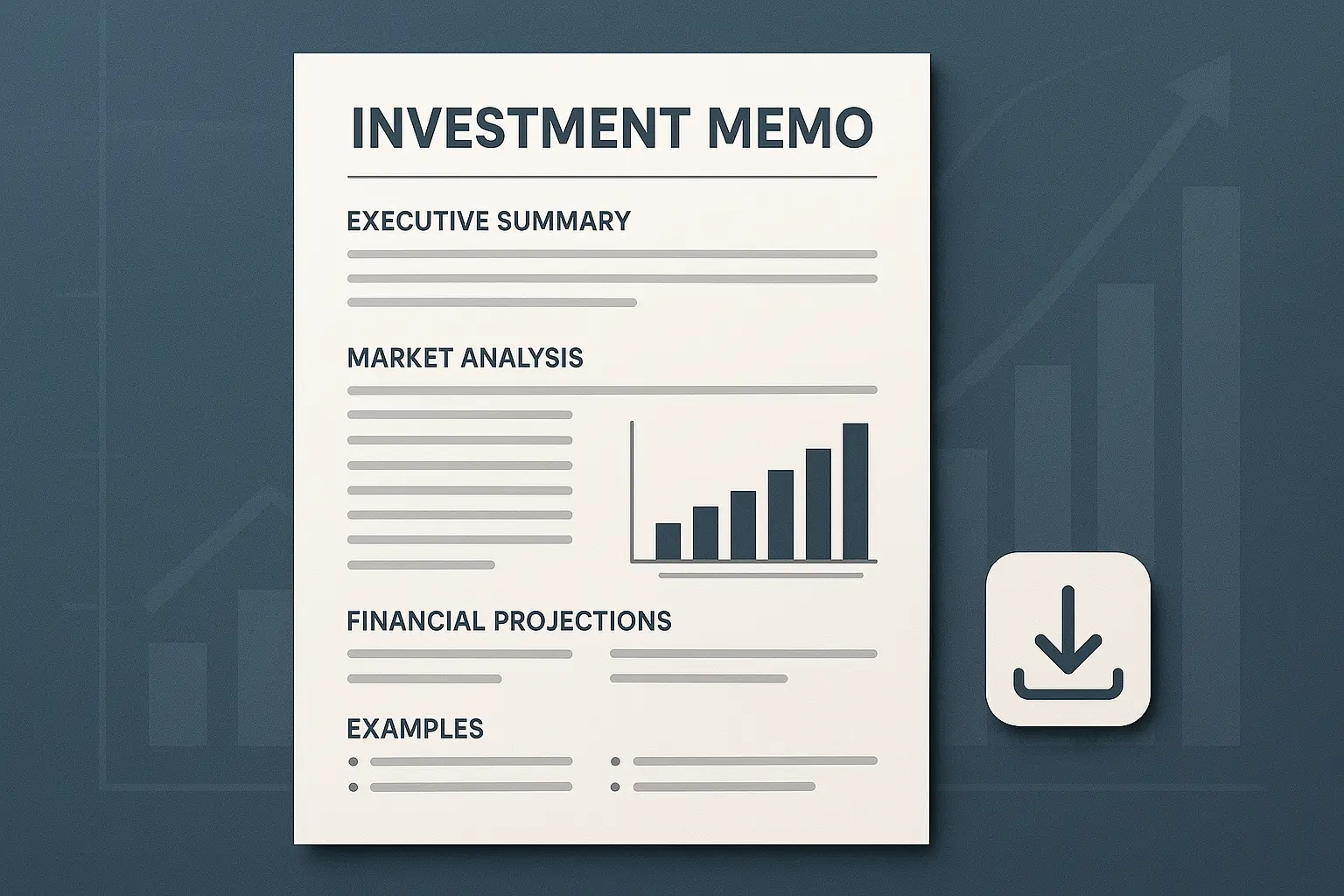
Writing an investment memo isn’t just for venture capitalists or private equity professionals—it’s a tool that anyone working on a startup, managing a portfolio, or considering an investment can use. A well-structured memo helps you organize your thoughts, challenge assumptions, and communicate your reasoning clearly. In fact, many investors credit their success to the discipline of documenting their investment thesis: according to a survey by the NVCA, over 80% of venture capital firms require formal investment memos before making a decision.
But crafting an investment memo from scratch can be intimidating. What should you include? How much detail is enough? Whether you’re preparing your first memo or looking to refine your process, this guide will walk you through the essential sections, provide real examples, and offer an easy-to-use template you can download and adapt. By the end, you’ll have everything you need to develop clear, compelling memos—without overthinking it.
Investment Memo Template Overview
What is an Investment Memo?
An investment memo is a concise document that lays out the key facts and rationale behind a potential investment decision. It’s not a pitch or a sales deck; instead, it distills research and analysis into a format that anyone on an investment committee can quickly review and understand. A well-structured memo crystallizes the key assumptions, highlights the risks, and explains the opportunity in plain terms.
When and Why to Use an Investment Memo?
Investment memos come into play before any official decision is made to invest. They act as a reality check, forcing the writer to articulate the main arguments driving their conviction—and to recognize any blind spots. These documents are especially useful for venture capital firms, angel investors, and internal innovation teams who want a consistent framework for decision making. By committing thoughts to paper, teams prevent groupthink, track their thinking over time, and make post-investment reviews more objective.
Now that we’ve outlined the purpose and role of an investment memo, let’s look at the must-have sections that help make each memo complete and actionable.
Essential Sections to Include in Your Investment Memo
Company and Market Snapshot
Begin with a short, sharp introduction to the business. Summarize the company’s name, foundational details, and the basic concept. Locate the business within its market—what segment is it in, and who are the main customers?
Problem and Solution
Identify the underlying pain point the company addresses. Explain why this problem matters and clearly outline how the company’s offering provides a meaningful fix or advantage.
Product and Technology
Describe what the company actually builds or delivers. Highlight any intellectual property, key technical features, or unique aspects of the product or platform.
Market Opportunity and Sizing
Quantify the addressable market. Use numbers or credible sources to demonstrate just how big the playground can be for the business, and explain why now is the right moment to act.
Team Overview
Share concise backgrounds of the core team. Spotlight relevant expertise and any experience that sets the founders or leadership apart for this venture.
Traction and Key Metrics
Back up the opportunity with tangible evidence. Show growth using actual results: user numbers, revenue, retention, churn, or any data that signals momentum.
Business Model and Revenue
Lay out how the company earns money and through which streams. Specify pricing, sales cycles, and anything illustrating the path to scale.
Competition and Differentiation
List direct and indirect competitors. Focus on the edge the company has—be it a product feature, distribution advantage, or other moat.
Go-to-Market and Growth Strategy
Explain how the company reaches customers and what channels, partnerships, or tactics drive expansion. Include any pilot wins, early partnerships, or viral loops. For more detailed insights, see our go to market strategy pitch deck guide.
Financials and Funding Ask
Present summary financials—revenue to date, burn rate, and cash runway. Clarify how much funding is sought, and outline how new capital advances the plan.
Risks and Mitigations
Call out the main risks or uncertainties. Address how the company plans to handle them, so readers know the challenges aren’t ignored.
Having your memo organized in this way equips investors and decision-makers to move swiftly from high-level understanding to detailed diligence. Next, let’s explore how to approach each section so your message lands with real clarity and conviction.
How to Fill Out an Investment Memo Template Effectively
Key Questions Investors Expect Answered
Investors use an investment memo to quickly judge if a deal merits their time. Your answers should make it easy for them to follow the logic behind your thesis. Start by stating what the company does and what makes now the right time for this business. Spell out the pain point and why the solution is urgent. Describe how big the market can realistically become, then lay out how the product fits into that landscape. Investors also want to know about the people behind the business: their track records and what sets this team apart. Finally, be clear about what’s needed—the funding ask, the use of funds, and the core milestones the team will achieve with the new capital.
Tips for Clarity and Conviction
Short sentences win. Lead with the takeaway in each section: don’t hide results or critical details in the middle of a paragraph. Use numbers wherever you can—market size, growth rates, user counts, revenue traction—without overcomplicating. Avoid filler words; if a fact doesn’t support your main point, cut it. Treat every section like it must stand on its own, so a reader skimming through finds the essential insight immediately. Showing conviction in your belief doesn’t mean hype—it means making your case with facts and clear reasoning. When outlining risks, show you already have possible mitigations in mind.

Inserting data charts, bullet lists, or a short summary table—like the one in this image—can highlight traction, team expertise, or go-to-market achievements in a way that stands out at first glance.
Common Mistakes in Investment Memos
One of the biggest errors is using vague claims, like “huge market” or “strong team,” without specifics. Overselling or glossing over risks erodes credibility as quickly as missing numbers. A memo cluttered with buzzwords or unclear statements slows readers down and signals weak thinking. Don’t forget to address competition fairly or leave out material weaknesses—savvy investors will notice. Overlooking formatting basics like section headings or logical flow can cause solid insights to get lost.
Once you’ve crafted a memo that answers the right questions with clarity and precision, the next step is to put effective templates into action—making it simple to capture every key point in your own detailed investment memo.
Thank you for reading EasyVC’s blog!
Are you looking for investors for your startup?
Try EasyVC for free and automate your investor outreach through portfolio founders!
Download: Ready-to-Use Investment Memo Template
Editable Investment Memo Template (PDF/Word/Google Docs)
Skip the hassle of building your investment memo from scratch. Our template is clean, intuitive, and saves you time, so you can focus on what truly matters: your analysis. Download the template in your preferred format—whether you need a PDF to print, a Word document for customization, or a Google Docs link for easy sharing with your team.
The template includes all critical sections: company snapshot, market sizing, traction, business model, team, risks, and more—aligned with investor expectations. Each section contains prompts and tips directly in the document to help you fill in what matters.

Download as PDF | Download as Word | Open in Google Docs
Sample Investment Memo Example
To make the template even easier to use, we’ve included a real-world sample investment memo. See exactly how the structure looks when filled out, including sample company analysis, market opportunity sizing, and risk assessment. This example acts as a guide or source of inspiration as you draft your own memo.
Ready to get started? In the following section, you’ll find guidance on how to fill out your investment memo effectively—including what investors want to see and secrets for making your points clear and persuasive.
Final Thoughts: Reviewing, Updating, and Sharing Your Memo
When to Revise Your Memo
Your investment memo isn’t a static snapshot; it’s a living document. As new information comes in—like updated traction numbers, shifts in team roles, or pivots in strategy—refresh the memo so it continues to reflect reality. Regular updates are especially important before important meetings, new funding rounds, or when a potential investor asks for specific details you haven’t captured yet.
Who Should Review
Before circulating your memo, gather feedback from people who understand the business but aren’t too close to the details. Colleagues from other teams, advisors, or even an external mentor can spot gaps, unclear sections, or areas that need more evidence. Their outside perspective helps make your case sharper and more credible.
Sharing the memo thoughtfully is just as important as drafting it. Provide context to your stakeholders when you send it, so they understand your goals and where their feedback is most valuable. A well-distributed, actively reviewed memo keeps your narrative aligned and your team moving forward with confidence.
As you work toward building your own investment memo, let’s look at practical tools and ready-made resources that streamline the entire process.