
Exploring Venture Capitalists by Check Size

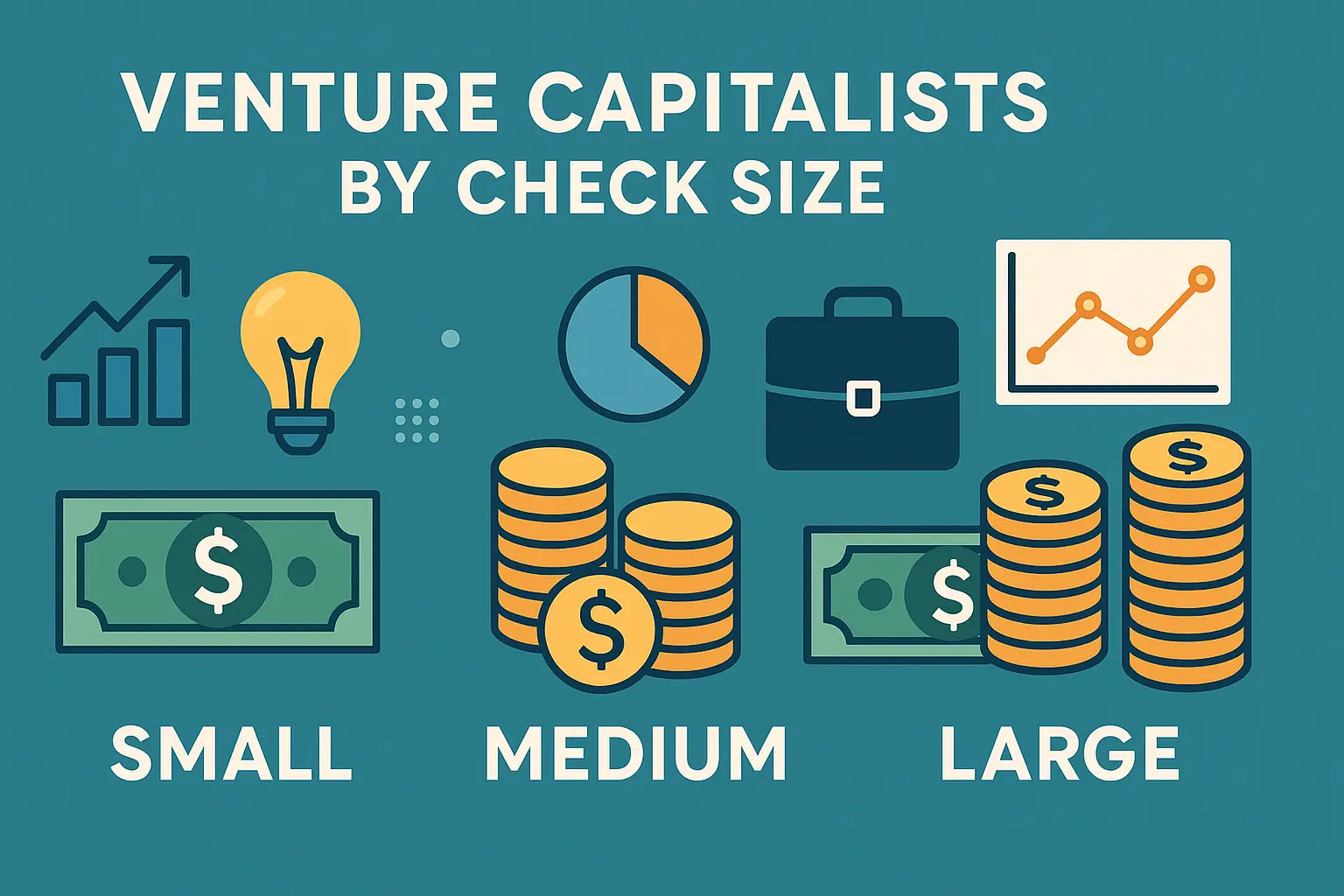
When you’re raising money for a startup, one of the first things you’ll hear about is the “check size” a venture capitalist is willing to write. But what does that really mean, and why does it matter so much? The size of a VC’s check determines much more than how much money you get upfront. It shapes which investors are a fit for you, what kind of support and expectations they’ll have, and even how your company grows.
In fact, according to PitchBook, the median early-stage VC deal size in the US rose from around $2 million in 2015 to more than $4 million by 2023. But behind those medians lies a huge range: many micro VCs invest as little as $25,000, while late-stage funds can invest tens of millions in a single round. Learning to navigate this landscape can make all the difference—whether you’re aiming for your first pre-seed round or planning to scale to the next level. In this article, we’ll break down the types of VCs by check size, what each means for founders, and how you can find the right fit for your goals.
How Check Size Shapes VC Strategies
Why Check Size Matters for Startups and Investors
Check size isn’t just a number—it’s a signal. It tells a founder what kind of relationship to expect, how involved an investor might get, and how much pressure they’ll feel around growth. Smaller checks tend to come with more hands-off support, often ideal for founders experimenting with early concepts or testing product-market fit. Larger checks, on the other hand, usually mean more oversight and bigger expectations. Investors writing bigger checks need more at stake, so they’ll push harder for results and growth milestones.
For investors, check size helps shape portfolio construction. Micro VCs may spread their capital across dozens of bets, absorbing more failures for the shot at one breakout success. Growth VCs, by contrast, concentrate their capital into fewer companies, sometimes fighting for board seats or making strategic introductions to maximize returns.
Typical Check Sizes Explained: Pre-Seed to Growth
At the earliest, pre-seed and seed stages, checks often range from $25,000 to $500,000—sufficient fuel to validate a promising idea or build a minimum viable product. Early- and Series A rounds typically bring in $500,000 to $2 million, supporting the transition from scrappy prototype to market traction. By the time a company hits growth-stage, checks can jump to $2 million and up, underwriting market expansion, hiring, and often global ambitions.
Every stage and check size draws a different breed of VC, each with its own preferred way of working and risk appetite. Startups navigating this landscape should pay close attention—not just to the dollars offered, but to the strategic implications attached to them.
Up next, we’ll break down the main types of venture capitalists by the check sizes they specialize in, revealing how these different approaches shape the world of startup investing.
Types of Venture Capitalists by Check Size
Venture capitalists are far from one-size-fits-all. They carve out their investment identities by the check sizes they write, each size bracket signaling a distinct appetite for risk, involvement, and returns.
Micro VCs: $25K to $500K
Micro VCs are the sprinters at the starting line, usually coming in with checks from as little as $25,000 up to around $500,000. These funds often back founders before there’s much proof—a bet on raw ambition and scrappy prototypes. Micro VCs lean in where angels leave off, sometimes participating in founder-friendly early rounds with light structure. Speed and conviction trump process here. Portfolio sizes balloon, often with dozens or hundreds of tiny bets, as these firms aim to spot the next breakout with minimal initial capital at risk.
Seed and Early-Stage VCs: $500K to $2M
Seed and early-stage VCs play at the intersection of vision and validation. Typical checks range from $500,000 to $2 million for startups with some early validation—think initial metrics, a launched product, or the first users trickling in. Partners at these funds roll up their sleeves, offering advice and opening doors, but expect a step up in diligence and process. Investments might be solo, but co-investment with fellow funds is common to spread risk and pad the cap table with strategic backers. Equity stakes are higher, and expectations for regular reporting start here.
Growth and Late-Stage VCs: $2M and Up
Growth and late-stage VCs arrive when the startup’s proof points are impossible to ignore. Their checks start at $2 million and can easily rocket into tens or hundreds of millions for the biggest rounds. These investors hunt for companies ready to scale aggressively—think product-market fit, solid revenue, and plans to dominate a sector. In return for large sums, they expect significant equity, board seats, and a say in strategy. Process is more rigorous, but the access to follow-on capital and major networks comes as part of the bargain.

Understanding where a VC fits on this spectrum helps founders target the right conversations—and decode investor behavior. Next, let’s dig into how you can spot these VCs by their typical check sizes before you reach out or craft your pitch.
How to Identify VCs by Preferred Check Size
If you want to save time and avoid chasing the wrong leads, pinpointing a venture capitalist’s typical check size is key. Some investors are open to wide check size ranges, but most stick to sweet spots based on their fund size, investment strategy, and portfolio goals. Figuring out these patterns can help you focus your outreach and boost your fundraising efficiency.
Sourcing Check Size Data: Databases, Pitch Books, and Networking
Public databases like Crunchbase, PitchBook, AngelList, and Dealroom often list recent deals and check sizes. You might spot an investor’s range just by filtering portfolio rounds. Most VC firms include their preferred investment size on their websites, albeit sometimes buried in FAQs or portfolio company info.
Pitch books—those investor overviews shared by VCs themselves—are goldmines for this detail. They often disclose check size preferences in slides meant for limited partners or founders. Conferences, demo days, and founder Slack/Discord groups can also reveal soft intel on how much a firm usually commits to each deal.
Understanding Patterns by Industry, Geography, and Fund Size
Trends in check size aren’t uniform. VCs who focus on capital-intensive industries (like biotech, hardware, or deeptech) typically back startups with bigger checks, simply because those founders need runway. On the other hand, consumer apps or SaaS companies may attract more micro-VCs or angel syndicates able to write smaller checks.
Geography also impacts check size. U.S. and Bay Area VCs usually invest more per deal than their European or emerging market counterparts. The fund size plays a role, too: a $50M fund manager will target smaller deals to maintain a diversified portfolio, while $1B+ funds are built to deploy hefty checks as they scale up winners.
Once you know how to decode these indicators, targeting the right investors becomes less of a guessing game. Next, let’s weigh what different check sizes actually mean for founders aiming for runway, speed, and terms on the table.
Advantages and Drawbacks of Different VC Check Sizes
Smaller Checks: Flexibility and Founder Control
Smaller venture investments, often under $1 million, offer breathing room for founders. With fewer dollars on the table, investors usually demand less immediate influence over decisions, allowing founders to drive vision and strategy. This means fewer board seats, lighter reporting requirements, and more room to learn, pivot, and experiment.
Yet, the limited amount of capital can slow growth and prolong periods between funding rounds. Founders might need to piece together several small checks, leading to a crowded cap table and the task of managing a growing list of investor relationships. Some micro VCs may lack the broad networks and resources of larger funds, too.
Larger Checks: Faster Scaling, More Demands
When an investor writes a large check—often several million or more—the company gets the fuel to accelerate hiring, expand into new markets, and outpace competitors. Bigger checks frequently come with deep networks and operational support, which can open doors to new hires, customers, and follow-on capital.
But more money means higher expectations. Investors putting in large sums typically want a seat at the table and significant say in company direction. Founders may give up more equity earlier, and face stricter targets, oversight, and frequent progress check-ins. If growth doesn’t keep pace with investment, future financing can get tricky.
Understanding the trade-offs between check sizes helps founders navigate not just fundraising, but also the kind of relationship—and trajectory—they shape with their investors. In the following section, we’ll explore how to match these differences to your company’s ambitions and stage.
Selecting the Right VC for Your Funding Needs
Matching Your Stage and Ambitions
Before pitching pitch decks or scheduling calls, take a hard look at how much capital suits your objectives. Founders at a concept stage chasing a $5 million check will find themselves squeezed out before they can even finish their sentence. If you need just enough to build a minimum viable product, micro VCs might offer small but crucial checks—think $100K to $500K—that keep early equity dilution low and hands-on support high. On the flip side, if your aim is a nationwide launch or international expansion in the next 12 months, small checks may simply not move the needle. Map your ambitions to realistic capital needs, then shortlist VCs whose check sizes and portfolio signal genuine alignment with those needs.
Questions to Ask Investors About Their Typical Check Size
One of the best ways to save time and avoid mismatches: ask investors directly how much they typically invest. Don’t be afraid to pin down the actual range. Is $250K their usual floor, with most of their capital going to $1M+ rounds? Do they reserve extra for follow-ons or are they “one and done”? Find out how check size relates to their involvement—do larger checks come with more board seats or veto power? The clarity of these answers will quickly reveal if their approach suits your path, or if you may end up shoehorned into an investor’s one-size-fits-all model.
Knowing how to spot the right check size and VC fit is only half the challenge—next, let’s look at which investors actually dominate each segment, so you can build a focused target list and avoid dead ends.
Top Venture Capitalists, Sorted by Check Size (With Examples)
Notable Micro VCs and Typical Investments
Micro VCs specialize in funding the earliest stages of a startup’s journey, often writing checks in the $50,000–$500,000 range. These firms typically back founders before a product ever goes public.
A16Z’s seed fund sometimes makes micro investments, but dedicated names include Uncork Capital, known for their early bets on Postmates and Fitbit, and Initialized Capital, which seeded companies like Instacart with checks around $100,000–$500,000.
Emerging micro funds such as Haystack (backers of DoorDash and Instacart) and Female Founders Fund (backers of BentoBox and Tala) are also highly active in this sphere.
Leading Early-Stage VCs and Average Checks
Early-stage VCs move up the check size ladder, often investing $750,000–$2 million in seed or Series A rounds. At this level, investors like First Round Capital (early in Uber and Square) and Lightspeed Venture Partners ($1M–$2.5M initial bets on companies such as Snap) drive capital into teams ready for traction.
USV (Union Square Ventures) is another stand-out, initially investing $1 million in Twitter’s Series A. Homebrew fueled startups like Plaid and Gusto with similar check sizes.
Internationally, Seedcamp in Europe and 500 Startups globally follow this early-stage playbook, with check sizes starting at $100,000 and rising to $1.5 million as their conviction grows.
Well-Known Growth VCs and Large Investments
Growth-stage investors write outsized checks—often $10 million or much more—participating in Series B, C and beyond. Sequoia Capital led WhatsApp’s $60 million Series B. Accel pumped $12.7 million into Facebook during its growth phase. Tiger Global is aggressive in this arena, sometimes wiring $50 million–$100 million checks as companies scale.
Insight Partners and SoftBank Vision Fund are also heavy hitters, with SoftBank notorious for $100 million+ investments in late-stage tech startups like DoorDash and Coupang.
Each tier of venture capital brings its own dynamics and expectations. Knowing who writes what kind of check helps founders target their investor shortlist with precision. From here, let’s break down how you can spot these patterns in the real world and approach the right funds with confidence.