
Cybersecurity Venture Capital: Trends, Top Firms, and How to Attract Investment


Cybersecurity is no longer just a concern for large enterprises—it’s something that affects us all, from small businesses to everyday users. With digital threats growing more complex and frequent each year, the demand for new security solutions has never been higher. Venture capital is at the heart of this race, helping security innovators build and scale defenses for a rapidly changing world.
In 2022 alone, global investment in cybersecurity startups exceeded $20 billion, even as broader tech funding markets tightened. The stakes are clear: as attackers keep evolving, investors are betting big on the companies that can outpace them. But what does the current landscape look like? Who are the top firms driving these investments? And if you’re building a cybersecurity startup, what does it take to get their attention?
This article dives into the key trends shaping cybersecurity venture capital, introduces the most active investors, and shares practical tips for founders looking to attract funding in a dynamic (and sometimes unpredictable) field.
Why Venture Capital Matters in Cybersecurity
The need for rapid innovation
Cyber threats don’t wait for annual product cycles. The adversary is always on, probing for weaknesses, demanding startups to invent, deploy, and scale solutions in record time. Venture capital doesn’t just supply money—it injects fuel for urgency. For cybersecurity startups, VC provides the breathing room to solve tough technical challenges without taking their eyes off the finish line. A well-timed investment can mean the difference between releasing a pioneering anti-ransomware platform this quarter or watching another breach headline steal the spotlight.
Evolution of threats and solutions
Attack methods morph overnight. This constant evolution pulls innovative ideas from the whiteboard into real-world deployment with relentless speed. Venture capital firms bring with them a network of advisors, early adopter customers, and seasoned operators who’ve seen attack waves crest and crash before. Their involvement drives smarter experimentation, tougher scrutiny, and pushes startups beyond mere compliance tools into territory that predicts, disrupts, and repairs in real time.
In cybersecurity, the stakes are always rising. Now that we’ve unpacked why outside investment is so pivotal, let’s look at how the flow of capital is shaping which cyber frontiers get attention—and which companies can seize the moment.
Key Trends in Cybersecurity Venture Capital
Deal volume and funding activity
Cybersecurity venture dealmaking isn’t following the script of other tech sectors. While 2021 saw an extraordinary spike in funding, recent quarters have revealed a nuanced story—a decline in mega-rounds, but a remarkably steady volume of early-stage deals. Investors are becoming more selective, looking for razor-sharp solutions addressing today’s threat landscape. 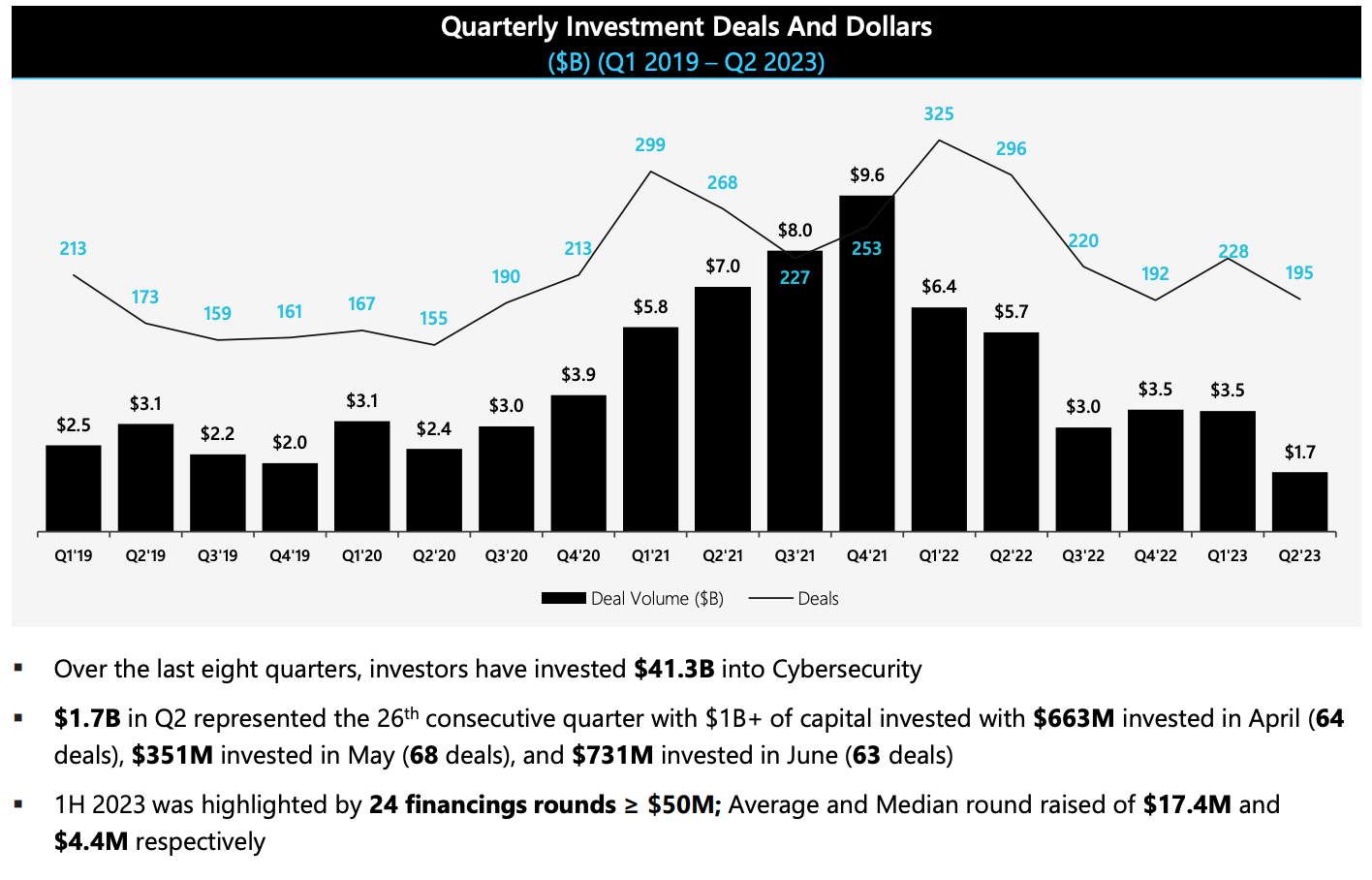 The chart above illustrates this ebb and flow: after a peak, capital is still flowing into promising upstarts, especially those with differentiated technology or execution.
Emerging investment themes (AI, cloud, resilience)
AI and machine learning are dominating pitch decks, but funds are reserved for startups with concrete security applications—think threat detection, automated response, or AI-powered risk analysis. Cloud-first security and zero trust aren’t just buzzwords; they’re requirements for scaling in hybrid and multi-cloud realities. Meanwhile, cyber resilience—rapid recovery and minimization of business disruption post-attack—is gaining ground as Fortune 500s rethink their risk strategies. Investors want evidence: demonstrable impact, not hype.
Global expansion and regional hotspots
The days of US-only cybersecurity innovation are over. Israel remains a magnet for top-tier early-stage teams, but new hotspots—like Singapore, London, and Berlin—are drawing international venture interest. State-backed initiatives and a surge of local talent are turning these regions into contenders, with unique solutions tailored to regional privacy and regulatory needs. The global chessboard is in play: VCs are increasingly scouting capabilities beyond Silicon Valley.
Understanding these trends lays the groundwork for identifying which venture capital firms are shaping the industry’s direction—and what entrepreneurs can expect from the current investment landscape.
Most Active Cybersecurity Venture Capital Firms
Top global VC firms
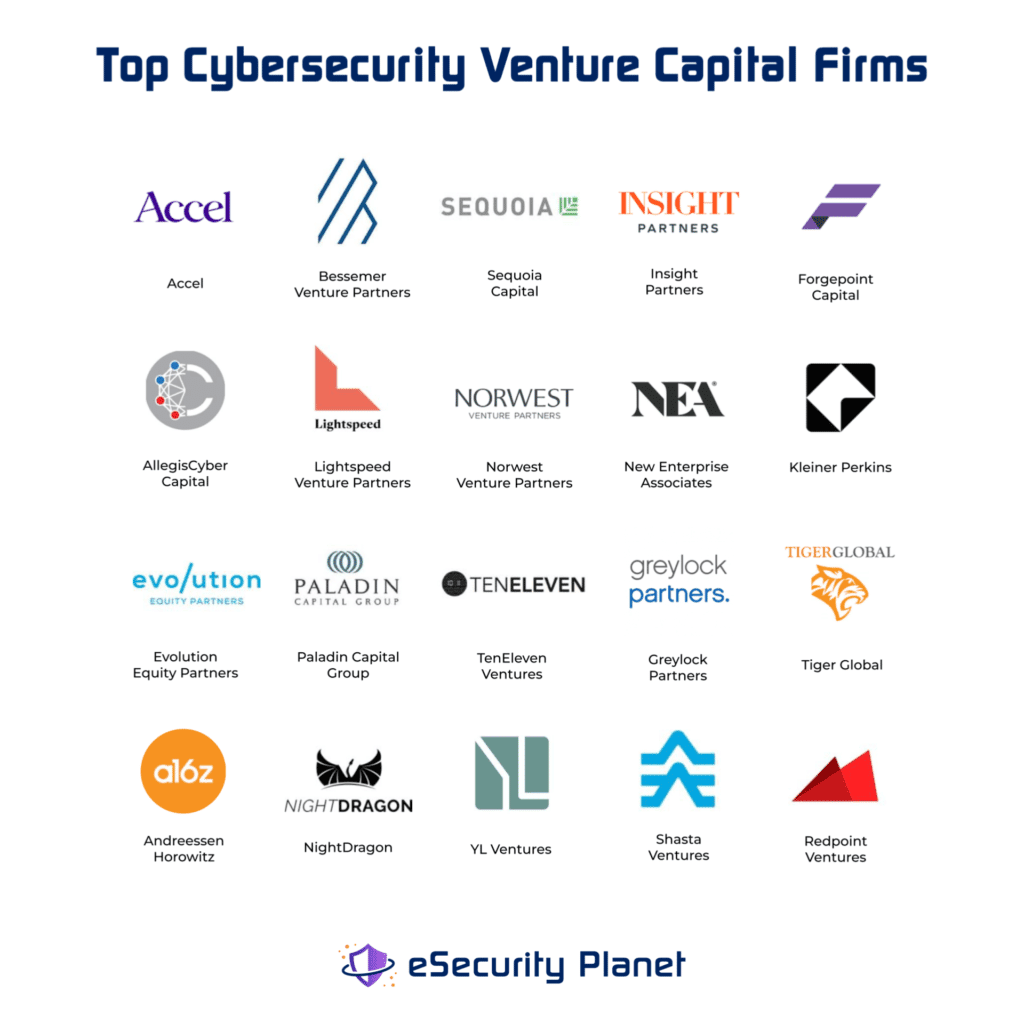
Several venture capital firms stand out for consistently championing cybersecurity startups. Names like Accel, Sequoia Capital, and Insight Partners regularly appear in funding announcements, having played pivotal roles in the trajectories of now-household brands in digital defense. With deep reservoirs of capital and strong industry networks, these firms move quickly on innovative technologies, backing founders who demonstrate technical rigor and the potential for outsized market impact.
Boutique and specialized cyber funds
Outside the marquee names, boutique investment groups hone in on security alone. Firms such as ForgePoint Capital, Cyberstarts, and Ten Eleven Ventures operate with laser focus, staffed by former CISOs and cybersecurity veterans. Their sector-specific insight often translates into hands-on support that generalist VCs rarely match. These funds also nurture deep ties with CISOs and enterprise buyers, giving portfolio companies direct channels to potential customers and partners.
Noteworthy recent investments
The past year has seen landmark funding rounds from these powerhouses. For example, Wiz’s unicorn ascent involved bold bets from Index Ventures and Lightspeed Venture Partners in mega-rounds. On the earlier-stage frontier, firms like YL Ventures have repeatedly spotted winners long before conventional investors take notice, leading initial rounds for startups that went on to raise mega-dollars. The frequency and volume of deals from these top VCs shape the industry’s competitive landscape and foster a relentless pace of innovation.
Tracking these active investors not only reveals who is influencing cybersecurity’s future; it also helps founders understand the benchmarks and strategic direction VCs expect. But just as important as who writes the checks is understanding when and how they deploy capital—insights that emerge when looking at startup funding across different stages of growth.
Stages of Cybersecurity Venture Investment
Every successful cybersecurity startup travels a distinctly mapped journey through venture funding stages. Each phase unlocks unique opportunities and challenges, shaping a company’s destiny and its potential impact on the security landscape.
Pre-seed and Seed
This is where it all begins—often with a handful of founders, a big idea, and perhaps a prototype. At this stage, startups attract early angel investors or specialized seed funds who seek to validate novel solutions for real-world security problems. The key focus is simple: does the innovation tackle an urgent pain point, and can this team build it quickly?
Funding amounts here can range from $100,000 up to a few million, often used to prove the concept, assemble a minimum viable product, and win initial customers or pilot projects. Due diligence at this stage leans heavily on the founders’ backgrounds and the uniqueness of the problem being solved.
Series A and Growth Rounds
Once early traction is proven, Series A investors step in. They’re looking for clear momentum: paying customers, growing revenue, solid technology, and an ambitious vision. Cybersecurity’s crowded market means VCs scrutinize product differentiation and the potential to scale.
Rounds here range from $5 million to $30 million or more; the capital drives go-to-market expansion, hiring, and product development. Subsequent rounds—Series B, C, and beyond—are about capturing outsized market share, landing big enterprise customers, and strengthening technical and sales teams for rapid growth. By now, companies compete head-to-head with established names, showing not just promise but proof.
Exits: Acquisition and IPO
The endgame for most cyber startups lies in acquisition or a public offering. Cyber companies make juicy targets for large tech players, security giants, and cloud vendors hungry for fresh talent and innovative tech. The pace of cybersecurity M&A has only accelerated, rewarding both founders and investors.
For the select few with staying power and vision, an IPO represents the ultimate milestone—a testament to building at scale and earning the trust of global enterprises. Either route requires a sharp focus on sustainable growth, operational discipline, and the ability to stand out in a market brimming with contenders.
With each stage, investor expectations rise as the stakes—and potential rewards—increase. Next, let’s examine what separates truly investable cybersecurity startups from the rest, and what venture capitalists look for before writing that term sheet.
What VCs Look For in Cybersecurity Startups
Team and technical expertise
Venture capitalists in the cybersecurity realm pay close attention to the founders’ backgrounds. They seek evidence of hands-on experience with enterprise security, deep domain knowledge, and a pragmatic understanding of real-world threats. A technical pedigree—perhaps from years in incident response, security research, or building defensive infrastructure—carries real weight. VCs want teams that don’t just understand technology, but anticipate how today’s adversaries sidestep yesterday’s solutions.
Product-market fit
It’s not enough to offer a clever tool. VCs listen for proof that a startup’s product solves a stubborn, urgent problem experienced by real customers. They look for validation—such as pilots with design partners, early letters of intent, or enthusiastic testimonials from CISOs—that your solution cuts through the noise. If potential buyers would fight to keep your tool or claim it makes their job easier, that’s the kind of signal investors want. Understanding this crucial phase is detailed in understanding product-market fit according to Sequoia.
Defensibility and differentiation
Funding flows to solutions that are hard for others to copy. VCs assess whether you’re building robust technology—maybe a proprietary data model, unique detection algorithm, or sticky integrations that create a high switching cost. They want to see barriers to entry, like a strong intellectual property position or a network effect that builds over time. In a crowded space, what keeps a giant from swallowing your lunch?
Traction and customer pipelines
Startups with even modest revenue, a pipeline of paying pilots, or clear expansion opportunities stand out. Investors want to see momentum: a fast-growing waitlist, committed proofs-of-concept with major enterprises, or an expanding ARR. Even if you’re early, demonstrating a sharp grasp of your ideal customer profile and buying journey gives VCs confidence that your growth isn’t just hypothetical.
Understanding the investor’s checklist is only the starting point for founders. Turning these ideas into a captivating story and a winning pitch takes strategy, clarity—and a bit of inside knowledge. Next, let’s explore actionable steps founders can take to make their startups impossible for cybersecurity VCs to ignore.
How Founders Can Attract Cybersecurity VC Investment
Crafting a compelling pitch
Cybersecurity investors sift through countless pitches, so standing out is as much about clarity as it is about innovation. Don’t just spotlight your technology—anchor your pitch in the real problems your product solves for businesses or end-users. Quantify the stakes, describe the attack surface, and illustrate how your solution weaves itself into existing security stacks. Demonstrate early validation with proof-of-concept deployments or feedback from industry CISOs, and explain exactly why your approach is harder to bypass, easier to deploy, or faster to scale than competitors.
Leveraging networks and warm introductions
Direct cold outreach rarely breaks through. Instead, use cybersecurity meetups, industry conferences, LinkedIn groups, or alumni circles to connect with trusted connectors—advisors, angels, or founders—who already have the ear of top VCs. A recommendation from someone they trust lifts your deck from the slush pile. Participate in cybersecurity accelerators or join panels to make your expertise visible, increasing the likelihood of warm introductions. Every successful conversation isn’t just about fundraising; it’s momentum toward credibility.
Common mistakes to avoid
Overhyping market size or leaning on buzzwords like “zero trust” or “AI-powered” without technical depth is a red flag for sophisticated investors. Avoid vague go-to-market strategies, hand-wavy technical explanations, or hiding challenges. If you lack founder-market fit or domain expertise, own it—and demonstrate how you’ve brought missing skills onto your team. Authenticity, transparency, and the ability to digest investor feedback without defensiveness set apart fundable founders from the rest.
The path to investment is not just about impressing potential backers—it’s about forging relationships and aligning with partners who share your vision for defending the digital frontier. As you learn what attracts venture capital, it’s equally important to recognize how this backing can amplify your impact across the cybersecurity ecosystem.
The Impact of Venture Capital on Cyber Defense
Accelerating innovation cycles
Venture capital doesn’t just fuel payroll—it turbocharges invention. Startups flush with funding transform promising concepts into deployable defenses at a speed that would overwhelm most bootstrapped teams. This rapid iteration means that groundbreaking security tools—think automated threat detection powered by AI, or cloud-native zero trust—move from whiteboard to enterprise deployment in record time. Startups backed by VCs can afford elite talent and R&D firepower, outpacing adversaries who never stop evolving their methods.
Consolidation and platformization
With capital in play, M&A activity soars. The fragmented world of point solutions is shrinking as well-funded ventures either acquire or get acquired, stitching together comprehensive security platforms. This consolidation gives organizations a clearer, more integrated way to manage threats, rather than a patchwork of disconnected tools. Investors often push founders to pursue bold, scalable visions—which has led to the rise of powerhouse platforms promising unified cyber defense across endpoints, identities, and clouds.
Enabling global cyber resilience
VC money isn’t locked to Silicon Valley zip codes anymore. Today’s investment flows know no borders, powering innovations from Tel Aviv to Bangalore. As funding reaches new regions, resilient security products become available to a wider swath of businesses—including those in markets historically underserved by cutting-edge vendors. This diffusion of capital makes for a stronger, more interconnected global cyber shield—exactly what’s needed as threats target organizations regardless of geography.
Understanding how capital shapes products and industry structure sets the stage for a closer look at the firms behind these seismic changes—and how startups can capture their attention.
Resources for Cybersecurity Entrepreneurs
Incubators, accelerators, and events
Whether your cybersecurity startup just emerged from stealth or you’re fine-tuning your product for market entry, the right ecosystem partners can dramatically boost your growth. Programs like Cylon, Alchemist Accelerator, and Dreamit Securetech provide hands-on mentorship from veteran cyber founders and direct introductions to leading VC firms specializing in the field. For those looking to tap into a worldwide network, Start-Up Nation Central in Israel and LORCA in the UK offer connections to European investors and CISOs—a valuable springboard into international markets.
Industry events and competitions can put your startup in front of investors and potential customers. The RSA Conference Innovation Sandbox and Black Hat Startup Spotlight routinely showcase emerging cybersecurity solutions; making the finalist list is often a catalyst for securing investment. Regional summits such as CyberTech Global and Infosecurity Europe are also prime opportunities to demo your product and forge key partnerships.
Further reading and industry reports
Founders aiming to understand market shifts or benchmark their company’s progress should keep a few trusted resources on hand. The annual Momentum Cyber Cybersecurity Almanac details M&A activity, funding rounds, and sector valuations. CB Insights and Crunchbase offer up-to-date databases of venture-backed cyber companies, while The CyberWire and Dark Reading dig into trends shaping future investment.
For those charting a path to their first funding, in-depth guides like “How to Pitch a Cybersecurity Startup to Investors” (published by Y Combinator) and “The Ultimate Guide to Cybersecurity Investment” by DataTribe provide practical frameworks and real-world case studies. Staying plugged into these resources ensures you’re ready for the tough questions when the time to pitch arrives.
Armed with powerful networks and cutting-edge knowledge, the stage is set for translating founder ambition into defendable businesses. Next, we’ll explore strategies to transform investor interest into deal-closing momentum and lasting partnerships.